- Commercial Greenhouse
- Film Greenhouse
- PC Greenhouse
- Glass Greenhouse
- Tunnel Greenhouse
- Scientific Research Greenhouse
- Vegetable Greenhouse
- Flower Greenhouse
- Multi-span Greenhouse
- Sawtooth Greenhouse
- Greenhouse Equipments
- Greenhouse Accessories
- Hot Dip Galvanized Pipe
- Irrigation System
- Hydroponics System
- Planting Tools
- Planting technology
Tel: +86 191 5068 3942
Fax:
Mobile: +86 191 5068 3942
Contact: Alina
E-mail: sales@cngreenhouses.com
SKYPE:


- Features


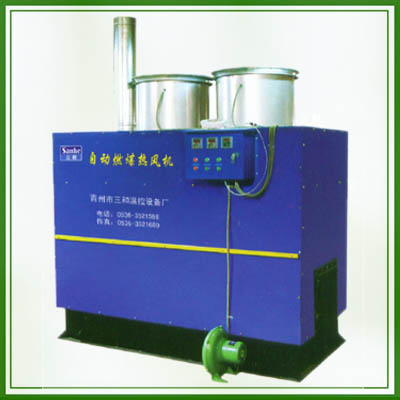
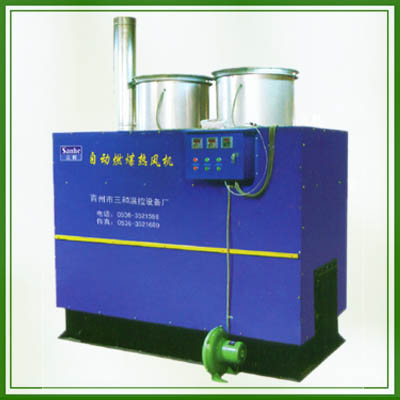
Heating is the system that decides how much of the year a greenhouse can be used. The photo above shows the type most often chosen for a commercial house: a hot air furnace with twin flues, a control panel and a blower, sitting outside the growing area. This page covers the categories of greenhouse heating, how the heat is delivered to the crop, and what decides the size of the unit you order.
What a greenhouse heating system has to do
The job is not simply to warm the air. A heated house loses heat through the covering, through gaps and doorways, into the ground, and every time the vents open. The heating system has to replace that loss fast enough to hold the crop's target temperature through the coldest night of the year, and to do it without creating cold spots at the ends of the house or hot spots under the ducting.
That is why heating is normally designed together with the insulation measures: a house that holds heat needs a smaller unit to run, and one sized after that work will be smaller and run less often.
Heat sources: hot air furnace, boiler and alternatives
The hot air furnace is the common choice for a production greenhouse. Fuel is burned in a chamber and the resulting hot air is blown into the house, usually through a duct running the length of the crop. A high thermal efficiency unit warms the house quickly, is simple to install and operate, and delivers air that is clean, odourless and safe around plants and people, so it can be discharged directly into the growing area. Coal-fired furnaces of this type remain among the most economical to run where coal is available, which is why they are still widely used.
The requirement behind that description is complete combustion. Clean, odourless delivery only holds if the burner is set correctly for its fuel and is maintained: an under-fuelled or badly adjusted unit passes carbon monoxide and unburnt fuel into the house, and sulphur in the fuel attacks both the crop and the metalwork above it. A furnace used this way is run with an analyser and cleaned on a schedule, because the moment combustion slips, the system stops being safe to discharge into a growing space.
Water-based systems are the alternative. A boiler heats water circulated to pipe coils along the walls or under the benches; it responds gradually, which suits steady base heating rather than fast recovery, and it can be combined with floor heating. Electric, geothermal and biomass units shift the balance between equipment and running cost, and are chosen against the fuel available on site.
Delivering the heat to the crop
How heat reaches the plants matters as much as how it is generated. Hot air is usually distributed through a perforated duct running above the crop or along the ridge, with the holes sized and spaced so that temperature stays even from the fan end to the far wall. Discharging the whole output at one point gives a hot zone near the unit and a cold zone at the far end, which shows up later as uneven growth.
Air movement also has to be kept off the canopy. A duct that blows directly onto the plants dries and cools the leaves, so outlets are aimed along the house rather than down onto the beds, and the air is given room to mix before it reaches the crop. In a house also enriched with carbon dioxide, the same ducting serves both duties, so the distribution is worth planning before the unit is bought.
Sizing, control and staging
Heating capacity is set by the worst case, not the average. The figures that decide it are the coldest outdoor temperature the site is designed for, the area and insulation value of the covering, the air leakage of the structure, and the temperature the crop needs held. Working from those four, the required output is calculated, and the unit is chosen with a margin that covers ageing and the occasional open vent.
Beyond the raw capacity, the practical questions are how the heat is split and how it is controlled. A house divided into zones can hold a warmer propagation area and a cooler finishing area at the same time, and staging the burners means the system runs at partial output for most of the season instead of cycling on and off at full power. Controls tie the whole thing together: a thermostat or sensor at crop level, a schedule that reflects the crop's day and night needs, and an interlock so that heating and ventilation are not fighting each other.
Fuel, running cost and keeping the efficiency
Running cost is decided by the price of heat per unit, which is why the choice between coal, gas, oil, electricity and biomass is made locally rather than by rule. What matters across all of them is that the unit is matched to the fuel it burns: a furnace run on the wrong fuel loses efficiency and brings back the exhaust problems described above.
Efficiency also decays with neglect. Heat exchangers soot up, burners drift out of adjustment, filters and ducting collect dust, and a unit that was efficient when installed quietly becomes an expensive one. A maintenance routine covering cleaning, combustion checking and blower servicing is what keeps a system close to its rated efficiency and gives it a long working life.
To have a heating system sized against the structure it will serve, write to sales@cngreenhouses.com or call +86 191 5068 3942. With above 35 years in greenhouse engineering we build the whole environmental package around the house, and keep reference material on greenhouse equipment systems as well as on how the heat load itself is assessed in heating needs and heater sizing and how loss is reduced first in heat preservation design.
Independent background on protected cultivation is published by the FAO, and current commercial reporting by Greenhouse Grower.
Frequently Asked Questions about greenhouse heating systems
Q1: Should I choose a hot air furnace or a water boiler?
For most production houses the hot air furnace is the simpler answer: it warms the house quickly, installs easily and can discharge directly into the growing area. Water systems suit steady base heating, zoning and floor coils, but they respond more slowly and take a larger installation.
Q2: Is hot air from a furnace safe to blow onto the crop?
Yes, provided combustion is complete. A correctly set furnace delivers clean, odourless air that is safe around plants and people. An under-fuelled or badly adjusted one passes carbon monoxide and unburnt fuel into the house, which is why the unit is run with an analyser and cleaned on a schedule.
Q3: What decides the size of a greenhouse heating system?
The coldest outdoor temperature the site is designed for, the area and insulation value of the covering, the air leakage of the structure, and the temperature the crop needs held. Those four give the required output, and a margin is added for ageing equipment and periods when vents are open.
Q4: Do I need to split the house into heating zones?
Only if the house holds more than one growing environment. Zoning lets a warmer propagation area and a cooler finishing area run at the same time, and lets burners be staged so the system runs at partial output instead of cycling at full power.
Q5: Can heating and ventilation run against each other?
They will if they are not interlocked. Ventilation removes heat and moisture at the same time as it lets carbon dioxide in, so the controls are set so that the two do not open and fire at once, and heating drops out when the vents are open.
Q6: Should insulation be improved before a heater is replaced?
Yes, wherever it can be. A screen or a second covering layer reduces the heat load before any unit is sized, so the replacement is smaller and runs less often. Insulation done first is paid back through every subsequent season of fuel.
 Deutsch
 Español
 Français
 Italiano
 Português
 日本の
日本の
 한국어
한국어
 العربية
 български
 hrvatski
 česky
česky
 Dansk
Dansk
 Nederlands
 suomi
suomi
 Ελληνικά
 हिन्दी
 norsk
norsk
 Polski
 Română
 русский
 Svenska