- Commercial Greenhouse
- Film Greenhouse
- PC Greenhouse
- Glass Greenhouse
- Tunnel Greenhouse
- Scientific Research Greenhouse
- Vegetable Greenhouse
- Flower Greenhouse
- Multi-span Greenhouse
- Sawtooth Greenhouse
- Greenhouse Equipments
- Greenhouse Accessories
- Hot Dip Galvanized Pipe
- Irrigation System
- Hydroponics System
- Planting Tools
- Planting technology
Tel: +86 191 5068 3942
Fax:
Mobile: +86 191 5068 3942
Contact: Alina
E-mail: sales@cngreenhouses.com
SKYPE:


Polycarbonate Sheet Greenhouse for Vegetables
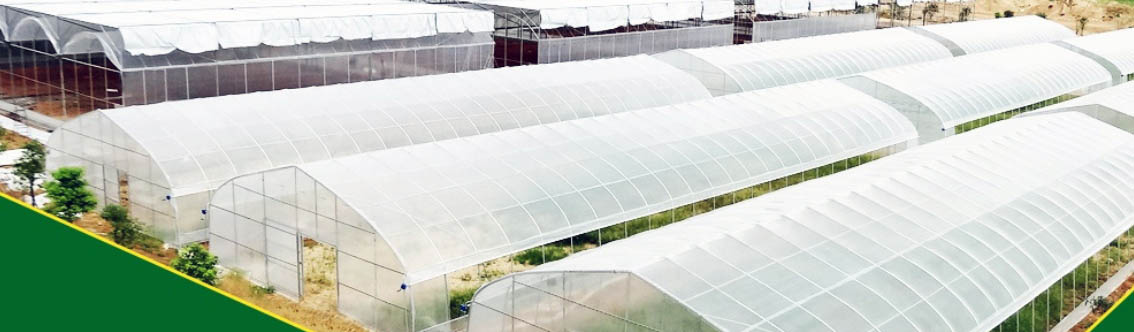
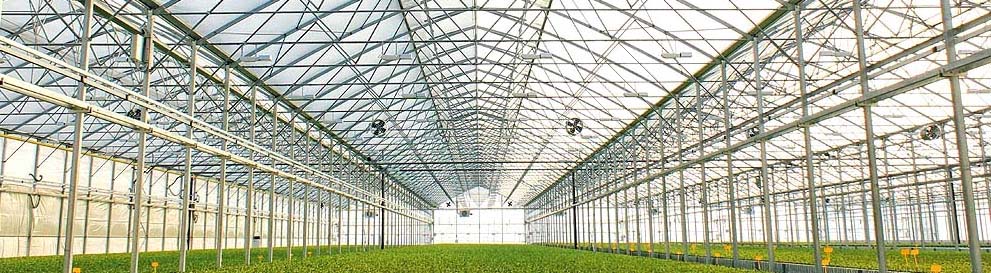
Polycarbonate sheet greenhouse for vegetables: how the multiwall cover spreads light, holds night heat, handles condensation, and measures against film.
.
TEL:+86 191 5068 3942
- Features


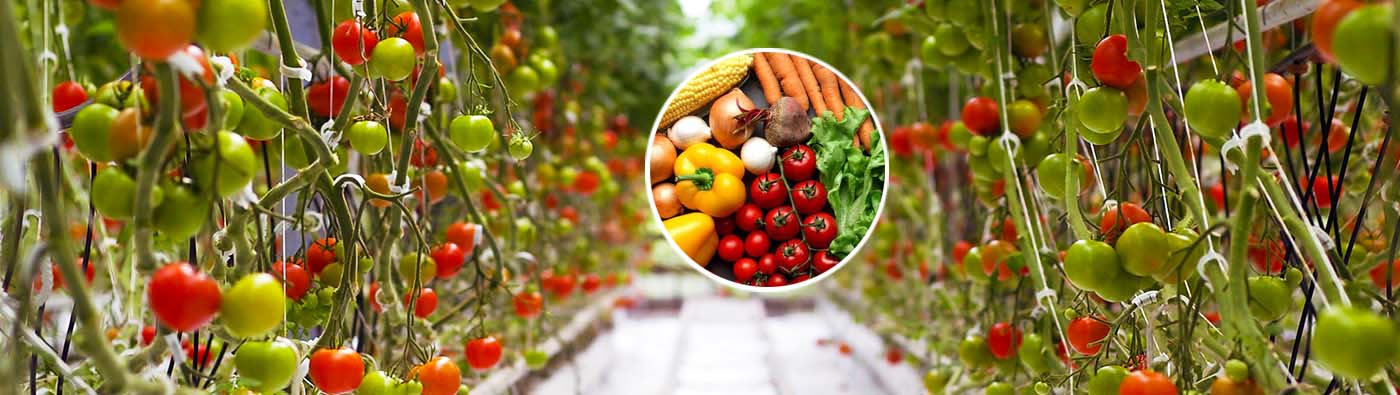
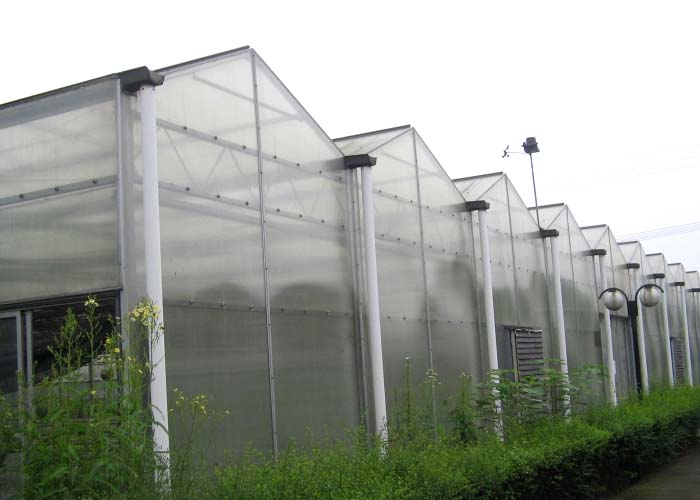
A vegetable house is run by two things the cover controls: how much light reaches the leaves, and how much heat is still inside the house after dark. This house is covered with polycarbonate sheet, usually called PC board, supplied as a double or triple hollow transparent sheet or as a single corrugated sheet. It is built for vegetable work first, and also for fruit, flowers and seedling nursery.
What the PC Sheet Does to Light Above the Crop
PC board is chosen in the first place for its light transmittance, which on this sheet is high. A multiwall sheet is not a single skin: several walls are joined by ribs, and the light that enters is bent and spread as it passes through, so a leaf is lit from more than one direction instead of from one hard patch of sun.
That matters in a vegetable house where beds run the length of the bay. Under a cover that concentrates light, the row directly under the bright strip grows away from its neighbour and the crop comes in uneven. Under a sheet that spreads it, the difference between one end of a bed and the other is smaller, and the whole canopy works at the same rate. The description of the sheet itself is on the 8 mm and 12 mm roof panels used on these houses.
Night Heat, and How Long the Winter Window Stays Open
The second job of the cover is holding heat. Measured as thermal conductivity, the K value of plastic film exceeds that of PC board by a lot, which is the technical way of saying that a film house loses its heat more easily. Good insulation is one of the reasons PC board is described here as the best performing of the covering materials overall.
The hollow sheet works because of the air sealed in the channels between its walls: each channel is a layer that heat has to cross, and a double or triple sheet therefore carries two or three of those layers. Together with the good sealing of a sheet that is fixed rather than draped, this is what cuts heat loss and stops cold air intruding. In a vegetable house the practical result is a night temperature that does not fall away as fast, a winter cropping window that stays open longer, and less energy spent holding the house at temperature, since consumption is low.
Condensation, Drip and Disease Pressure Under a Rigid Cover
Leaf disease in a covered house usually starts where the canopy stays wet. On a slack film that sags between its supports, water gathers in the dip and comes down in drops on the plants below, and every drop on a leaf extends the wet period. A rigid sheet does not sag into pockets, so it does not hold water over the beds in the first place.
Condensation still forms on the inside face of a PC sheet, as it does on any cover, but it forms on a surface that is held straight and drained. The vapour that reaches the sheet runs down it to the gutter rather than hanging above the crop as a drip point. Because the sheet is sealed, the grower also controls the air change instead of losing it through gaps, and ventilation is used deliberately to bring humidity down at the times of day when it peaks.
PC Board Measured Against Film on the Same Vegetable House
PC board has existed since the 1970s in Europe, where it was widely used in greenhouse construction, and it is treated on this page as a later generation of covering material than film. Impact resistance separates the two even more clearly than light and heat do: a PC sheet is described as having a no broken glass and ring of steel reputation, it does not become cold and brittle at minus 100 degrees Celsius, and it does not soften at 135 degrees Celsius.
Fire behaves differently as well. Tested, the PC board flame belongs to class B, self-extinguishing, and it does not produce toxic gas or spread the fire onwards, so the sheet has a relatively good fire resistance. A burning plastic film is the other case, and film houses have been lost to it.
Service life is the everyday difference. Taking the two materials as they are used, a film cover is replaced about every two years, while the board lasts much longer, so less time and effort go into the cover over the life of the house. The one place where film still wins is the first cost: the price of PC board is higher. Through all of that comparison the board house comes out as the better fit for vegetable growing than the traditional film house, and the film side of the range is described on our film greenhouses. Where the two sheets differ in construction rather than in material, the twin wall PC sheet house covers it.
Who Builds the House
The company has above 35 years of professional greenhouse production behind it and has developed into a conservatory company with some influence in the trade. The range covers all types of greenhouses and their supporting facilities, from design and construction to machine research: multi-span film houses, glass houses, single-span film houses, PC board houses, garden and flower houses, lighting board houses, vegetable houses on hot galvanized pipe, and a variety of hydroponic greenhouses. There are also the high roof and large span types built for eco-restaurant work, large bays, beautiful appearance and a bright interior.
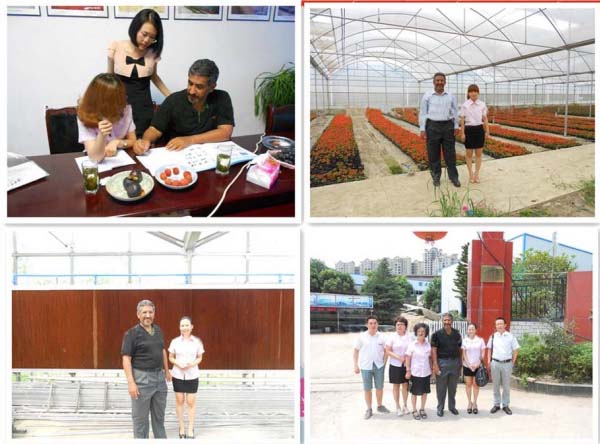
Every year the company ships its greenhouses to customers around the world, and there are many customers who visit the factory for business cooperation. A professional engineer department handles the drawings, and on request engineers are sent to foreign countries to guide the installation. The polycarbonate greenhouse range is the sheet side of that work and the commercial greenhouse range sets out the rest of it.
Guidance on protected vegetable cultivation is published by the Food and Agriculture Organization of the United Nations, and commercial growing under cover is reported by Greenhouse Grower. For a price on a house with a PC sheet cover, call +86 191 5068 3942 or write to sales@cngreenhouses.com with the ground plan and the crop.
Frequently Asked Questions
Q: Does a PC sheet cover let enough light through for vegetables?
The sheet is chosen for its high light transmittance. Because the multiwall sheet is built with ribs and hollow channels, the light that enters is spread rather than concentrated, so beds in different parts of the bay are lit at a similar level.
The sheet is chosen for its high light transmittance. Because the multiwall sheet is built with ribs and hollow channels, the light that enters is spread rather than concentrated, so beds in different parts of the bay are lit at a similar level.
Q: How does the cover deal with condensation over the crop?
A rigid sheet does not sag into the dips that a slack film forms, so water is not held above the beds. Vapour condenses on a straight, drained face and runs down to the gutter, and the grower brings humidity down through ventilation.
A rigid sheet does not sag into the dips that a slack film forms, so water is not held above the beds. Vapour condenses on a straight, drained face and runs down to the gutter, and the grower brings humidity down through ventilation.
Q: Can a PC sheet house hold night heat in winter?
That is what the covering is chosen for. The K value of plastic film exceeds that of PC board, so film loses heat more easily, and the air sealed in the sheet channels adds a layer per wall pair. Together with the sealing of the fixed sheet this is described as cutting heat loss and cold air intrusion.
That is what the covering is chosen for. The K value of plastic film exceeds that of PC board, so film loses heat more easily, and the air sealed in the sheet channels adds a layer per wall pair. Together with the sealing of the fixed sheet this is described as cutting heat loss and cold air intrusion.
Q: How often does the cover have to be replaced?
A film cover is replaced about every two years, while the PC board lasts much longer, which is the time and effort saved over the life of the house.
A film cover is replaced about every two years, while the PC board lasts much longer, which is the time and effort saved over the life of the house.
Q: Is a polycarbonate sheet a fire risk in a crop house?
Tested, the flame of the PC board belongs to class B and is self-extinguishing; it does not give off toxic gas and does not spread the fire onwards. It is described here as having relatively good fire resistance, in contrast with a burning film.
Tested, the flame of the PC board belongs to class B and is self-extinguishing; it does not give off toxic gas and does not spread the fire onwards. It is described here as having relatively good fire resistance, in contrast with a burning film.
Q: What experience stands behind the houses?
The company has above 35 years of professional greenhouse production, builds the whole range from multi-span film to glass and PC board houses, ships worldwide, and can send engineers abroad to guide installation.
The company has above 35 years of professional greenhouse production, builds the whole range from multi-span film to glass and PC board houses, ships worldwide, and can send engineers abroad to guide installation.
Note: If you're interested in the product, please submit your requirements and contacts and then we will contact you in two days. We promise that all your informations won't be leaked to anyone.
 Deutsch
 Español
 Français
 Italiano
 Português
 日本の
日本の
 한국어
한국어
 العربية
 български
 hrvatski
 česky
česky
 Dansk
Dansk
 Nederlands
 suomi
suomi
 Ελληνικά
 हिन्दी
 norsk
norsk
 Polski
 Română
 русский
 Svenska