
- Commercial Greenhouse
- Film Greenhouse
- PC Greenhouse
- Glass Greenhouse
- Tunnel Greenhouse
- Scientific Research Greenhouse
- Vegetable Greenhouse
- Flower Greenhouse
- Multi-span Greenhouse
- Sawtooth Greenhouse
- Greenhouse Equipments
- Greenhouse Accessories
- Hot Dip Galvanized Pipe
- Irrigation System
- Hydroponics System
- Planting Tools
- Planting technology
Tel: +86 191 5068 3942
Fax:
Mobile: +86 191 5068 3942
Contact: Alina
E-mail: sales@cngreenhouses.com
SKYPE:


Sawtooth Greenhouse Maintenance and Film Replacement
80x20 m sawtooth commercial greenhouse care: daily checks, film ageing signs, when to replace the 0.12-0.15 mm cover, snow clearing and bolt re-tightening.
.
TEL:+86 191 5068 3942
- Features


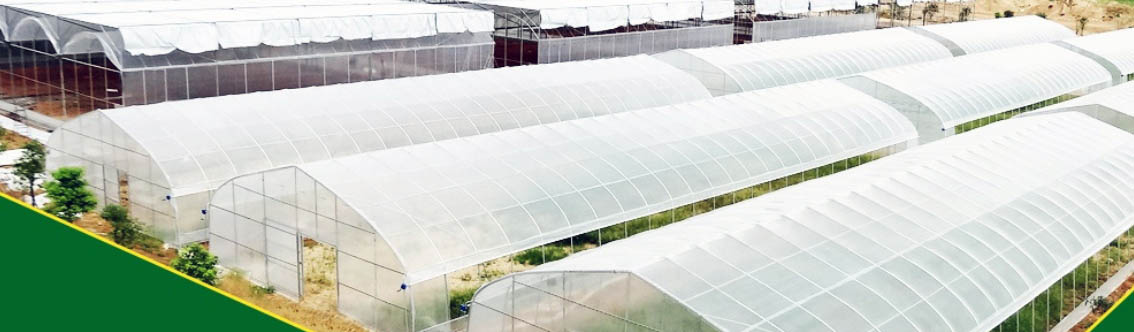
This page is about the house in use, not the house as ordered. It sets out what to look at week by week, how to read the first signs that the covering is going, when the film should be taken off and replaced, how snow and water are handled once the roof is in service, and what has to be re-tightened as the seasons pass. The building described here is the same commercial film house throughout: 80 m by 20 m, 1,600 square metres under a single layer of 0.15 mm or 0.12 mm film, on a hot dip galvanized steel pipe frame with a grooved channel and aluminum clips, and sidewall openings closed by insect nets and roll-up curtains. Building the house is a separate job and is dealt with on our the installation sequence page; the choice of film and the way it is run into the channel are on our film specification and fixing page.
The Weekly Walk-Through
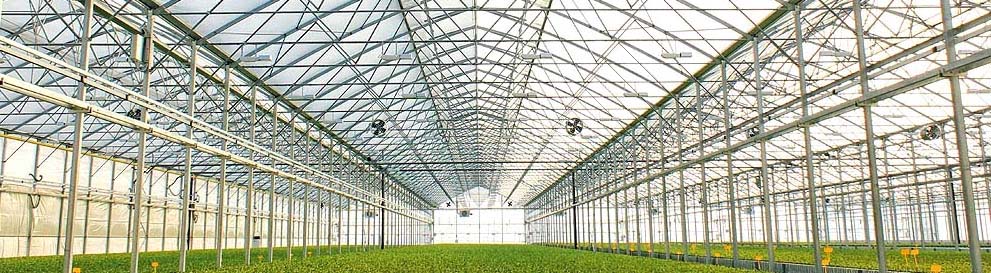
On a house of this size the only way maintenance stays cheap is to walk it. The walk-through is not an inspection of everything; it is a fixed route that visits the same points in the same order, so that a change from last week is noticed at once. Six points are worth the route. Along the roof, the film where it enters the channel, because that is where a tear begins. Along the sawtooth ridge, the seats of the upright windows, because a window that no longer closes flat was usually disturbed by the film beside it. Along the side walls, the roll-up curtain and the insect net, because a net that has worked loose at one end is open to insects along its whole edge. Along the ground, the soil immediately around each anchor, because a hollow that has appeared there is telling you something about the anchor. Inside, the columns and the ridge members, where the first rust bloom on a scratched coating is easiest to catch while it is still a bloom. And at the doors, the gear that operates the curtains, because manual and electrical gear both fail first as stiffness rather than as complete failure.
What makes the walk-through work is writing down what is found. Number the bays along the 80 m and the teeth across the ridge, note the position of each finding against that numbering, and the same defect stops being rediscovered from the ground every week. A house that is watched this way is repaired in small pieces at convenient times; a house that is not is repaired in one large bill after a storm.
Reading the Film: Ageing Signs and the Point of Replacement
Film does not fail on a date; it fails in a sequence, and the sequence can be read. The first stage is optical. The film that was clear begins to look washed or milky in the low sun, and the anti-drip behaviour that once kept the inner surface from beading stops working, so condensation that used to run to the channel now hangs overhead and drips on the crop. Light is still coming through and the house still works, but this is the stage at which a replacement is planned rather than waited for. The second stage is mechanical. The film stiffens, a fold held over a winter no longer flattens, and the first small splits appear, characteristically radiating from a clip or from where the film turns into the channel. The third stage is the one that forces the decision: a split that runs, a panel that slaps in wind, or a piece of film that has cleared its clips at a corner.
The practical rule that follows from this sequence is that replacement is done between crops, not after a failure. A house kept on the same film thickness, 0.15 mm or 0.12 mm in a single layer, and re-covered in an empty house on a still day is a two-part job: the old film is stripped bay by bay, the channel is checked and cleared, and the new film is run in the same order it was run the first time. A house left until a storm finishes the film is a different job altogether, because the covering then has to be replaced with a crop standing underneath it. Reading the first two stages costs nothing and is the whole reason the weekly walk goes along the channel line.
Snow, Rain and Water on a Sawtooth Roof
The frame on this sheet is checked for a snow load of 0.35 kN/m2, and snow is the one load on a greenhouse that the grower can do something about before it becomes a structural matter. On a sawtooth roof the places to watch are the ones a plain arch does not have. The upright window face of each tooth and the valley where it meets the sloping face both catch and hold snow, and drifted snow tends to gather unevenly along the ridge rather than across the whole roof. Clearing is therefore done by working along the ridge and down each slope, never by pushing a full width of snow from one end, which piles the load at the far end instead of removing it. Clearance is carried out before the accumulation on any one bay approaches the figure the frame is checked for, and it is done with a soft-edged tool that slides on the film rather than scrapes it.
Water is the other half of the same subject, and on a film house it is managed in three places. Condensation on the inside of the film is the first: with the anti-drip layer working it runs down to the channel and out, and the sign that the layer has gone is drip on the crop rather than run-off. The foot of the side wall is the second: the roll-up curtain and the net have to leave a clear path for water to leave the house rather than stand at the base of the film. The ground outside is the third: the areas that stay wet beside the house keep the film and the lower frame permanently damp, which is the condition that shortens the life of both. Reporting on how protected structures behave in service, rather than only at the point of sale, is collected by HortWeek, and the drainage and storage failures it describes are the same ones a walk-through is looking for.
Re-Tightening Fasteners and Looking After the Galvanized Frame
Nothing on a film house works loose faster than the parts that were tight on the day it was built. The clips that hold the film into the groove, the bolts that hold the ridge and the purlins, and the fixings at the foot of the roll-up curtains all move a little as the house warms and cools and as the film moves in wind. Two occasions put them back: the change of season, when the house moves from open to closed or from closed to open, and the passage of any strong wind, after which the run along the ridge and the side wall is repeated clip by clip. A clip that no longer resists when pressed is re-seated, not left to be discovered by the film in the next gale.
The frame itself is hot dip galvanized steel pipe, and how long it stays free of maintenance is decided by the air the house stands in rather than by the name of the process. Under ISO 9223 and BS EN ISO 14713-1, a galvanized coating of the thickness used on this frame - a specified average of 70 to 85 micrometres of zinc under BS EN ISO 1461 - gives about 13 years to first maintenance in heavy industrial air (class C4), about 30 years in urban conditions (class C3), about 50 years in coastal conditions (class C5), and 50 years or more without repair in clean suburban conditions (class C2). The service point is simple: every scratch, cut or drilled hole made when the house was put up, or made later when a system is added, is a place where the coating is already thinner than the rest, so it is touched up rather than left bare. The aluminum parts are confined to the grooved channel and the clips that carry the film and are not part of the load-bearing frame. Guidance on how greenhouse structures and their covering are managed in service is published by the NGMA, whose material is written for the operator as well as the buyer.
What the House Is, Read in Service
| Size and area | 80 m x 20 m, 1,600 square metres |
| Type and scale | Sawtooth greenhouse, middle scale |
| Cover and layer | Film, single layer, 0.15 mm or 0.12 mm |
| Span | 6.4 m, 8 m, 9.6 m or 10 m |
| Total structure height | 4.3 m to 6.5 m |
| Wind load | 0.35 kN/m2 |
| Snow load | 0.35 kN/m2 |
| Standard | CE |
| Application | Vegetable, fruit, seed nursery, flower |
Two lines in that table matter more in service than they do at order. The height band, 4.3 m to 6.5 m, decides how the roof is reached for the walk-through and for snow clearing; a taller house means longer equipment and more careful working above the crop. The load figures, 0.35 kN/m2 for wind and the same for snow, are the numbers the structure is entitled to rely on, and they are also the numbers that tell the grower when snow has become a job and when wind damage should be repaired before the next blow. The ventilation, by sidewall openings covered by insect nets and roll-up curtains operated manually or electrically, is the part of the house that is worked and therefore the part that is maintained most often. The ranges this house belongs to are gathered on our sawtooth greenhouse range page, and its figures are set out in full on our span and load figures page.
Optional Systems and the Maintenance They Add
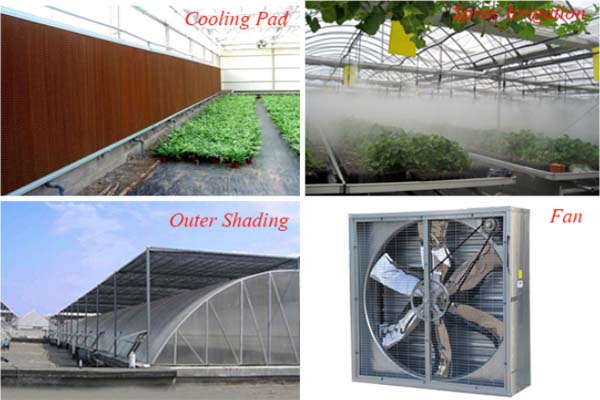
Cooling and heating, irrigation, ventilation, fertilization, shading, and benches are all quoted on request together with the house. Each of them adds something to the running routine rather than only to the build. Cooling pads and fans bring filters, water and moving parts that are checked with the season; heating brings a fuel or power service and a control that has to be proved before the first cold night; irrigation and fertilization bring filters, lines and emitters that are flushed and cleaned; a ventilation system adds to what the side curtains already do; shading adds a surface above the roof that is rolled and unrolled and must be stowed before wind; and benches add a floor load and change how the side wall is reached for its curtain. Naming them when the house is ordered keeps the frame right for them, and knowing them when the house is running is what puts them into the walk-through route.
Packing, Spares and Contact
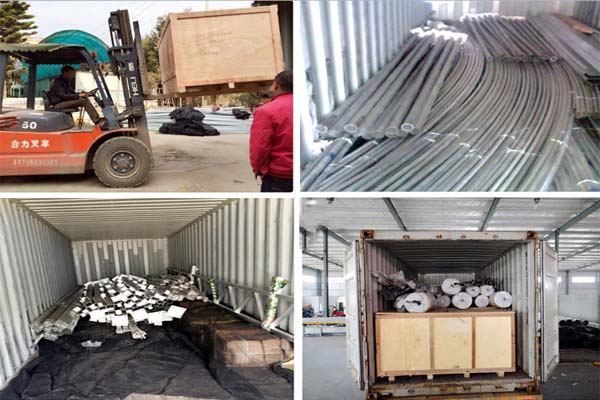
The order is packed for export in three groups that are also the three lists a spares box is drawn from: metal structures, covering system, and install accessories. Keeping a small stock from each group - film clips and channel spares, curtain and net fixings, and the fasteners used along the ridge and the columns - is what allows the findings of a walk-through to be closed the same week rather than at the end of the season. Every year customers from many countries visit the factory for business cooperation, and where it is wanted our engineers travel to guide the installation in the first place. To talk about a replacement covering, a spares list or any point in the routine above, call us on +86 191 5068 3942 or write to sales@cngreenhouses.com.
Frequently Asked Questions
Q: What should I check on a sawtooth greenhouse every week?
A: Walk the same route in the same order. The film where it enters the grooved channel, because that is where a tear begins. The seats of the upright roof windows along the ridge, because a window that no longer closes flat was usually disturbed by the film beside it. The roll-up curtain and the insect net along each side wall. The soil around every ground anchor, where a hollow means the anchor is moving. The columns and ridge members for the first bloom of rust on a scratched coating. And the curtain gear at the doors, which usually stiffens before it fails. Note each finding against the bay and tooth numbering so the same defect is not rediscovered every week.
A: Walk the same route in the same order. The film where it enters the grooved channel, because that is where a tear begins. The seats of the upright roof windows along the ridge, because a window that no longer closes flat was usually disturbed by the film beside it. The roll-up curtain and the insect net along each side wall. The soil around every ground anchor, where a hollow means the anchor is moving. The columns and ridge members for the first bloom of rust on a scratched coating. And the curtain gear at the doors, which usually stiffens before it fails. Note each finding against the bay and tooth numbering so the same defect is not rediscovered every week.
Q: How do I know when the film needs replacing?
A: Read it in three stages. First optical: the film looks washed or milky in low sun, and the anti-drip behaviour stops working so condensation drips on the crop instead of running to the channel. That is the stage to plan a replacement. Second mechanical: the film stiffens, a fold held over a winter no longer flattens, and small splits appear radiating from clips or from where the film turns into the channel. Third forced: a split that runs, a panel that slaps in wind, or a corner that has cleared its clips. The rule is to re-cover between crops, on the same 0.15 mm or 0.12 mm single layer, stripping and re-running bay by bay in an empty house rather than in an emergency with a crop standing.
A: Read it in three stages. First optical: the film looks washed or milky in low sun, and the anti-drip behaviour stops working so condensation drips on the crop instead of running to the channel. That is the stage to plan a replacement. Second mechanical: the film stiffens, a fold held over a winter no longer flattens, and small splits appear radiating from clips or from where the film turns into the channel. Third forced: a split that runs, a panel that slaps in wind, or a corner that has cleared its clips. The rule is to re-cover between crops, on the same 0.15 mm or 0.12 mm single layer, stripping and re-running bay by bay in an empty house rather than in an emergency with a crop standing.
Q: Does snow have to be cleared from the roof?
A: Snow is the one load the grower can remove before it becomes structural, and this frame is checked for 0.35 kN/m2 of snow. On a sawtooth roof the upright window face of each tooth and the valley where it meets the sloping face both hold snow, and drift gathers unevenly along the ridge. Clear along the ridge and down each slope with a soft-edged tool that slides on the film, never by pushing a full width of snow from one end, which piles the load at the far end. Clear before accumulation on any one bay approaches the figure the frame is checked for.
A: Snow is the one load the grower can remove before it becomes structural, and this frame is checked for 0.35 kN/m2 of snow. On a sawtooth roof the upright window face of each tooth and the valley where it meets the sloping face both hold snow, and drift gathers unevenly along the ridge. Clear along the ridge and down each slope with a soft-edged tool that slides on the film, never by pushing a full width of snow from one end, which piles the load at the far end. Clear before accumulation on any one bay approaches the figure the frame is checked for.
Q: How often do clips and bolts need re-tightening?
A: Twice a year, at the change of season when the house moves from open to closed or the reverse, and again after any strong wind. The parts that were tight on the day it was built are the ones that work loose: the clips holding the film into the groove, the bolts on the ridge and purlins, and the fixings at the foot of the roll-up curtains. Any clip that no longer resists when pressed is re-seated at once rather than left for the next gale to find.
A: Twice a year, at the change of season when the house moves from open to closed or the reverse, and again after any strong wind. The parts that were tight on the day it was built are the ones that work loose: the clips holding the film into the groove, the bolts on the ridge and purlins, and the fixings at the foot of the roll-up curtains. Any clip that no longer resists when pressed is re-seated at once rather than left for the next gale to find.
Q: How long does the galvanized frame last before it needs attention?
A: It follows the corrosivity of the air around the site, not the name of the process. Under ISO 9223 and BS EN ISO 14713-1, a coating of the thickness used here, a specified average of 70 to 85 micrometres of zinc under BS EN ISO 1461, gives about 13 years to first maintenance in heavy industrial air (class C4), about 30 years in urban conditions (class C3), about 50 years in coastal conditions (class C5), and 50 years or more without repair in clean suburban conditions (class C2). Every scratch, cut or drilled hole is a point where the coating is already thinner, so it is touched up rather than left bare.
A: It follows the corrosivity of the air around the site, not the name of the process. Under ISO 9223 and BS EN ISO 14713-1, a coating of the thickness used here, a specified average of 70 to 85 micrometres of zinc under BS EN ISO 1461, gives about 13 years to first maintenance in heavy industrial air (class C4), about 30 years in urban conditions (class C3), about 50 years in coastal conditions (class C5), and 50 years or more without repair in clean suburban conditions (class C2). Every scratch, cut or drilled hole is a point where the coating is already thinner, so it is touched up rather than left bare.
Q: Can the add-on systems be fitted after the house is already running?
A: Yes, and many are, but each one adds to the routine rather than only to the building. Cooling and heating bring filters, water and controls to be checked with the season; irrigation and fertilization bring lines and emitters to be flushed; a ventilation system adds to what the side curtains already do; shading adds a rolled surface above the roof that must be stowed before wind; and benches change how the side wall is reached. Adding them to the walk-through route at the same time they are fitted is what keeps the house working as one machine.
A: Yes, and many are, but each one adds to the routine rather than only to the building. Cooling and heating bring filters, water and controls to be checked with the season; irrigation and fertilization bring lines and emitters to be flushed; a ventilation system adds to what the side curtains already do; shading adds a rolled surface above the roof that must be stowed before wind; and benches change how the side wall is reached. Adding them to the walk-through route at the same time they are fitted is what keeps the house working as one machine.
Note: If you're interested in the product, please submit your requirements and contacts and then we will contact you in two days. We promise that all your informations won't be leaked to anyone.
 Deutsch
 Español
 Français
 Italiano
 Português
 日本の
 한국어
 العربية
 български
 hrvatski
 česky
 Dansk
 Nederlands
 suomi
 Ελληνικά
 हिन्दी
 norsk
 Polski
 Română
 русский
 Svenska