
- Commercial Greenhouse
- Film Greenhouse
- PC Greenhouse
- Glass Greenhouse
- Tunnel Greenhouse
- Scientific Research Greenhouse
- Vegetable Greenhouse
- Flower Greenhouse
- Multi-span Greenhouse
- Sawtooth Greenhouse
- Greenhouse Equipments
- Greenhouse Accessories
- Hot Dip Galvanized Pipe
- Irrigation System
- Hydroponics System
- Planting Tools
- Planting technology
Tel: +86 191 5068 3942
Fax:
Mobile: +86 191 5068 3942
Contact: Alina
E-mail: sales@cngreenhouses.com
SKYPE:


- Features


Why Water in a Tunnel Comes Only from the Tap:
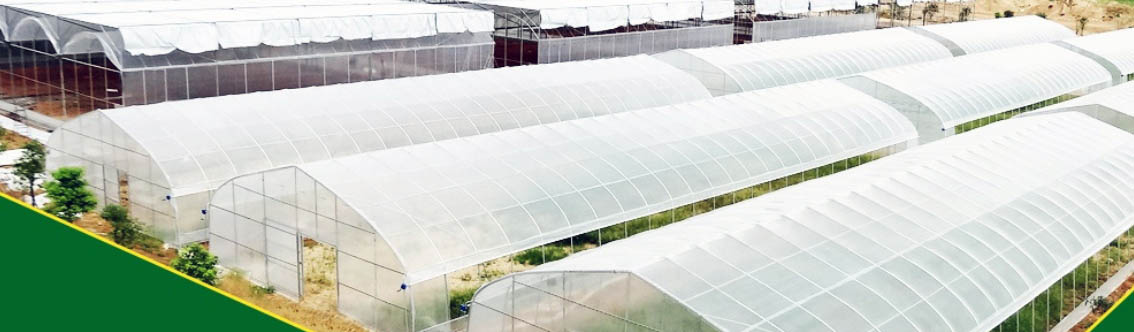
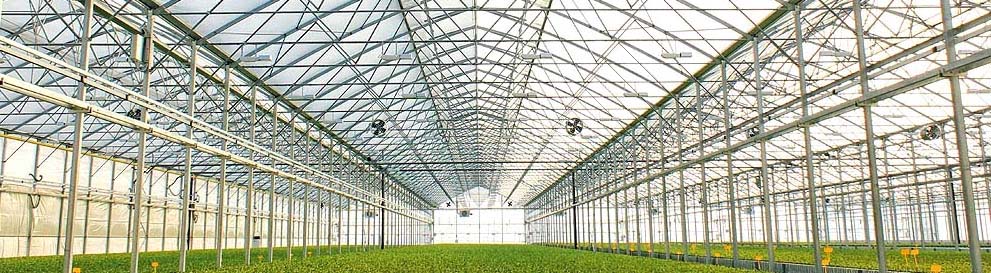
Film cuts the rain off, so in a polytunnel the crop drinks only what the tap delivers and every litre is planned and counted, so the pipework is part of how the house works. A polytunnel - also written as a tunnel greenhouse, hoop house or high tunnel - is a tunnel of polyethylene, usually semi-circular, square or elongated in shape; solar radiation warms the plants, the soil and the frame faster than the heat can escape, and temperature, humidity and ventilation are set by equipment fixed inside. It suits complex topography and almost any climate. This model is a large commercial house in film on an arch roof: 275 gsm zinc coated tube, non-welded, hot dip galvanized to avoid rust, gable span 5 m to 10 m, total height 3 m or 4 m.
Drip Lines and the Main Pipe Run:
Keep the water close to the head and the pressure even at the far end. A sub-main runs along the head of the house and laterals branch from it to each bed or row, so the run inside stays short; beds that want the same water go on one valve, so a section can be shut off without starving another. In these long houses - 6 m x 40 m, 8 m x 30 m and 9.6 m x 16 m with top ventilation, in multiples of 4 metres - run the sub-main along the long side, laterals across the short span. Drip wets the root zone instead of the leaf, and under film that matters more, because the air is already humid and a wet leaf dries slowly.
How many lines a bed takes follows the bed: one line down each row, or two across a wide bed, spaced by the row spacing and the soil. Check the pressure at the end of the run, because it falls from the head to the last outlet and the last row suffers first. Where that fall is too large, split the house into two blocks fed from the same head, or increase the sub-main rather than the lateral. Keep a flush valve at the end of each line, and lift or roll the lines when the ground is worked.
The Head Unit, the Filter and the Fertilizer Injector:
The head is where the water enters, and it is worth building properly because everything downstream depends on it: supply and meter, filter, pressure regulator, block valves and the fertilizer injector. Put it at the gable beside the door unit, reachable for checking and close enough to the beds that the pipe is short. It is also the part that freezes first, so drain or protect it in winter.
The filter protects the drippers, and a filter never flushed is the commonest reason a line stops delivering evenly. The injector mixes fertilizer into the flow before the block valves so every line receives the same strength, and a non-return valve stops the mix backing up into the supply. Run each zone in three steps - clean water, then the fertilizer, then clean water to flush - so the lines are not left full of nutrient, which feeds slime inside the pipe. Judge the strength against a soil or water test, not a figure from a bag. The equipment is our greenhouse irrigation and fertilizing systems, with the lines described under drip line hardware, laterals and emitters.
Water and iron need managing together, because a leaking joint keeps the fixtures wet and a wet fixture rusts. Check the fixture connections as a routine, re-tighten a loose wedge at once, patch a ruptured film promptly, close the vents and step up the pressure lamination line when it blows, clear snow, and brace the centre tube against the arch with stays in heavy weather. A lost fixture is re-ordered by its part name code, so keep the record of names and purchase dates, and store spares dry and ventilated.
Humidity - the Side Effect of Watering Under Film:
Water in a closed house raises the humidity, and still air under film lets a wet leaf stay wet. Every watering adds vapour to the air the film has trapped, and a warmer house holds more of it. Three things follow: leaf disease that needs a wet leaf, botrytis and downy mildew among them, strikes when foliage stays wet into the evening; condensation forms under the film and drips back onto the crop; and a saturated root zone keeps the air humid, so overwatering and damp air are one fault seen twice.
What removes the vapour, in order: water the root zone instead of the leaf, so a drip line beats a hose played over the tops; water early so the house has the day to dry; and ventilate, which here is by side-wall openings covered by insect nets and closed by roll-up curtains, manual or electric. Open the curtain in steps, more carefully in cold weather, because the air that leaves takes heat with it. Keep the paths drained, and avoid late-evening watering.
Winter and Summer: Two Watering Rhythms:
In winter growth is slow and the house is shut for longer, so the crop uses far less water and the risk reverses: cold, saturated soil does more damage than a dry spell. Water less often, in the morning, on the days the house will be aired, and keep the bed moist rather than wet. Cold water straight from a surface tap is a shock to a root zone that is already cool, so a tank or a buried main is gentler.
In summer the house heats quickly and a missed watering costs growth that is never recovered. Water more often and earlier, and judge the need at root depth rather than at the surface, which dries long before the soil below it. If one run cannot keep up, split it in two, and cut the demand with ventilation and shading rather than with more water. Under drip the temptation is a little and often, which keeps the roots shallow; a heavier watering less often pushes them deeper. Read the schedule from the crop and the soil, not from a date.
The frame that carries all of this is the tunnel greenhouse range, built to the customer's own site, with fittings in the greenhouse equipment range. Snow and wind loads are 0.35 kN/m2 each and the frame takes wind up to 90-100 km per hour; the house ships as an export package, a do-it-yourself kit with an installation manual and CD, well engineered with test reports, an optional door unit, and the cover is film in 0.08 mm, 0.12 mm or 0.15 mm, single or double layer, held with aluminium clips. Design, material and construction sit under one quality control system with 360 degree control, each house is sized to the site, the aim is to lift the productivity of the customer's own site, and we carry above 35 years of supply. Call +86 191 5068 3942 or send an E-mail to sales@cngreenhouses.com. Watering practice for protected crops is published by the NGMA, and glasshouse and tunnel news by HortWeek.
Frequently Asked Questions:
Q: Do I really need irrigation in a polytunnel, or can I just use a hose?
A: You can, but the house is shut and the air is still, so watering over the top wets the leaf and raises the humidity. A drip line puts the same water at the root zone with less vapour.
Q: Why do my drip lines stop delivering evenly?
A: Almost always the filter, then the emitters. Flush the filter on a routine, open the flush valve at the end of each line, and finish every feed with clean water.
Q: Should I water less in a polytunnel in winter?
A: Yes. Growth is slow and the house is shut for longer, so the crop uses far less water, and cold saturated soil is the greater risk. Water less often, in the morning, on days the house will be aired.
Q: Why is the house so humid after watering?
A: The film traps the vapour and the still air lets a wet leaf stay wet. Water the root zone rather than the leaf, water early, and open the roll-up curtains in steps.
Q: Where should the fertilizer injector be fitted?
A: At the head, after the filter and before the block valves, with a non-return valve on the supply side, so every line gets the same mix. Flush with clean water after each feed.
Q: What spans, heights and film does this tunnel come in?
A: 6 m x 40 m, 8 m x 30 m and 9.6 m x 16 m with top ventilation, in multiples of 4 metres; gable span 5 to 10 m; total height 3 or 4 m. Cover film 0.08 mm, 0.12 mm or 0.15 mm, single or double layer, held with aluminium clips.
 Deutsch
 Español
 Français
 Italiano
 Português
 日本の
 한국어
 العربية
 български
 hrvatski
 česky
 Dansk
 Nederlands
 suomi
 Ελληνικά
 हिन्दी
 norsk
 Polski
 Română
 русский
 Svenska