- Commercial Greenhouse
- Film Greenhouse
- PC Greenhouse
- Glass Greenhouse
- Tunnel Greenhouse
- Scientific Research Greenhouse
- Vegetable Greenhouse
- Flower Greenhouse
- Multi-span Greenhouse
- Sawtooth Greenhouse
- Greenhouse Equipments
- Greenhouse Accessories
- Hot Dip Galvanized Pipe
- Irrigation System
- Hydroponics System
- Planting Tools
- Planting technology
Tel: +86 191 5068 3942
Fax:
Mobile: +86 191 5068 3942
Contact: Alina
E-mail: sales@cngreenhouses.com
SKYPE:

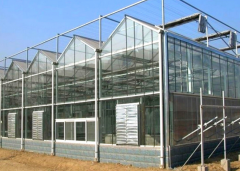

Glass Greenhouse - Roof Vents, Shading and Cooling
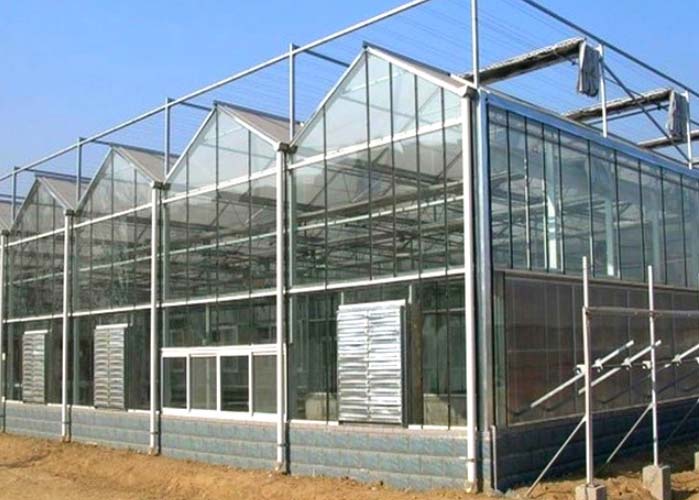
Glass greenhouse with roof and side vents, external shading and wet curtain cooling, on a hot dip galvanized frame with 4-5mm glass cover.
.
TEL:+86 191 5068 3942
- Features


Basic Information:
Type: gable roof multi-span glass greenhouse | Cover: 4 mm or 5 mm float glass, or 5 mm tempered glass | Light transmittance: above 90%
Frame: hot dip galvanized steel pipe | Gable spans: 8 m to 10.8 m | Total height: 4 m to 5.3 m | Wind and snow load: 0.35 kN/m2
Ventilation - Roof and Side Vents:
A glass house holds heat the way no other covering does, so ventilation is not an accessory on this building - it is part of the structure. Roof vents run along the ridge of each bay and side wall vents sit above the crop line. They are opened by a rack and pinion drive, mechanically or electrically, and a long run of house can be aired from a few control points rather than window by window. The roof vents are the ones that matter most: hot air leaves through the ridge under its own pressure, and the side vents feed cooler air in behind it. Get that combination right and the house needs far less forced cooling on an average summer day.Shading - External and Internal:
Shading is the cheapest degree of cooling there is, because it stops the heat before it enters the house rather than trying to remove it afterwards. An external screen is mounted above the roof and drawn across in the middle of the day; you can see one retracted along the ridge in the photo above. An internal screen runs under the roof inside the house and is used to cut direct sun on the crop while holding some warmth in on a cold night. On a bright site the two are usually specified together, and the external screen carries most of the load. The screen is drawn by a rack and pinion or cable drive, and the fabric is chosen for the shade percentage the crop needs - a seedling house and a flowering house on the same site rarely want the same figure.Cooling and Heating:
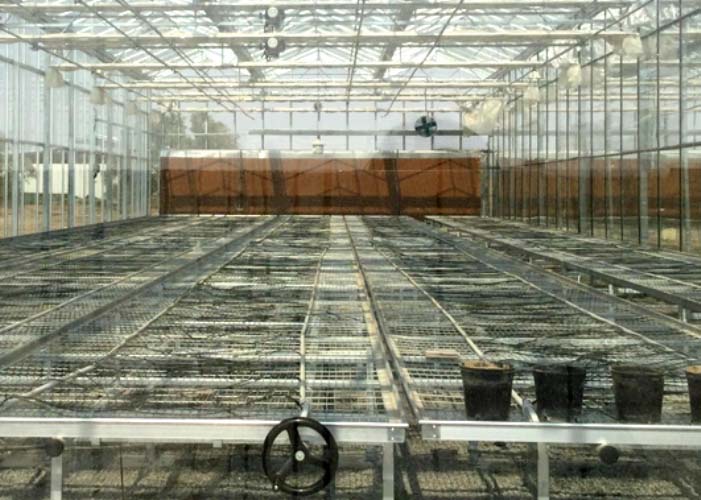
Where shading and roof vents are not enough, a wet curtain and fan system is added: the pad is fitted in one end wall and the fans in the opposite one, and the temperature inside drops by 4 to 12 degrees Celsius depending on how dry the outside air is. In winter the same house needs heat, because glass gives up warmth faster than a hollow PC sheet or a double layer of film - that is the price of the light it passes. Heating is normally sized for the local winter rather than for the cover, and it is quoted with the structure so that the pipe runs are planned before the frame is drilled. Ventilation, shading, cooling and greenhouse irrigation systems are all supplied with the house rather than retrofitted afterwards.Frame, Cover and Layout:
The frame is hot dip galvanized steel pipe, cut and drilled in our own factory before packing, and the glass is held in purpose-made aluminium profiles on the roof, the sides and the end walls. Gable spans run from 8 m to 10.8 m with a total structure height of 4 m to 5.3 m, so the house can be laid out around the benches, the pipe runs and the machinery you plan to use. Because the building is assembled from standard bays it also suits a site that is not perfectly flat, which a cast structure does not. You can compare it against the polycarbonate sheet greenhouses on the same span, or look through the glass house models and the full commercial greenhouse range to see where glass sits against the other coverings.Shipping, Payment and Ordering:
Normal shipping time is 4 to 6 weeks after receipt of order, plus transit from the factory. 30% of the basic greenhouse price is charged on receipt of order and the balance before shipment. Tell us the span and length you need, the crop you plan to grow and your local conditions - summer peak temperature, winter minimum, snow load and wind speed - and we will confirm the ventilation and shading specification, the layout and a quotation. Read more about our greenhouse factory, call +86 191 5068 3942 or send an E-mail to sales@cngreenhouses.com.Frequently Asked Questions:
Q: Do I need both roof vents and side vents?
A: Yes, and they do different jobs. Hot air leaves through the ridge vents under its own pressure while the side vents feed cooler air in behind it. With that combination working, the house needs far less forced cooling on an average summer day.
Q: What is the difference between external and internal shading?
A: An external screen sits above the roof and stops the heat before it enters, which makes it the more effective of the two by day. An internal screen runs inside under the roof, cuts direct sun on the crop and helps hold warmth in at night. On a bright site both are normally specified.
Q: How much can the cooling system reduce the temperature?
A: With a wet curtain at one end and fans at the other, the temperature inside drops by 4 to 12 degrees Celsius, depending mainly on how dry the outside air is. In a humid climate the effect is smaller, which is why shading carries more of the load there.
Q: Why does a glass house need heating when a film house does not?
A: Glass has the lowest heat insulation of our three coverings, so it gives up warmth faster than a hollow PC sheet or a double layer of film. On a cold site that is handled with a heating system sized for the location rather than by the cover.
Q: What are the standard span and height?
A: Gable spans run from 8 m to 10.8 m with a total structure height of 4 m to 5.3 m. The layout is then set around your benches, pipe runs and equipment rather than the other way round.
Q: What information do you need to quote?
A: The span and length you want, the crop you plan to grow and your local conditions - summer peak temperature, winter minimum, snow load and wind speed. With that we can confirm the ventilation and shading specification and send a quotation.
Note: If you're interested in the product, please submit your requirements and contacts and then we will contact you in two days. We promise that all your informations won't be leaked to anyone.
 Deutsch
 Español
 Français
 Italiano
 Português
 日本の
日本の
 한국어
한국어
 العربية
 български
 hrvatski
 česky
česky
 Dansk
Dansk
 Nederlands
 suomi
suomi
 Ελληνικά
 हिन्दी
 norsk
norsk
 Polski
 Română
 русский
 Svenska