
- Commercial Greenhouse
- Film Greenhouse
- PC Greenhouse
- Glass Greenhouse
- Tunnel Greenhouse
- Scientific Research Greenhouse
- Vegetable Greenhouse
- Flower Greenhouse
- Multi-span Greenhouse
- Sawtooth Greenhouse
- Greenhouse Equipments
- Greenhouse Accessories
- Hot Dip Galvanized Pipe
- Irrigation System
- Hydroponics System
- Planting Tools
- Planting technology
Tel: +86 191 5068 3942
Fax:
Mobile: +86 191 5068 3942
Contact: Alina
E-mail: sales@cngreenhouses.com
SKYPE:


Sawtooth Greenhouse Spares and After-Sales Support
Greenhouse clips, film, nets and operator parts for a sawtooth house: what to hold as spares, how intervals are set, and what the warranty covers.
.
TEL:+86 191 5068 3942
- Features


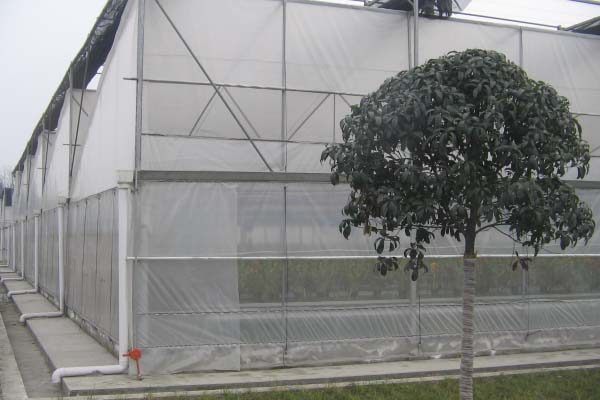
This page is about everything the house will need a second time. The building itself stays as the sheet describes it: 80 m by 20 m, 1,600 square metres under a single layer of film, carried on a hot dip galvanized steel pipe frame, held by a special grooved channel with aluminum clips, and vented through sidewall openings covered by insect nets and roll-up curtains. None of that changes here. What changes is the view: instead of the first delivery, this page takes the second, third and tenth order — the small parts, the soft parts and the moving parts that a working house consumes, and the warranty and support that stand behind the parts that are not meant to be consumed at all. What arrives with the house in the first place is a different question and is answered on our order contents page.
The Line Between What Arrives and What You Re-Order
The house is packed in three groups — metal structures, covering system, and install accessories — and it is worth being clear that this is the first supply, not the spare supply. A spare, on this page, means a part that is ordered after the house is standing, for one of three reasons: because it is consumed by the covering itself, because it wears against its own movement, or because it fails and stops a system working.
- Consumed by the covering: the aluminum clips that hold the film, and the film itself. These have no separate life of their own; they are replaced when the covering is.
- Worn by movement or by light: the insect net panels in the sidewall openings and the roll-up curtain film that moves against them every time the house is vented.
- Failing and stopping something: the fastener sets on the frame, and the parts of the curtain operator, whether it is the manual gear or the electric motor and its controls.
The three classes behave differently enough that they deserve separate decisions, and putting a part in the wrong class is how sites end up with a shelf full of the wrong spares and none of the right ones.
Spares Worth Holding on the Shelf
Held spares should be the parts whose absence stops the house, not the parts that are cheapest to buy. On this house the list is short and it follows the three classes above.
| Spare held | What it serves | Why it is held |
| Aluminum clips | The grooved channel that holds the film | The smallest part with the largest consequence. One clip lost on a ridge line is where the wind begins to work. |
| Polyethylene film, 0.12 mm and 0.15 mm | The whole roof and the side walls | The covering is a consumable by design, so the spare is not a roll in a store but the next covering campaign. |
| Insect net panels | The sidewall openings | Cut and light-exposed, a net is replaced as a panel rather than patched, so the panel is the unit to hold. |
| Roll-up curtain film | Sidewall ventilation | It unrolls and rolls every time the house is vented, so it is consumed by use rather than by weather alone. |
| Fastener and bolt sets in the frame sizes | Every joint on the structure | A re-tightening pass that finds a thread which no longer holds cannot finish without the right fastener to hand. |
| Operator parts, manual or electric | The opening gear on the roll-up curtains | The operator is the only part of the ventilation that moves, and when it stops, a whole sidewall stops with it. |
Two of those spares are worth ordering with the house rather than later: the clips and the film. The clips are seated along the channel, so their size and profile belong to the channel fitted to this house, and the film is the same single layer run into that channel and held by those clips — how the covering and its fixing work together is set out on our film choice and fixing page. A spare that does not match the channel is not a spare.
How a Replacement Interval Is Set When the Sheet Gives No Figure
The sheet does not publish an interval for any of the parts above, and putting a number on this page would be worse than leaving it blank: a clip on an exposed coastal ridge and a clip under a sheltered inland eave do not retire on the same date, and neither does the film they hold. What can be said honestly is that each spare is consumed by an event, and the event is the thing to plan around.
- The clips and the film are consumed by one event, the covering campaign. They are ordered, fitted and replaced together, so the interval for both is the interval between covering campaigns on that roof.
- The insect net is consumed by loss of tension and by light. It is judged at the opening it serves, not at a store shelf, and it is replaced when the net no longer closes the gap it was fitted to close.
- The roll-up curtain film is consumed by use. A sidewall vented twice a day wears its curtain far faster than one opened twice a season, so the interval follows the operating routine rather than the calendar.
- Fasteners are consumed by a failed thread, and the interval is therefore set by the re-tightening pass that finds it.
- Operator parts are consumed by failure. The spares worth holding are the ones that restore a whole sidewall, so the list is drawn from the parts that stop the drive rather than from the parts that are easy to carry.
The practical way to turn all of that into a schedule is a service record, kept by bay and by date, so that the second order is placed from evidence instead of from a guess. That record is also what makes a warranty conversation possible later, because it shows what was replaced, when and why. Keeping that kind of record is ordinary practice in protected cultivation rather than a habit invented for this house; the FAO publishes technical guidance on greenhouse crop production that takes the same line. What a service record cannot set is the date of first maintenance on the frame itself, and that one is written down — it is a corrosion figure taken from a standard rather than from the site's own history, and it is the next subject on this page. The routine checks that the record is built from, from the weekly walk-through to the snow and the fasteners, are gathered on our maintenance and film replacement page.
The Frame, the Coating and the One Date That Is Written Down
The frame is hot dip galvanized steel pipe, and the coating is the only part of this house whose service life can be read off a table rather than off a service record. The reading runs through four bands of air quality, quoted as the time to first maintenance: heavy industrial air, class C4, about 13 years; urban conditions, class C3, about 30 years; coastal conditions, class C5, about 50 years; and clean suburban conditions, class C2, 50 years or more without repair. Those bands mean nothing on their own, because the figure that produces them is the coating thickness. The frame tube on this house carries a specified average coating of 70 to 85 micrometres of zinc, read under BS EN ISO 1461 and selected against BS EN ISO 14713-1, and it is that thickness placed next to the corrosivity class of your site under ISO 9223 that puts a project on one of the four lines.
This matters on a spares and support page for a specific reason. A claim against a structural frame is almost never a claim about the steel; it is a claim about coating damage, and coating damage has causes that are visible long before the claim: a cut end left untreated, a drilled hole with the swarf still on it, a member dragged along the ground during erection, a scratch from a machine working too close to a column. Those are the things a service record should note at the time, in the same way it notes a replaced clip. Treat them when they happen and the four bands above describe your house; leave them and the frame's first maintenance arrives at a date no table predicted. Every cut, drilled hole and scrape made while the house is being built, or made later by a machine in the lane beside it, is treated rather than noted and forgotten.
What the Warranty Covers, and What a Consumable Never Does
The house comes with a long-term structural warranty, and it is worth being exact about where that promise starts and stops, because a grown-up after-sales arrangement is more useful than a generous-sounding one.
- The structural frame is what the warranty is written around. It is hot dip galvanized steel pipe, built to the CE standard, and it is not a consumable — it is the part of the house that is expected to outlast several coverings.
- The covering is a consumable and is treated as one. A single layer of polyethylene film at 0.12 mm or 0.15 mm is replaced as a campaign, and the aluminum clips are replaced with it. Reporting either as a defect would be a misunderstanding of how the house is designed.
- The insect nets and the roll-up curtain film are wear parts. They work against their own movement and against daylight, and they are designed to be replaced.
- The added systems — cooling and heating, irrigation, ventilation, fertilization, shading and benches — are quoted on request, and each one brings its own support arrangement with it. The order should say which of them are included and on what terms, so that a fault on an irrigation valve is never argued about as though it were part of the frame.
One honest gap is worth naming. This sheet does not publish a response time for after-sales support, and a figure invented on a web page would be worthless to you. What is firm is that where it is wanted our engineers travel to the site to guide the installation, and that the same factory stands behind the house afterwards. Response terms, the handling of a spare-part order and the way a claim is raised should all be agreed and written into the order before it is placed, so that nobody is negotiating them for the first time in the middle of a failed curtain drive.
Keeping the House Serviceable Between Orders
Three habits decide how much of this list you actually need. The first is access: a covering campaign, a net replacement and a curtain swap all need somebody at the roof line and along the sidewall, so the perimeter and the opening band are kept clear rather than used as storage. The second is identification: spares are labelled by part and by the system they belong to, not by the bay they came out of, because an operator replaced with a different make quietly makes the whole spare list obsolete. The third is to have the spare list confirmed at handover, while the people who built the house are still on the ground — the part references for the operator and for any added system belong in the same file as the service record. How other commercial growers run replacement cycles is a standing subject in the trade press, and Greenhouse Grower is one publication that follows it.
The house comes from a factory with above 35 years in greenhouse manufacture, trading as Bozong, packed as an export package and shipped to markets that are global, and the covering production that feeds it runs at 10,000 square metres a month — which is why a re-order of film or clips is normally a short lead rather than a long wait, provided the part references are known.
Frequently Asked Questions
Q: Which spare parts should be kept for this sawtooth greenhouse?
A: Six things cover almost every interruption. Aluminum clips for the grooved channel; polyethylene film in the same single layer thicknesses used on the house, at 0.12 mm and 0.15 mm; insect net panels for the sidewall openings; roll-up curtain film; fastener and bolt sets in the frame sizes; and operator parts for the curtain gear, manual or electric. The clips and the film are worth ordering with the house, because they must match the channel that was fitted.
A: Six things cover almost every interruption. Aluminum clips for the grooved channel; polyethylene film in the same single layer thicknesses used on the house, at 0.12 mm and 0.15 mm; insect net panels for the sidewall openings; roll-up curtain film; fastener and bolt sets in the frame sizes; and operator parts for the curtain gear, manual or electric. The clips and the film are worth ordering with the house, because they must match the channel that was fitted.
Q: How are replacement intervals set if the sheet gives no figures?
A: By the event that consumes each part rather than by the calendar. The clips and the film are consumed by one event, the covering campaign, and are replaced together. The insect net is judged at the opening it serves and is replaced when it stops closing the gap it was fitted for. The roll-up curtain film is consumed by use, so it depends on how often the sidewall is vented. Fasteners are replaced when a re-tightening pass finds a thread that no longer holds, and operator parts when they fail. A service record kept by bay and by date is what turns those events into a schedule.
A: By the event that consumes each part rather than by the calendar. The clips and the film are consumed by one event, the covering campaign, and are replaced together. The insect net is judged at the opening it serves and is replaced when it stops closing the gap it was fitted for. The roll-up curtain film is consumed by use, so it depends on how often the sidewall is vented. Fasteners are replaced when a re-tightening pass finds a thread that no longer holds, and operator parts when they fail. A service record kept by bay and by date is what turns those events into a schedule.
Q: Does the warranty cover the film, the nets and the clips?
A: No, and it is better to be clear about that. The long-term structural warranty is written around the hot dip galvanized steel pipe frame, which is built to the CE standard and is not a consumable. The single layer film, the aluminum clips that hold it, the insect nets and the roll-up curtain film are all designed to be replaced, the clips and the film together at each covering campaign. The added systems carry their own support arrangement, which is one reason the order should list them explicitly.
A: No, and it is better to be clear about that. The long-term structural warranty is written around the hot dip galvanized steel pipe frame, which is built to the CE standard and is not a consumable. The single layer film, the aluminum clips that hold it, the insect nets and the roll-up curtain film are all designed to be replaced, the clips and the film together at each covering campaign. The added systems carry their own support arrangement, which is one reason the order should list them explicitly.
Q: How long does the galvanized frame go before first maintenance?
A: It follows the air the coating stands in. Under ISO 9223 a galvanized coating of this kind gives about 13 years to first maintenance in heavy industrial air, class C4; about 30 years in urban conditions, class C3; about 50 years in coastal conditions, class C5; and 50 years or more without repair in clean suburban conditions, class C2. The frame tube carries a specified average coating of 70 to 85 micrometres of zinc under BS EN ISO 1461, selected against BS EN ISO 14713-1. Cuts, drilled holes and scrapes made during the build or later by machinery are treated when they occur, because those are where the coating is consumed first.
A: It follows the air the coating stands in. Under ISO 9223 a galvanized coating of this kind gives about 13 years to first maintenance in heavy industrial air, class C4; about 30 years in urban conditions, class C3; about 50 years in coastal conditions, class C5; and 50 years or more without repair in clean suburban conditions, class C2. The frame tube carries a specified average coating of 70 to 85 micrometres of zinc under BS EN ISO 1461, selected against BS EN ISO 14713-1. Cuts, drilled holes and scrapes made during the build or later by machinery are treated when they occur, because those are where the coating is consumed first.
Q: What after-sales support is offered, and how fast?
A: Where it is wanted, our engineers travel to the site to guide the installation, and the factory stands behind the house afterwards. This sheet does not publish a response time, and we will not invent one here. The useful step is to agree the terms that matter for your site before the order is placed: how a spare-part order is raised, how a claim is reported, who is contacted, and what is expected on site when an engineer travels out. Put them in the order and they stop being an argument later.
A: Where it is wanted, our engineers travel to the site to guide the installation, and the factory stands behind the house afterwards. This sheet does not publish a response time, and we will not invent one here. The useful step is to agree the terms that matter for your site before the order is placed: how a spare-part order is raised, how a claim is reported, who is contacted, and what is expected on site when an engineer travels out. Put them in the order and they stop being an argument later.
Q: Where does the first delivery end and the spare list begin?
A: The first delivery is the three packed groups — metal structures, covering system and install accessories. Everything on this page is a later order, apart from the clips and the film, which are worth adding to the first order precisely because they have to match the grooved channel and the covering it holds. The full range of sawtooth houses, and the parts pages that go with them, are listed on our sawtooth greenhouse range page.
A: The first delivery is the three packed groups — metal structures, covering system and install accessories. Everything on this page is a later order, apart from the clips and the film, which are worth adding to the first order precisely because they have to match the grooved channel and the covering it holds. The full range of sawtooth houses, and the parts pages that go with them, are listed on our sawtooth greenhouse range page.
Contact
To go through the spare list for your house, confirm a part reference or agree the support terms in an order, call us on +86 191 5068 3942 or write to sales@cngreenhouses.com.
Note: If you're interested in the product, please submit your requirements and contacts and then we will contact you in two days. We promise that all your informations won't be leaked to anyone.
 Deutsch
 Español
 Français
 Italiano
 Português
 日本の
 한국어
 العربية
 български
 hrvatski
 česky
 Dansk
 Nederlands
 suomi
 Ελληνικά
 हिन्दी
 norsk
 Polski
 Română
 русский
 Svenska