- Commercial Greenhouse
- Film Greenhouse
- PC Greenhouse
- Glass Greenhouse
- Tunnel Greenhouse
- Scientific Research Greenhouse
- Vegetable Greenhouse
- Flower Greenhouse
- Multi-span Greenhouse
- Sawtooth Greenhouse
- Greenhouse Equipments
- Greenhouse Accessories
- Hot Dip Galvanized Pipe
- Irrigation System
- Hydroponics System
- Planting Tools
- Planting technology
Tel: +86 191 5068 3942
Fax:
Mobile: +86 191 5068 3942
Contact: Alina
E-mail: sales@cngreenhouses.com
SKYPE:


Commercial Glass Greenhouse - 15x30m, Research and Nursery
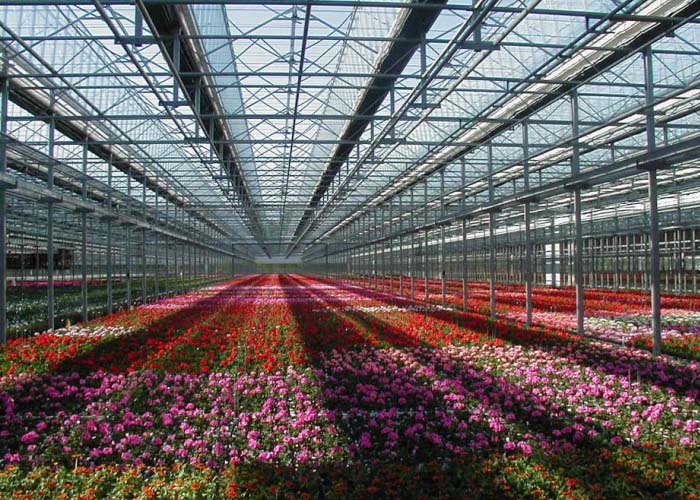
Commercial glass greenhouse, 15 x 30 m: HDG steel frame, 4-5mm float or 5mm tempered glass at over 90% light, for research, nurseries and hydroponics.
.
TEL:+86 191 5068 3942
- Features


Basic Information:
Size: 15 m x 30 m | Area: 450 square metres | Type: gable roof glass greenhouse | Cover: single layer glass
Glass: 4 mm or 5 mm float glass, or 5 mm tempered glass | Light transmittance: above 90%
Frame: hot dip galvanized steel pipe | Gable spans: 8 m to 10.8 m | Total height: 4 m to 5.3 m
Wind load: 0.35 kN/m2 | Snow load: 0.35 kN/m2 | Export markets: worldwide
What a Glass House Is Built From:
The frame is hot dip galvanized steel pipe, cut and drilled in our own factory before packing. The cover is single layer glass - 4 mm or 5 mm float glass, or 5 mm tempered glass where a stronger pane is wanted - held in purpose-made aluminium profiles rather than puttied into timber. Light transmittance stays above 90%, which is the highest of the three coverings we build with, and where the house is used for research or high-grade seedlings that figure is the one that matters most. Under normal service the glass keeps its clarity and its UV resistance for the long term, so the cover is not a part that gets replaced on a short cycle.Where Glass Works Best:
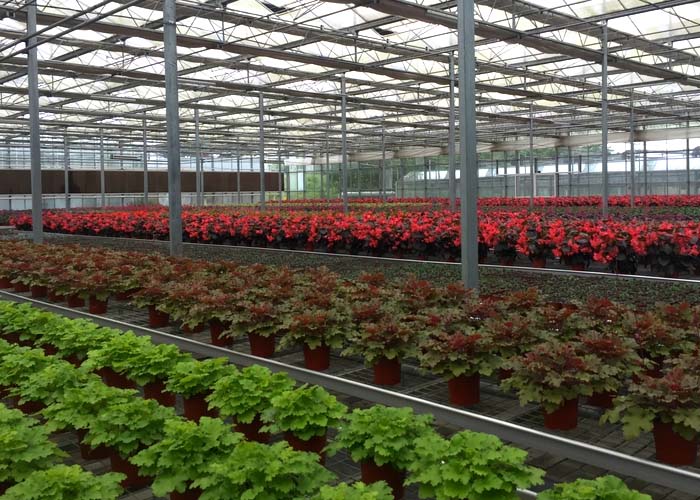
Glass houses are specified for scientific research, high-end seed nurseries and hydroponic production, and for display or visitor greenhouses where the room itself is part of the value. The reasons are the same in each case: the crop works under close to full daylight, the room can be kept clean and controlled, and the glazed walls give the house the appearance that buyers and visitors expect from a research or exhibition building. A glass house also suits an uneven site, because the structure is assembled from standard bays rather than cast in one piece. The span, the bay length and the height are set from the crop and the equipment you plan to fit, which is why we quote from a layout rather than from a catalogue size.The Honest Limits of a Glass House:
Glass does two things less well than the other coverings, and both affect the running cost. Its heat insulation is lower than a hollow PC sheet or a double layer of film, so in a cold region the house is normally specified together with a heating system sized for the site rather than relying on the cover. It is also the cover that asks the most of the installers: the panes are heavy, the glazing has to be set squarely, and a house put up badly will leak and lose heat for years. Neither point is a reason to avoid glass - it is the right cover for a research or nursery house - but both belong in the budget before you choose it. Where heat retention is the priority, the polycarbonate greenhouses we build are worth comparing on the same span.Coverings Side by Side:
Put the three coverings we build with next to each other and the choice usually comes down to what the crop needs most. Glass gives the highest light transmission and the cleanest room. Hollow PC sheet gives up a little light and returns better heat insulation, a lighter roof and a cover that will not shatter. Film is the cheapest to put up and is re-covered about every second season. A glass house for research or high-grade seedlings, a PC house where heat retention matters, and a film house for short-season production are all built on the same galvanized frame, so the comparison can be made on the same footprint instead of on price alone. You can look through the glass greenhouse models or start from the wider commercial greenhouse range to see them side by side.Shipping, Payment and Ordering:
Normal shipping time is 4 to 6 weeks after receipt of order, plus transit time from the factory; please allow for that when you plan a planting date. 30% of the basic greenhouse price is charged on receipt of order and the balance before shipment. Ventilation, shading, heating and greenhouse irrigation can all be quoted with the structure, and specifying them at the same time is cheaper than retrofitting. Tell us the span and length you need, the crop you plan to grow and your local conditions - winter temperature, snow load and wind speed - and we will confirm the layout and a quotation. Read more about our greenhouse factory, call +86 191 5068 3942 or send an E-mail to sales@cngreenhouses.com.Frequently Asked Questions:
Q: What is this glass greenhouse used for?
A: Scientific research, high-end seed nurseries, hydroponic production and display houses. The common factor is that the crop needs close to full daylight in a clean, controllable room, which is what glass gives better than any other covering.
Q: What glass is used and how much light gets through?
A: 4 mm or 5 mm float glass, or 5 mm tempered glass, held in aluminium profiles. Light transmittance stays above 90%, the highest of the three coverings we build with.
Q: What loads can the frame take?
A: The house is designed for a wind load and a snow load of 0.35 kN/m2 as standard. If your site sees heavier snow or higher wind speeds, tell us the figures and the frame is specified for your conditions rather than the standard.
Q: Is a glass house suitable for a cold climate?
A: Glass has lower heat insulation than PC sheet or double-layer film, so on a cold site the house is normally supplied with a heating system sized for the location. Where heat retention is the main concern, a PC sheet house on the same span is the better answer and we will say so.
Q: How long does the glass last?
A: Under normal service the glass keeps its clarity and UV resistance for the long term, so it is not a cover that is re-made every few seasons. What a glass house does need is to be glazed carefully in the first place, because a badly set pane will leak and lose heat for years.
Q: What is the delivery time and payment term?
A: Shipping is normally 4 to 6 weeks after receipt of order, plus transit from the factory. 30% of the basic greenhouse price is charged on receipt of order and the balance before shipment.
Note: If you're interested in the product, please submit your requirements and contacts and then we will contact you in two days. We promise that all your informations won't be leaked to anyone.
 Deutsch
 Español
 Français
 Italiano
 Português
 日本の
日本の
 한국어
한국어
 العربية
 български
 hrvatski
 česky
česky
 Dansk
Dansk
 Nederlands
 suomi
suomi
 Ελληνικά
 हिन्दी
 norsk
norsk
 Polski
 Română
 русский
 Svenska