
- Commercial Greenhouse
- Film Greenhouse
- PC Greenhouse
- Glass Greenhouse
- Tunnel Greenhouse
- Scientific Research Greenhouse
- Vegetable Greenhouse
- Flower Greenhouse
- Multi-span Greenhouse
- Sawtooth Greenhouse
- Greenhouse Equipments
- Greenhouse Accessories
- Hot Dip Galvanized Pipe
- Irrigation System
- Hydroponics System
- Planting Tools
- Planting technology
Tel: +86 191 5068 3942
Fax:
Mobile: +86 191 5068 3942
Contact: Alina
E-mail: sales@cngreenhouses.com
SKYPE:


Twin Wall Polycarbonate Greenhouse: Insulation and Frame
Twin wall polycarbonate greenhouse: how the air cavity holds heat, what the ribs do to stiffness, hail and fire behaviour, and where condensation goes.
.
TEL:+86 191 5068 3942
- Features


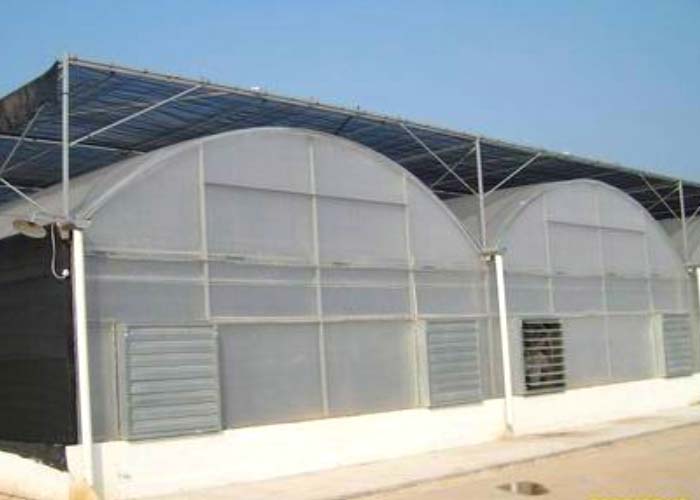
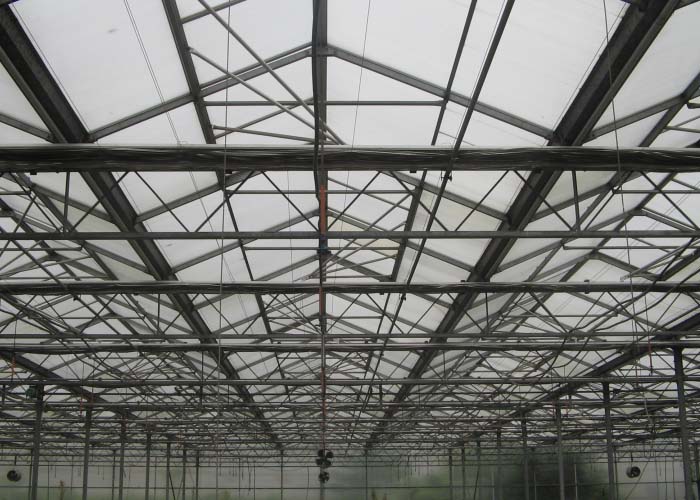
A twin wall polycarbonate sheet is two skins with a layer of still air held between them, and on a greenhouse that trapped air is the product. This house carries it as polycarbonate hollow sheet at 8 mm or 12 mm, set in top quality aluminium frames with a grooved channel that reinforces the panels against wind and weather, on a structure of hot dip galvanized pipe. The sections below stay with the twin wall construction itself: the cavity and heat loss, the ribs and the fixing, impact and fire, condensation, and why twin wall is the common commercial cover.
Two Skins, and the Layer of Air Between Them
A hollow sheet is not one pane of plastic: it is two faces joined by internal ribs that divide the space between them into closed flutes, so the panel carries a layer of air wherever it goes. Still air conducts heat poorly and cannot circulate in a closed flute, so both conduction and convection are interrupted. U value is the term for this side of a covering: heat lost per square metre of cover for each degree of temperature difference between inside and outside, so a lower figure holds warmth better. Two skins with an unmoving air layer sit well below a single skin of the same material, which is why this sheet is listed as good at keeping warm while still passing the light a crop needs. The 8 mm and 12 mm in the sheet name are the depth of that cavity, not the thickness of either face.
What the Ribs Do to Stiffness and to the Fixing
Ribs are not only a thermal device. Because they run in one direction across the panel, a twin wall sheet is stiff along the ribs and much more flexible across them, and that decides how it is fixed: the panel is carried so the ribs take the bending load between supports, and it is held in the grooved channel frame instead of being screwed through at every rib, so the sheet is not pierced along its length.
The frame is sized for the house, not the panel: spans of 6.4, 8, 9.6 and 10 metres are available, with a total structure height of 4 metres to 7.5 metres, and the pipe carrying roof and walls is hot dip galvanized steel to avoid rust. Sections and coating are described under hot dip galvanized steel pipe for greenhouse frames. Coatings are graded to the air at the site: under ISO 9223 a location is classed from class C2 in clean inland air through C3 and C4 to class C5 on a severe coast, and BS EN ISO 14713-1 sets the zinc coating against that class, with coating mass or thickness quoted to the exposure category.
Impact, Hail and Behaviour in a Fire
The second wall does not make the sheet brittle. The covering is stated to have a shock performance 200 times that of glass and 8 times that of an acrylic plate, the panels are described as not breaking or shattering during installation, and at very high temperature the material melts without spreading, with good flame retardancy. A ribbed panel also fails differently from a solid pane: a local impact loads the ribs around it, so damage tends to stay local. Against hail the 200 times figure is the material argument, while a real storm depends on stone size, sheet thickness and sheet age. The trade with glass is set out in the comparison between polycarbonate and glass covers.
Condensation, and Where the Water Ends Up
Better anti-condensation behaviour than a single layer covering is one of the properties listed for this sheet, and the reason sits in the same cavity. The outer skin follows the outside air and stays cold, the inner skin faces the warmer house, and the still air between them holds the two at different temperatures, so the inner face meets the moisture in the house air first. Water forms there as a film rather than large drops and runs down to the gutter instead of onto the crop.
Sealed flutes are what keep that behaviour. A twin wall panel has open channels at every cut end, and those openings are the one path water has into the body of the panel, so they are closed with the profile supplied for the sheet. That keeps the cavity dry and the insulation working, and keeps the panel free of damp-plastic staining. For seedling and research work, where plants sit close under the cover, it is the difference between a cover that drips on the benches and one that takes its water to the edge. No condensation rate, drip volume or gutter spacing is quoted for this model.
Why Twin Wall Is the Common Commercial Cover
Cover sheets come as a single skin, a twin wall panel, or a panel with three or more walls. A single skin has no cavity, so it adds no insulating layer. Adding walls goes the other way: each extra wall and rib set slows heat loss further, but adds material and weight and takes a little light out of the house. Twin wall is where a commercial house usually settles: an air layer across the whole cover at a weight and a light level the frame and the crop can both live with.
Which panel suits a project follows from how the house is used. This structure is bought for scientific research, seed nursery, flower growing and experimental bases, work where heat is retained on purpose. Thickness, wall count and the light a panel passes have to be read side by side, which is set out in reading a polycarbonate covering specification. The full range built on this construction is in the PC greenhouse range. Service life follows the panel and the site rather than a fixed figure, and is quoted with the specification.
The company has been building greenhouses for above 35 years, and its engineer department can travel to a foreign site to guide installation if the customer asks; customers also visit the factory each year. Independent references: the National Greenhouse Manufacturers Association publishes technical guidance for protected cultivation structures, and HortWeek reports on the commercial growing industry. To have a cover and frame matched to a site, send the span, the wall height, the climate and the crop to sales@cngreenhouses.com or call +86 191 5068 3942.

Frequently Asked Questions
Q: Why does a twin wall cover hold heat better than a single skin of the same plastic?
The two faces trap a layer of still air, which conducts heat poorly and cannot circulate in a closed flute, so conduction and convection are interrupted and the U value falls well below that of a single skin.
The two faces trap a layer of still air, which conducts heat poorly and cannot circulate in a closed flute, so conduction and convection are interrupted and the U value falls well below that of a single skin.
Q: How should the flutes and ribs of the panel be run on this house?
The ribs run one way and make the sheet stiff along them and flexible across them, so the panels are carried with the ribs taking the bending between supports and held in the grooved channel frame rather than pierced at every rib, so wind load stays on the profile.
The ribs run one way and make the sheet stiff along them and flexible across them, so the panels are carried with the ribs taking the bending between supports and held in the grooved channel frame rather than pierced at every rib, so wind load stays on the profile.
Q: What happens if water gets inside the air cavity?
Water in a flute carries heat straight across the panel, so the cover loses the insulation it was bought for and damp plastic stains inside. The cut ends of a twin wall sheet are open channels, so they are closed with the profile supplied for the sheet.
Water in a flute carries heat straight across the panel, so the cover loses the insulation it was bought for and damp plastic stains inside. The cut ends of a twin wall sheet are open channels, so they are closed with the profile supplied for the sheet.
Q: How much impact will the covering take before it breaks?
The material is stated at 200 times the shock performance of glass and 8 times that of an acrylic plate, and the panels are described as not breaking or shattering during installation. In a storm the result depends on stone size, sheet thickness and sheet age.
The material is stated at 200 times the shock performance of glass and 8 times that of an acrylic plate, and the panels are described as not breaking or shattering during installation. In a storm the result depends on stone size, sheet thickness and sheet age.
Q: Twin wall, or a panel with more walls?
More walls slow heat loss further but add weight and material and take a little light out of the house. Twin wall is the usual balance: a full air layer at a weight and light level the frame and the crop can accept.
More walls slow heat loss further but add weight and material and take a little light out of the house. Twin wall is the usual balance: a full air layer at a weight and light level the frame and the crop can accept.
Q: Who builds this house, and what is the cover specified as?
The cover is polycarbonate hollow sheet at 8 mm or 12 mm in aluminium frames with a grooved channel, on hot dip galvanized pipe, with spans of 6.4, 8, 9.6 or 10 metres and a structure height of 4 to 7.5 metres. The factory has been building greenhouses for above 35 years and can send engineers abroad to guide installation; write to sales@cngreenhouses.com or call +86 191 5068 3942.
The cover is polycarbonate hollow sheet at 8 mm or 12 mm in aluminium frames with a grooved channel, on hot dip galvanized pipe, with spans of 6.4, 8, 9.6 or 10 metres and a structure height of 4 to 7.5 metres. The factory has been building greenhouses for above 35 years and can send engineers abroad to guide installation; write to sales@cngreenhouses.com or call +86 191 5068 3942.
Note: If you're interested in the product, please submit your requirements and contacts and then we will contact you in two days. We promise that all your informations won't be leaked to anyone.
 Deutsch
 Español
 Français
 Italiano
 Português
 日本の
日本の
 한국어
한국어
 العربية
 български
 hrvatski
 česky
česky
 Dansk
Dansk
 Nederlands
 suomi
suomi
 Ελληνικά
 हिन्दी
 norsk
norsk
 Polski
 Română
 русский
 Svenska