- Commercial Greenhouse
- Film Greenhouse
- PC Greenhouse
- Glass Greenhouse
- Tunnel Greenhouse
- Scientific Research Greenhouse
- Vegetable Greenhouse
- Flower Greenhouse
- Multi-span Greenhouse
- Sawtooth Greenhouse
- Greenhouse Equipments
- Greenhouse Accessories
- Hot Dip Galvanized Pipe
- Irrigation System
- Hydroponics System
- Planting Tools
- Planting technology
Tel: +86 191 5068 3942
Fax:
Mobile: +86 191 5068 3942
Contact: Alina
E-mail: sales@cngreenhouses.com
SKYPE:


Greenhouse Multifunction Control: What One Unit Runs
A greenhouse multifunction control unit running several facilities from one set of readings: window opening, film roll-up, cooling and heating.
.
TEL:+86 191 5068 3942
- Features


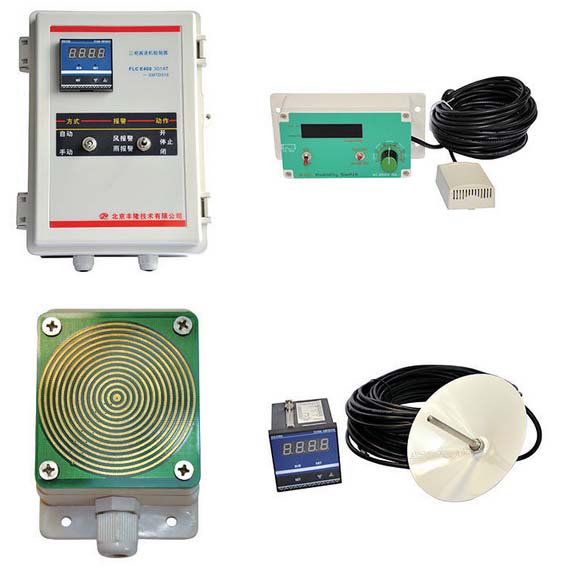
This is our multifunction automatic control system, the equipment that runs several facilities of one greenhouse from one set of readings. The description of the system names four parts - a weather station, sensors, a master control and a microcomputer - and four facilities that it drives: window opening, film roll-up, cooling and heating. What this page deals with is the multifunction side of it: what one unit is able to run, how the facilities are chosen, how the set values are agreed, and how the grower sees what the house is doing. It sits in our greenhouse accessories range and is quoted with the house rather than bolted on afterwards.
What Multifunction Means on This Equipment
The word is not decoration. On a single-function device one box does one job: an opener that pushes a vent, a thermostat that calls for heat, a timer that switches a pump. The multifunction unit is the other arrangement - one master control and one microcomputer standing behind several facilities of the same house, all of them reading the same weather station and the same sensors, and all of them held against the set parameters that belong to the house.
The practical consequence is that the facilities stop making their own separate decisions. Window opening and cooling are two ways of moving the same heat out of the same volume of air, and on a house where they answer to one control unit they are opened in a sensible order instead of working against each other. The same applies to film roll-up against heating, which are the two halves of the same day and night problem. How the sensing side of the loop works - the weather station and sensors reporting back, and the computer bringing a drifting reading back to its set value - is set out on the page that covers the sensing loop, because this page is about what the unit runs rather than about how it reads.
The Duties One Unit Takes On
The facilities named in the system description are four: window opening, film roll-up, cooling and heating. They cover the daily work of a film house - air out when the house is warm, air in when it is cold, cover open for the day, cover down at night - and they are the duties the control unit is bought for in the first place.
Around those four sits the rest of the house. A greenhouse is supplied with several supporting systems, and shading and irrigation are the two that a grower most often wants in the same place as the vents. Both are separate products in our range rather than parts of the control box: the shading side is covered by the shade net and shading systems we supply, and the water side by our irrigation systems. Because they are ordered together with the control unit, the list of facilities that one house will carry is written into the order rather than discovered on site when the control gear is switched on for the first time.
There is a useful way to read a control quotation: count the facilities. A house with vents only and a house with vents, a moving cover, a cooling system and heat are not the same control job, even though the box looks alike on both. Bring the full list to the enquiry - what moves, what opens, what heats and what waters - and the control unit is specified against that list instead of being sized for the smallest version and stretched later.
Set Values Rather Than Set Times
Everything the unit does hangs on the parameters the grower sets. The reading comes in from the weather station and the sensors, the computer compares it with the set value, and the facilities are driven until the environmental factors meet that value. The house is therefore held against conditions - a temperature band, a light level - not against the clock.
That difference shows up on the awkward days. A timer that opens the vents at nine in the morning opens them on a cold overcast morning too, and a thermostat that calls for heat at a fixed temperature knows nothing about the sun that is about to break through. A control unit working to set parameters reacts to what the sensors report, so the same house is handled differently on two days that start alike and turn out differently. It also means the set values are the part of the order worth thinking about twice: they are the numbers the crop lives with, and they are agreed with the buyer rather than being fixed inside the box at the factory.
For the same reason the set values belong to the house and to the crop, not to the equipment. Two houses of the same size can run different parameters because they are growing different things, and a house changing from one crop to another is a question of changing values rather than changing the control unit.
Seeing What the House Is Doing
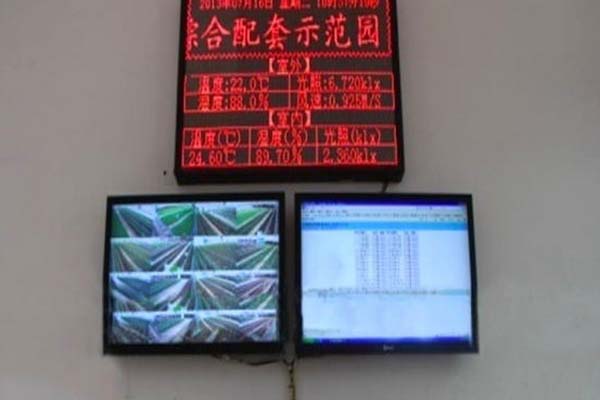
The second photograph on this page is what the same idea looks like installed: a display board carrying the house readings and the upper and lower limits beside them, with the monitoring screens below it. Automatic control does not mean a house nobody watches; it means the house is watched through readings. The board in that picture is the reason the readings matter - temperature, humidity and light level on show where the grower passes, and the limits visible next to them, so a number that has run to the edge of its band is seen before it becomes a crop problem.
Having the readings on display also changes what the manual work looks like. The person who used to walk the house testing whether it felt too warm becomes the person who reads what the sensors report, and the day-to-day work moves from operating the facilities to watching the values and adjusting them when the crop or the season changes. The system description for this unit names temperature and light intensity among the environmental factors it collects, and the readings a particular house carries follow the facilities it has. How growers work with readings of this kind through a season is followed by the horticulture trade press, for example HortWeek.
What to Settle Before the Order
Four things turn this from a catalogue item into a control system matched to a house. The first is the list of facilities the unit has to run, from the four named in the description out to shading, irrigation and anything else the house carries. The second is the set values the grower wants held, which follow the crop and the site rather than the equipment. The third is how the readings are to be watched - at the house, or on a display in an office or control room, which is what the second photograph shows. The fourth is whether the control is bought with a new house or matched to a house already standing, since a house already built fixes which facilities exist and therefore what the unit has to drive.
None of the four is a technical question for an engineer alone; three of them are decisions only the grower can make. That is why the control system is quoted alongside the greenhouse rather than chosen afterwards from a specification sheet, and why the same unit can be the right answer for two houses that share nothing but their size.
Where the Control System Fits in Our Range
The control unit is one of the supporting systems we make and supply, and it belongs with the structure rather than apart from it. Our greenhouse equipment range covers the systems that go inside a house, and the control unit is the part of that range that decides when the others run. On a project the frame, the covering, the cooling or heating equipment and the control are drawn as one set, so the drives the unit has to command and the facilities it has to watch are known before anything is packed. General background on the equipment side of the industry is published by the manufacturers body, the NGMA.
Why Us
We have produced greenhouses and their supporting systems for above 35 years, and the equipment on this page is made in our own factory rather than bought in and relabelled. Our engineer department reviews the facilities, the set values and the house they are going into with the buyer, and where a customer asks we send engineers abroad to guide the installation on site. Growers and project contractors visit the factory each year to see the frames and the equipment being made before they order. To have a control system quoted with your house, call +86 191 5068 3942 or write to sales@cngreenhouses.com with the list of facilities you want the unit to run.
Frequently Asked Questions:
Q: What does multifunction mean on this control system?
A: One master control and one microcomputer stand behind several facilities of the same house instead of one device being fitted per job. The facilities named in the system description are window opening, film roll-up, cooling and heating, and they all read the same weather station and sensors and work to the same set parameters.
A: One master control and one microcomputer stand behind several facilities of the same house instead of one device being fitted per job. The facilities named in the system description are window opening, film roll-up, cooling and heating, and they all read the same weather station and sensors and work to the same set parameters.
Q: Which duties can be put on one unit?
A: The four named in the description are window opening, film roll-up, cooling and heating. A house is also supplied with other supporting systems, and shading and irrigation are the two most often wanted in the same place as the vents, so the list of facilities a particular house will carry is agreed when the control is ordered.
A: The four named in the description are window opening, film roll-up, cooling and heating. A house is also supplied with other supporting systems, and shading and irrigation are the two most often wanted in the same place as the vents, so the list of facilities a particular house will carry is agreed when the control is ordered.
Q: Does the unit work on timers or on the readings?
A: On the readings. The weather station and sensors report the environmental factors, the computer compares them with the set parameters, and the facilities are driven until the values meet what was set. A cold overcast morning and a bright one therefore get a different response from the same house.
A: On the readings. The weather station and sensors report the environmental factors, the computer compares them with the set parameters, and the facilities are driven until the values meet what was set. A cold overcast morning and a bright one therefore get a different response from the same house.
Q: How do I see what the system is doing?
A: Through the readings. The photograph on this page shows a control room installation with the house readings and their upper and lower limits on a display board and the monitoring screens below it, so the numbers are visible to whoever is passing rather than locked inside the box.
A: Through the readings. The photograph on this page shows a control room installation with the house readings and their upper and lower limits on a display board and the monitoring screens below it, so the numbers are visible to whoever is passing rather than locked inside the box.
Q: Is the control unit bought with the greenhouse or on its own?
A: It is quoted together with the house, because the facilities the house carries decide what the unit has to drive. A house already standing can also be fitted with control, but then the existing facilities set the limits of what can be automated.
A: It is quoted together with the house, because the facilities the house carries decide what the unit has to drive. A house already standing can also be fitted with control, but then the existing facilities set the limits of what can be automated.
Q: What do you need from me to quote a control system?
A: Four things: the list of facilities the unit has to run, the set values you want held, how the readings are to be watched, and whether this is for a new house or one already built. Send those four and we can put a control system against your house instead of a generic box.
A: Four things: the list of facilities the unit has to run, the set values you want held, how the readings are to be watched, and whether this is for a new house or one already built. Send those four and we can put a control system against your house instead of a generic box.
Note: If you're interested in the product, please submit your requirements and contacts and then we will contact you in two days. We promise that all your informations won't be leaked to anyone.
 Deutsch
 Español
 Français
 Italiano
 Português
 日本の
 한국어
 العربية
 български
 hrvatski
 česky
 Dansk
 Nederlands
 suomi
 Ελληνικά
 हिन्दी
 norsk
 Polski
 Română
 русский
 Svenska