- Commercial Greenhouse
- Film Greenhouse
- PC Greenhouse
- Glass Greenhouse
- Tunnel Greenhouse
- Scientific Research Greenhouse
- Vegetable Greenhouse
- Flower Greenhouse
- Multi-span Greenhouse
- Sawtooth Greenhouse
- Greenhouse Equipments
- Greenhouse Accessories
- Hot Dip Galvanized Pipe
- Irrigation System
- Hydroponics System
- Planting Tools
- Planting technology
Tel: +86 191 5068 3942
Fax:
Mobile: +86 191 5068 3942
Contact: Alina
E-mail: sales@cngreenhouses.com
SKYPE:


- Features


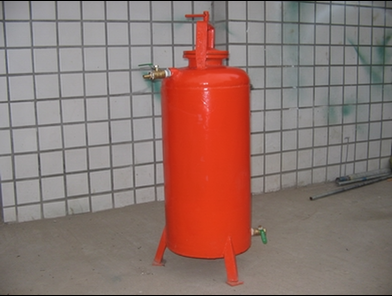
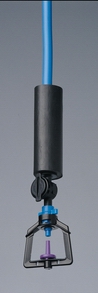
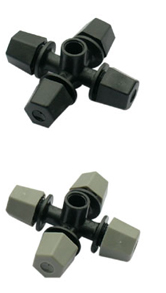
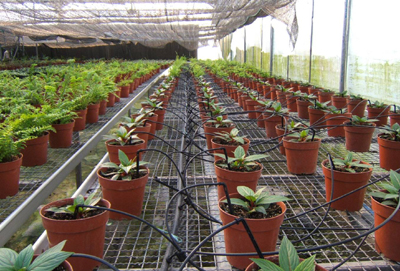
Watering and feeding are one job in a modern greenhouse, and the system that does it is built from a small number of parts working in sequence. The photos above show three of them: the fertilizer tank, the inline filter and the pipe fittings that join the runs. This page goes through what each part does, how the nutrient solution is mixed and dosed, and what has to be decided before a fertigation system is ordered.
What a fertigation system consists of
The system is put together from pumps, filters, a fertilizer tank, the control system, piping and an injector, and the job it performs is to deliver water and nutrients to the root zone in one pass rather than in two separate operations. That is what makes it worthwhile in a commercial house: labour is spent on one routine instead of two, every plant in a zone receives the same concentration at the same time, and the feed can be adjusted as the crop moves through its season.
Because the parts are in series, a weakness in any one of them limits the whole system. A pump that cannot hold pressure starves the far end of a run, a filter that is too coarse lets debris through to the emitters, and an injector that does not mix evenly gives some plants a stronger solution than others. Designing the system means deciding each of those parts against the others, not choosing them one at a time.
The water side: pump, filter and main line
The pump has to deliver the flow the house needs at the pressure the emitters are rated for, at the furthest point of the longest run rather than at the pump outlet. Where a house is divided into zones, the pump is sized for the largest zone it will serve rather than for the whole area at once, because zones are irrigated in turn.
Filtration is what protects everything downstream. A coarse screen on the main line catches what comes in from the source, and a finer filter before the emitters catches what the first stage misses; open water, a borehole and a stored reservoir each bring different debris, so the filter grade follows the water source rather than a habit. Filters are fitted with a pressure gauge or a differential reading, because a filter that is quietly blocking is the most common cause of an uneven crop.
The nutrient side: tank, injection and mixing
The fertilizer tank holds the concentrated stock solution, and the injector draws it into the water line at a set ratio. Where the tank is used with an injector of the venturi type, the flow of water through a narrowed section creates the suction that pulls the concentrate in, which is why the unit has to be matched to the pump's flow and pressure to work at all.
Mixing is where most problems are avoided or created. Stock solutions are prepared separately and added in a set order, because concentrated fertilizers react with each other and a solution mixed in the wrong sequence forms a precipitate that settles in the tank and blocks the emitters downstream. Strength is monitored by electrical conductivity and acidity rather than by eye, and the same tank is often used for other soluble inputs, which makes cleaning between products a routine rather than an occasional task.
Distribution: applying it evenly
Even application is the point of the whole system, and it depends on the emitters as much as on the mixing. Drip lines place water at the root zone with very little loss, micro sprinklers cover a bed, and overhead nozzles wet a wider area; whichever is chosen, the same nozzle type and the same pressure must hold across the zone, because a zone with mixed emitters is a zone with mixed growth.
Pressure differences along a run are the usual reason for uneven delivery, and they are managed by keeping the runs within a sensible length, by sizing the lateral pipe for the flow it carries, and by irrigating in sequence rather than opening every zone at once. Planting the same crop across a zone keeps the demand even as well: a zone that mixes a heavy feeder with a light one will always overfeed one of them.
Control, upkeep and what to specify
Control ranges from a simple timer to a unit that starts irrigation on accumulated light and stops it when the substrate has received enough. The more closely the schedule follows what the crop is actually using, the less water and nutrient is lost to the drain, and the smaller the swing in root zone conditions between one irrigation and the next.
Upkeep is short but not optional. Filters are backwashed or cleaned on a schedule, the tank is rinsed between different products, drip lines are flushed periodically, and the whole system is drained before a frost. Blocked emitters are found by walking the zone and looking for dry patches, which is why the filter and pressure readings are worth watching rather than replacing parts as they fail.
To have a fertigation system sized against the house and the water source, write to sales@cngreenhouses.com or call +86 191 5068 3942. With above 35 years in greenhouse engineering we supply greenhouse equipment systems as part of the house, and keep reference material on how moving sprinkler systems cover a whole bay in self-propelled boom irrigation and how the same water is handled in hydroponic drip systems.
Independent guidance on irrigation and water use in agriculture is published by the USDA, and current commercial reporting by HortiDaily.
Frequently Asked Questions about fertigation systems
Q1: What is the difference between irrigation and fertigation?
Irrigation supplies water; fertigation supplies water and nutrients together through the same lines. In a commercial house that means one routine instead of two, an even concentration across the zone, and a feed that can be adjusted as the crop develops.
Q2: How fine should the filter be?
Fine enough to protect the emitters and no finer than necessary, because a very fine filter blocks quickly and costs pressure. In practice the grade is set by the water source, with a coarse screen on the main line and a finer element ahead of the emitters.
Q3: Why does the stock solution form a precipitate?
Because concentrated fertilizers react with one another when they are mixed in the wrong order or at high strength. Tanks are filled with water first, the products are added in sequence, and each is allowed to dissolve before the next goes in, which keeps the solution clear and the lines open.
Q4: How is the feed strength controlled?
By measuring the solution rather than by judging it. Electrical conductivity shows the total strength of the nutrient solution and acidity shows how available the nutrients are, so the injector is set against those readings taken at the far end of a run, not at the tank.
Q5: Why is the far end of a zone drier than the near end?
Usually a pressure difference along the lateral, a partly blocked filter, or too many zones open at once. Run lengths, pipe sizes and zone sequencing are the three things that keep delivery even, and a pressure gauge on the filter shows the second of them immediately.
Q6: What maintenance does the system need?
Filter cleaning or backwashing on a schedule, rinsing the tank between different products, periodic flushing of the drip lines, and draining the system before frost. Emitter blockage is found by watching for dry patches, so the pressure readings are worth checking as part of the normal round.
 Deutsch
 Español
 Français
 Italiano
 Português
 日本の
日本の
 한국어
한국어
 العربية
 български
 hrvatski
 česky
česky
 Dansk
Dansk
 Nederlands
 suomi
suomi
 Ελληνικά
 हिन्दी
 norsk
norsk
 Polski
 Română
 русский
 Svenska