- Commercial Greenhouse
- Film Greenhouse
- PC Greenhouse
- Glass Greenhouse
- Tunnel Greenhouse
- Scientific Research Greenhouse
- Vegetable Greenhouse
- Flower Greenhouse
- Multi-span Greenhouse
- Sawtooth Greenhouse
- Greenhouse Equipments
- Greenhouse Accessories
- Hot Dip Galvanized Pipe
- Irrigation System
- Hydroponics System
- Planting Tools
- Planting technology
Tel: +86 191 5068 3942
Fax:
Mobile: +86 191 5068 3942
Contact: Alina
E-mail: sales@cngreenhouses.com
SKYPE:


- Features


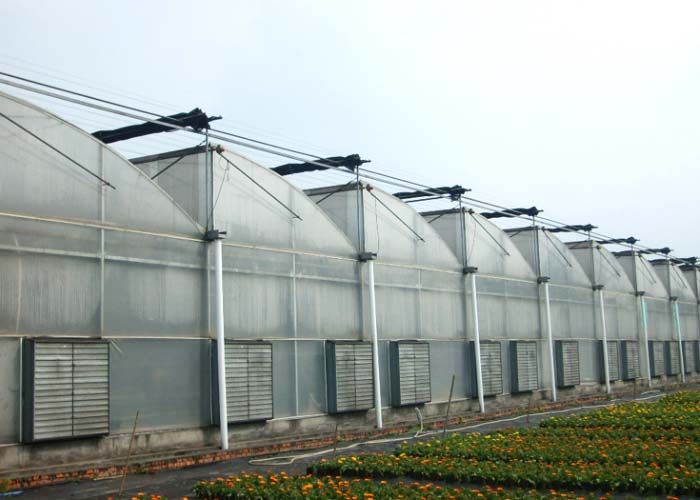
A vegetable PC greenhouse is not a single-season machine. Its skeleton, polycarbonate top, gutters and water supply work all year; the equipment shaping the internal climate changes over twice a year. Running one well is a question of sequence.
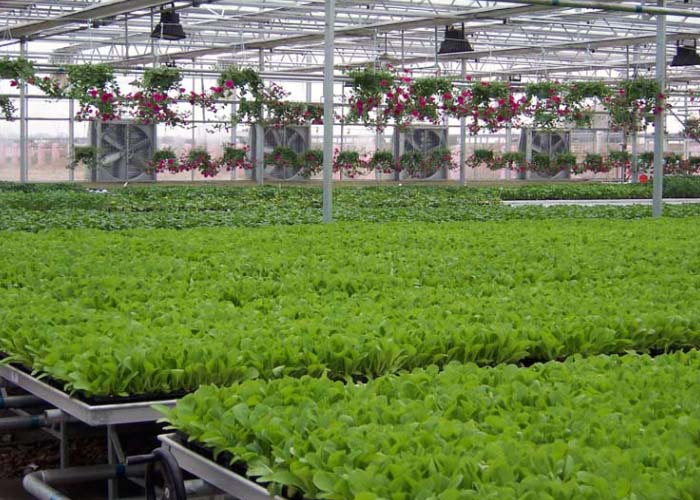
1. Year-Round Operation Starts With the Structure
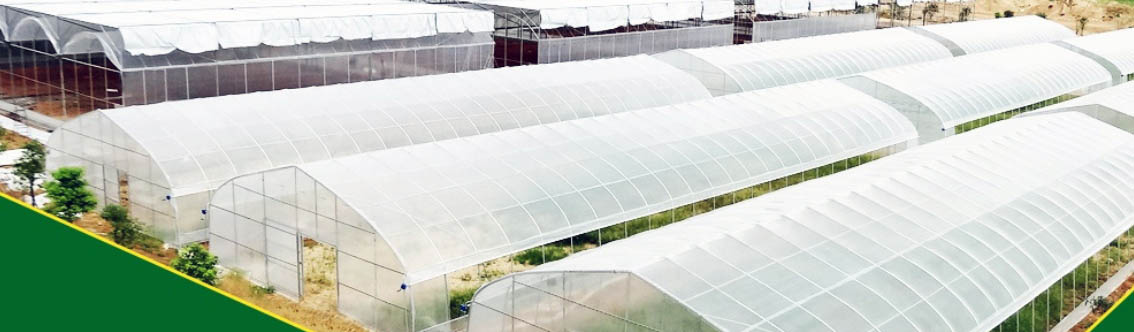
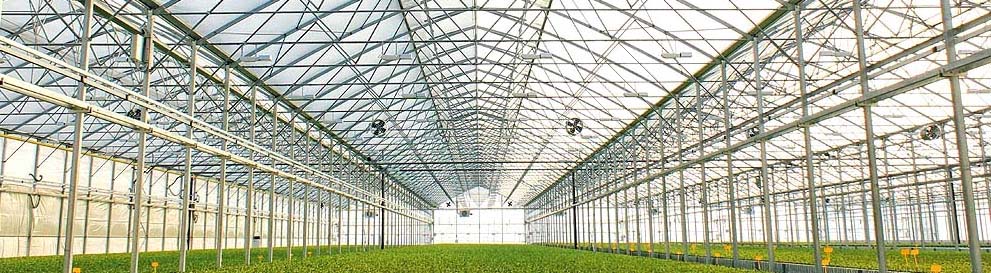
A vegetable greenhouse works because of the excellent thermal insulation behaviour of the PC structure frame, which is why its produce does not have to follow the outdoor season. Usual construction uses a steel skeleton with the top covered by one layer or several layers of insulating PC sheet, and drainage is planned at the same time, because a sealed volume also holds moisture and stale air.
2. The Two Operating Windows and the Two Handovers
The closed window. From late autumn to early spring the house behaves as an insulated volume. Daylight goes on getting light in and holding humidity down, ventilation becomes short and is placed in the warmest part of the day, and water goes on earlier and in smaller amounts so foliage dries before the temperature falls.
The open window. From late spring to early autumn the house works the opposite way: open for most of the day, with the covering that was an asset in winter now a liability. Shading, ventilation and pad cooling are covered on the companion page about the summer cooling combination of shade, airflow and evaporative pads.
The two handovers. The awkward parts of the year are the joins rather than the seasons: late spring into early summer, when the house leaves the closed mode, and late autumn into early winter, when it returns. Each takes days, and each has an order that works and one that damages the crop.
3. Equipment Shared All Year, Equipment That Is Mutually Exclusive
Shared all year. The skeleton and foundation, the PC covering and gutters, drainage and water supply, the irrigation main line and control cabinet. These are maintained rather than switched.
Mutually exclusive. The heat-retaining and shading layers compete for the same space under the roof, so most houses treat the winter and summer layers as alternatives in one position. That is why the change happens twice a year, and heating and cooling never run in the same week.
Shared but reversed. Ventilation uses the same openings and control loop all year, yet its purpose flips: a brief humidity tool when closed, a heat-removal tool used for hours when open. The irrigation and feeding line is the same shared hardware on a different schedule.
4. The Handover Sequence, in Working Order
Late spring into early summer, first to last:
- Decide the coming crop and its planting date; the crop decides whether the house goes open.
- Take the heat-retaining layer out, clean it and check its drive.
- Bring the shading layer in and test it after months idle.
- Open the vents and check the fans little used in winter.
- Wet the irrigation line and look for leaks.
- Bring the cooling side in gradually.
- Adjust feeding and irrigation last.
Late autumn into early winter, first to last:
- Decide the overwintering crop and its planting date first.
- Clear the summer shading and clean covering and gutters.
- Bring the heat-retaining layer back in, checking seals and drive.
- Reduce irrigation and move it earlier.
- Change habits last: close earlier, ventilate briefly, use timed air exchange.
The rule is the same for both: change the crop decision first, the equipment layer second, the daily habits last. Never change both layers in one week. The trade-offs between successive configuration tiers for a vegetable PC house are easier to judge once the seasonal routine is settled.
5. Crops Across the Change
Eggplant, tomato and melon types should be replaced with other vegetables yearly or by quarter, since they draw on the same nutrients and carry the same soil-borne problems forward; alternate a heavy-feeding fruit crop with a lighter leafy one, and use the shoulder period for a short-cycle leafy crop. Do not carry a summer crop into the closed window, and plant only while the house is already in the mode the crop will grow in.
6. The Four Losses Behind a Bad Handover, and the Fixes
Adjusting the production season to promote yield and quality of vegetables is one of the effective means to increase revenue, and the benefits of a commercial vegetable greenhouse are widely understood. Besides the wrong crop or method, the four losses below are often the important factor.
- Fertilizer damage. The damage is in fact harmful salts, from one-sided excess of chemical fertilizer or salinization of the soil: roots are suppressed, the concentrated solution draws water out of the plant, giving wilting or scorched leaf margins.
- Pesticide injury. Visible or latent, from the wrong choice or misuse of a pesticide, too strong a concentration, low-quality products, and spraying when the heat makes it unsafe: leaves may yellow or burn, and fruit may drop.
- Drought injury. From a site short of water, poor water quality, or ditch, drainage and irrigation left incomplete: it affects sowing and seedlings and complicates management.
- Continuous cropping obstacles. Growing the same kind of vegetable again while yield and quality fall: similar crops prefer the same nutrients, so deficiency follows, and soil pathogens accumulate, with Fusarium wilt among the results.
The measures follow directly. Complete the water system: clean water, ditch and drainage, and proper irrigation on higher-standard houses. Fertilize in a balanced way: matured organic manure year round, refined high-energy organic fertilizer, steady nitrogen and phosphorus with more potassium instead of a nitrogen bias, a graded amount, and a foliar liquid feed when damage appears. Adjust rotation and the environment: rotate eggplant, tomato and melon vegetables yearly or by quarter, improve the soil where trouble repeats, use a soil treatment agent, and replenish the missing nutrient.
The join goes wrong in recognizable ways: equipment changed before the crop is decided, both layers changed in one week, a summer crop carried into the closed window, irrigation not re-tuned, and ventilation abandoned when the closed mode returns. Public guidance on rotation and soil management, such as that of the United States Department of Agriculture, is a useful reference, while the trade press, for example Hortidaily, follows growers in practice.
For more on a polycarbonate greenhouse range built for year-round vegetable work, write to sales@cngreenhouses.com or call +86 191 5068 3942. Layout choices such as cultivation benches and working space change with the season too.
Frequently Asked Questions
Q1: Which equipment runs all year and which is switched seasonally?
A: Structure, covering, gutters, drainage, water supply, irrigation line and control cabinet are shared all year; the heat-retaining and shading layers are alternatives and change at the handovers.
Q2: At the late spring handover, what changes first?
A: The crop decision, since it decides whether the house goes open; the heat-retaining layer comes out next, the shading layer goes in, and feeding is adjusted last.
Q3: Can a summer crop be carried into the closed window?
A: Not advisable: a variety chosen for the open mode is a poor fit once the house is sealed. Plant while the house is already in the mode the crop needs.
Q4: Why does a crop fail after a handover when the equipment works?
A: The order was usually wrong rather than the hardware: both layers changed in one week, ventilation run with the previous season habits, or irrigation left untouched.
Q5: What is needed to quote a year-round vegetable PC greenhouse?
A: The size and span, the PC sheet layers on top and walls, the ventilation arrangement, the shading and heat-retaining layers, and the irrigation installation.
Q6: How can we reach the greenhouse team?
A: Write to sales@cngreenhouses.com or call +86 191 5068 3942, and we will review the rotation plan and equipment list for both windows.
 Deutsch
 Español
 Français
 Italiano
 Português
 日本の
日本の
 한국어
한국어
 العربية
 български
 hrvatski
 česky
česky
 Dansk
Dansk
 Nederlands
 suomi
suomi
 Ελληνικά
 हिन्दी
 norsk
norsk
 Polski
 Română
 русский
 Svenska