

- Commercial Greenhouse
- Film Greenhouse
- PC Greenhouse
- Glass Greenhouse
- Tunnel Greenhouse
- Scientific Research Greenhouse
- Vegetable Greenhouse
- Flower Greenhouse
- Multi-span Greenhouse
- Sawtooth Greenhouse
- Greenhouse Equipments
- Greenhouse Accessories
- Hot Dip Galvanized Pipe
- Irrigation System
- Hydroponics System
- Planting Tools
- Planting technology
Tel: +86 191 5068 3942
Fax:
Mobile: +86 191 5068 3942
Contact: Alina
E-mail: sales@cngreenhouses.com
SKYPE:


- Features


Three Kinds of Walk, Not One Fixed Calendar:
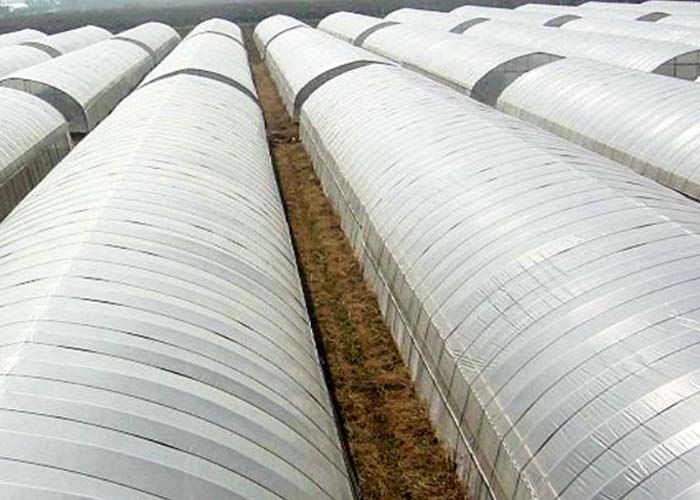
A tunnel - also a polytunnel, hoop greenhouse, hoophouse or high tunnel - is a tunnel of polyethylene, usually semi-circular, square or elongated. Solar radiation warms the inside faster than heat escapes, warm air is held by roof and wall, and temperature, humidity and ventilation are set by equipment fixed in the house. Nothing fails in one moment: clips work loose, a curtain jams, a tube foot stays wet. Working life depends more on careful maintenance than on the specification sheet.
The routine is best built as three walks, not one fixed calendar. Every visit - a short walk in and out: film tension, the clip line, the roll-up curtain. After weather - a fuller walk once wind or snow has passed, the two loads it is designed against: snow load 0.35 kN/m2, wind load 0.35 kN/m2, up to 90-100 km/hour, to be read against your local code. When the season turns - the long pass over film and clips, tubes and channels, curtains and doors, netting, drainage and the ground around the house.
Film Tension and Resetting the Clips:
The house may only be covered by polyethylene held with aluminium clips, in 0.08 mm, 0.12 mm or 0.15 mm, single or double layer. Tension is what stops that film working: a flapping panel pulls the film edge and the clips, and a slack bay is where most damage begins. Check it by feel, bay by bay - firm with a little give between arch and channel.
Where tension has gone, the clips show it first. Push a slid or popped clip back into its channel, reseat the film under it and re-tighten a loose wedge; a clip that walks out twice in the same place points to the channel or the panel, not the clip. A rupture from a tool, hail or a sagging clip is patched or replaced promptly - a tear grows fast once wind gets under it. Re-sheeting a whole house is a different job, set out on our poly tunnel cover and fitting page; here the question is only whether today's film is tight, whole and properly clipped.
Arch Tubes, Channels and Where Rust Starts:
The frame is a 275 gsm zinc coated tube in a non-welded structure, hot dip galvanized to avoid rust, with an arch roof over gable spans from 5 m to 10 m and a total height of 3 m or 4 m. An arch carries its load in compression over a short span, so the tube can stay light - and a dent takes away margin the design relied on. The coating stands between the steel and the weather, so the question is not whether a house is galvanized but where the coating is broken or kept wet; corrosivity is classified under ISO 9223, class C2 to class C5, and the coating under BS EN ISO 14713-1.
The walk looks for where water and damage collect: impact marks where a tool or machine caught a tube; soil packed against a tube foot or in a channel; water standing after rain; a channel pushed open or a section bent, since a bent tube loses strength and traps water. Where a tube or channel is renewed, our hot dip galvanized pipe range matches the frame on the house.
Curtains, Doors, Drainage and the Ground Around It:
Ventilation is by side-wall openings covered by insect nets and closed by roll-up curtains, manual or electric, with an optional door unit - the only parts worked every day, so they wear first. Take each curtain through its full travel both ways: the bearing, winch or ratchet and the ties are what fail, and a curtain jammed part way is worse than one left open - the house then runs at a vent position nobody chose. On the door, work the hinges and their post, the brace, the latch and the skin - a door that has dropped rubs its frame and tears its covering. On electric units run to both limits and check the cable entry for water; the equipment is described on our natural ventilation system page.
Water causes more slow damage than wind because it stays. After rain, follow where run-off actually goes and clear the ditch and any collection point at the sides and gable ends, so it leaves the site instead of sitting against the house. A tunnel suits all climate conditions and any landscape, so on sloping ground the water path differs at every bay. Keep the strip along both side walls cut: tall growth holds moisture against the film and lower tubes, hides a torn curtain or popped clip, shelters pests and blows seed in through the vents; and keep the ground under each curtain clear of soil and stones.
Season-Change Checklist and Common Failure Points:
The seasonal pass covers the whole house: film tension and every clip line; tubes and channels for rust, impact and standing water; curtain travel, winch and ties; doors and hinges; drainage and the cut strip. When it blows, close all vents and step up the pressure lamination line. When it snows, clear it promptly rather than let it build, brace the central tube against the arch and keep one person responsible through a severe spell. The failures that recur are few: clips popping in one bay means an open channel or a slack panel; a tear left alone grows under wind; packed soil and standing water at a tube foot is where galvanized steel first corrodes; and a jammed curtain or dropped door tears its covering and leaves a gap for insects.
Where a fixture is lost or damaged, contact the factory for the part, recording its name code and quantity. Parts taken off the house are cleaned, classified and stored dry and ventilated, because damp storage lets corrosion shorten their life. Replacement sections come in the recommended sizes - A: 6 m x 40 m, B: 8 m x 30 m, C: 9.6 m x 16 m with top ventilation, in multiples of 4 metres - supplied Large, double layer, film covered, Large Scale feature, as an export package under the commercial greenhouse programme.
Each house is built to the customer's own site as a simple and effective solution for varied and complex topography, engineered with test reports, and ships as a do-it-yourself kit with an installation manual and CD. Design, material and construction sit inside one quality control system with 360 degree control at the key nodes, and crews work to a safety operation manual. We carry above 35 years of supply - email sales@cngreenhouses.com or call +86 191 5068 3942, and see the tunnel greenhouses we build. Protected cropping guidance comes from the NGMA, and commercial horticultural practice from HortWeek.
Frequently Asked Questions:
Q: How often should a tunnel greenhouse be inspected?
A: Set it from your climate, the crop cycle and how hard the curtains are worked: a brief walk in and out, a full one after wind or snow, a long pass when the season turns.
Q: A clip has popped out of the channel - what does that tell me?
A: Push it back and reseat the film under it. If the same clip comes out again in the same bay, the channel has opened or the film has lost tension over that span, so look at the channel rather than the clip.
Q: Which parts of a tunnel house fail first?
A: The parts that move and the places that stay wet: curtains, winches, ties, netting and door hinges wear with daily use, while a tube foot, an open channel and packed soil are where the galvanized coating is first attacked.
Q: What should be done before a storm or heavy snow?
A: Close all vents and step up the pressure lamination line when it blows. Clear snow promptly rather than let it accumulate, brace the central tube against the arch with temporary stays, and keep one person responsible.
Q: Does the wall strip around the house need cutting?
A: Yes. Tall growth holds moisture against the film and lower tubes, hides a torn curtain or a popped clip, shelters pests and blows seed in through the vents. Keep the ground under each curtain clear of soil and stones too.
Q: Where do spare parts come from, and how should they be stored?
A: Order from the factory by part name code, recording the code and quantity when ordering. Parts taken off the house are cleaned, classified and stored dry and ventilated, because damp storage lets corrosion shorten their life.
 Deutsch
 Español
 Français
 Italiano
 Português
 日本の
 한국어
 العربية
 български
 hrvatski
 česky
 Dansk
 Nederlands
 suomi
 Ελληνικά
 हिन्दी
 norsk
 Polski
 Română
 русский
 Svenska