- Commercial Greenhouse
- Film Greenhouse
- PC Greenhouse
- Glass Greenhouse
- Tunnel Greenhouse
- Scientific Research Greenhouse
- Vegetable Greenhouse
- Flower Greenhouse
- Multi-span Greenhouse
- Sawtooth Greenhouse
- Greenhouse Equipments
- Greenhouse Accessories
- Hot Dip Galvanized Pipe
- Irrigation System
- Hydroponics System
- Planting Tools
- Planting technology
Tel: +86 191 5068 3942
Fax:
Mobile: +86 191 5068 3942
Contact: Alina
E-mail: sales@cngreenhouses.com
SKYPE:


Glass Greenhouse Cost - What Drives the Price Per Sqm
What drives the cost of a glass greenhouse: span and height, frame steel, 4-5mm or tempered glass, vents, shading and site works.
.
TEL:+86 191 5068 3942
- Features


Basic Information:
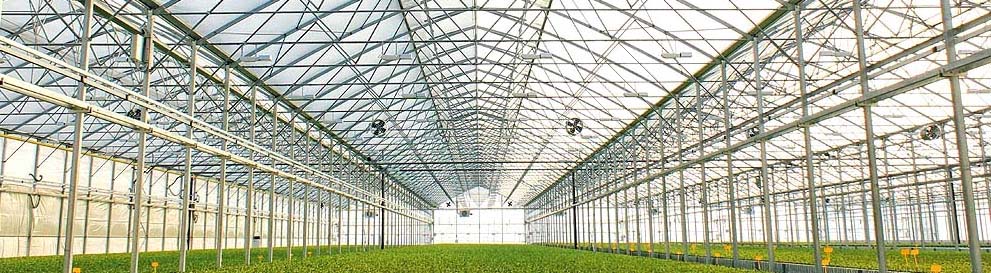
Size: 15 m x 30 m | Area: 450 square metres | Type: gable roof glass greenhouse | Cover: single layer glass
Glass: 4 mm or 5 mm float glass, or 5 mm tempered glass | Light transmittance: above 90% | Frame: hot dip galvanized steel pipe
Gable spans: 8 m to 10.8 m | Total height: 4 m to 5.3 m | Wind and snow load: 0.35 kN/m2
What Sets the Price: Span, Height and Steel:
Most of the price of a glass house is steel, and the steel is set by the span and the height, not by the floor area. Gable spans run from 8 m to 10.8 m and the structure height from 4 m to 5.3 m on our standard build; push either figure up and the columns, trusses and purlins all have to be heavier, so the frame cost rises faster than the extra growing space. The second driver in this group is the load the house has to take: the standard design is rated for a wind load and a snow load of 0.35 kN/m2, and a site with heavier snow or a coastal wind figure needs a stronger frame again. This is why we quote a glass house from a layout and the site conditions rather than from a price per square metre - two houses of the same 450 square metres can differ substantially in steel weight, and the steel is what you are buying.What Sets the Price: Glass and Glazing:
The cover is the second cost block, and within it the choice is mostly 4 mm or 5 mm float glass against 5 mm tempered glass. Float glass is the economical option and it is what most walls and mild-climate roofs use; tempered glass costs more per pane but resists impact far better, so it is the sensible spend on a roof that sees hail, or over a working area where people pass underneath. Thicker float glass is also available where a site wants a stiffer panel. Set against the price of the panes, the aluminium profiles, the sealing strips and the glazing labour are a smaller share - but they are the share that decides whether the house leaks, so they are the wrong place to save. Light transmittance stays above 90% whichever glass you choose, so you are not buying light with the upgrade; you are buying impact resistance.What Sets the Price: Equipment and Site Works:
On a working house the climate equipment is often the third block, and it is the one people leave out of the first comparison. Roof and side vents, external and internal shading, a wet curtain and fan system, heating and greenhouse irrigation are all priced with the structure, because the frame is drilled and the pipe runs are planned once. Two other items sit outside our quotation but belong in your budget: the foundations or base the columns stand on, and the labour to erect the house. Asking us for a structure price and then discovering the base and the erection separately is the most common way a glass house goes over budget.Where Money Is Usually Wasted:
Paying for a taller, wider span than the crop needs is the first waste - it buys steel and heat loss, not yield. The second is buying tempered glass over the whole house when the walls would have been fine in float. The third, and the most expensive over the life of the building, is saving on the frame and the sealing: a house that rattles, leaks at the joints and loses heat through badly set panes will cost more in heating and repairs within a few seasons than the difference in the original quotation. Before you compare offers, put the site conditions, the crop, and the equipment list side by side, and make sure every supplier is pricing the same frame weight. If heat retention turns out to matter more to your crop than peak light, compare the polycarbonate sheet houses on the same span before committing to glass.Shipping and Ordering:
Normal shipping time is 4 to 6 weeks after receipt of order, plus transit from the factory; 30% of the basic greenhouse price is charged on receipt of order and the balance before shipment. Send us the span and length, the crop, your wind and snow figures and the equipment you intend to fit, and we will come back with a layout, a panel schedule and a quotation broken down by block, so you can see what each decision costs. Look through the glass greenhouse models or the full commercial greenhouse range, read more about our greenhouse factory, call +86 191 5068 3942 or send an E-mail to sales@cngreenhouses.com.Frequently Asked Questions:
Q: What is the biggest cost in a glass greenhouse?
A: The steel. The frame weight is set by the span, the height and your site loads rather than by the floor area, so two houses of the same 450 square metres can differ substantially in cost. That is why we quote from a layout instead of a price per square metre.
Q: Is tempered glass worth the extra?
A: On a roof that sees hail, or anywhere people work underneath, yes - tempered resists impact far better. For walls and mild-climate roofs, float glass is the economical choice and light transmittance stays above 90% either way. The upgrade buys impact resistance, not more light.
Q: What is usually left out of the first quotation?
A: The foundations or base the columns stand on, and the labour to erect the house. They sit outside our structure price but belong in your budget - asking for a frame price and finding the base and erection later is the most common way a glass house goes over budget.
Q: Can I get a cheaper house by using a lighter frame?
A: You can, but it is the wrong saving. A frame that is light for the span rattles, leaks at the joints and loses heat for years; the heating and repair cost will pass the original saving within a few seasons.
Q: Can the climate equipment be added later instead of now?
A: Vents, shading, cooling, heating and irrigation are cheapest specified with the structure, because the frame is drilled and the pipe runs are planned once. Retrofitting means drilling a finished frame and re-running services.
Q: What do you need from me to quote?
A: The span and length, the crop you plan to grow, your local wind and snow figures and the equipment you intend to fit. We come back with a layout, a panel schedule and a quotation broken down by block.
Note: If you're interested in the product, please submit your requirements and contacts and then we will contact you in two days. We promise that all your informations won't be leaked to anyone.
 Deutsch
 Español
 Français
 Italiano
 Português
 日本の
日本の
 한국어
한국어
 العربية
 български
 hrvatski
 česky
česky
 Dansk
Dansk
 Nederlands
 suomi
suomi
 Ελληνικά
 हिन्दी
 norsk
norsk
 Polski
 Română
 русский
 Svenska