
- Commercial Greenhouse
- Film Greenhouse
- PC Greenhouse
- Glass Greenhouse
- Tunnel Greenhouse
- Scientific Research Greenhouse
- Vegetable Greenhouse
- Flower Greenhouse
- Multi-span Greenhouse
- Sawtooth Greenhouse
- Greenhouse Equipments
- Greenhouse Accessories
- Hot Dip Galvanized Pipe
- Irrigation System
- Hydroponics System
- Planting Tools
- Planting technology
Tel: +86 191 5068 3942
Fax:
Mobile: +86 191 5068 3942
Contact: Alina
E-mail: sales@cngreenhouses.com
SKYPE:


- Features


Why the Climate Zone Sets the Specification:
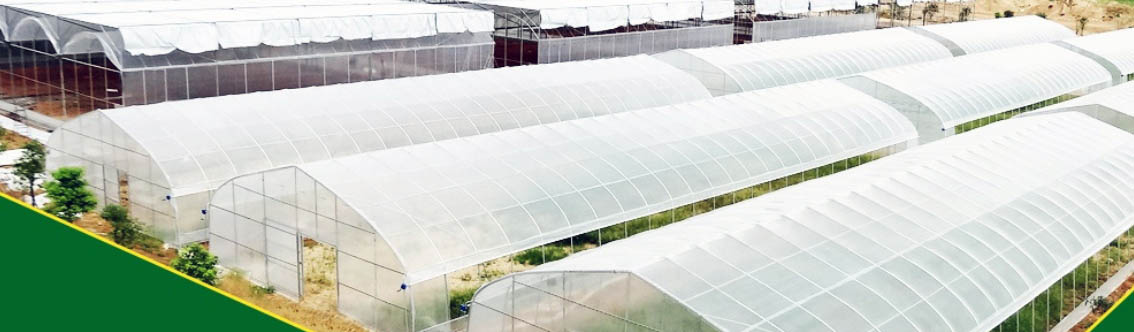
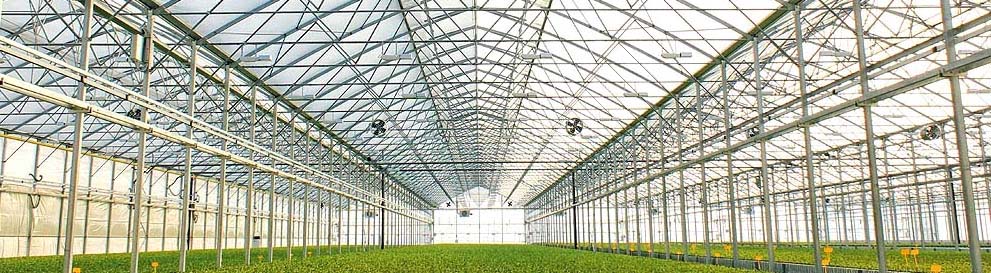
A polytunnel - also a tunnel greenhouse, hoop greenhouse, hoophouse or high tunnel - is a tunnel of polyethylene, usually semi-circular, square or elongated in shape. Solar radiation warms plants, soil and frame faster than heat can escape, the warm air is held by roof and wall, and temperature, humidity and ventilation are set by equipment fixed inside; polytunnels suit temperate regions as glass and film greenhouses do. This model is a large commercial film house on an arch roof: 275 gsm zinc coated tube, non-welded, hot dip galvanized to avoid rust, gable span 5 m to 10 m, height 3 m or 4 m, film 0.08, 0.12 or 0.15 mm in single or double layer held with aluminium clips. It suits complex topography and any climate, because it is configured to the climate rather than sold in one fixed form.
The design sheet states a snow load of 0.35 kN/m2 and a wind load of 0.35 kN/m2, the frame taking wind up to 90-100 km per hour. Read those as the load this house was engineered to, not a universal figure: snow and wind are site values from your own building code. Establish the local load first, then have arch spacing, tube section, bracing and anchoring sized to it - maintenance cannot correct a mild-climate house.
Snow Zones: Arch Spacing, Shape and the Load That Stays:
Snow arrives quietly and stays, and wet snow is heavy, so the arch must carry it across the span. Everything that stiffens a house in snow also shortens the film's span between supports: closer arch spacing puts more hoops under the same area, a steeper or gothic profile sheds more readily than a shallow one, purlins and end-bay bracing stop the first arches folding, and ground posts set to anchoring depth hold the assembly as the load presses down. Snow drifts into hollows and into the channel between two houses set too close, so clear it promptly rather than letting it build, close the vents and step up the pressure lamination line when it blows, brace temporary stays against the arch while the load is heavy, and keep one person responsible through a severe spell.
Wind Zones: Anchoring, Bracing and a Tight Film:
Wind does the opposite: it does not press the house down, it lifts and racks it, and a film-covered hoop is a sail, so frame and foundations are judged on uplift. The anchor is chosen for the subsoil - ground screws, driven stakes or concrete footings - with the subsoil checked by digging rather than assumed. The frame takes more arches, purlins and end-bay bracing. The film must be tight and evenly held, because a loose cover flaps and tears along the clamp line. Exposure raises the site figure, especially on a coast or an upland site, so take the wind speed and terrain from the local code.
The routine is short: close the vents when it blows, step up the pressure lamination line, inspect the fixture connections, re-retain a loose wedge at once, and patch a ruptured film. The working life of a house like this depends far more on proper use and careful maintenance than on the specification sheet.
Hot and Humid Zones: Opening Area First, Shading Second:
In a hot, humid climate a house must lose heat it never needed to keep, and the first limit is opening area. Ventilation is by side-wall openings covered by insect nets and closed by roll-up curtains, manual or electric, and the 9.6 m x 16 m size is offered with top ventilation. Heat leaves by air change, not by equipment, so the openings must be generous relative to the floor and the air must have somewhere to go; in still, humid weather a naturally ventilated tunnel stops working, because no wind drives the flow. Then a taller house, more opening, a ridge vent or mechanical help comes in - those openings and actuators being our natural ventilation equipment.
Shade is the second lever: a screen outside the film stops radiation before it becomes heat inside, while a screen hung inside traps that heat under the cover, so the external shading systems we build run above the film. Shading on a hot site should be seasonal and removable, because the same house wants every photon in the short days.
Humidity is the part growers underestimate: under film the vapour from soil and crop is trapped and still air lets a wet leaf stay wet, so leaf disease gets its window in the evening. Ventilate early rather than late, open the curtains in steps, and leave the canopy room to dry.
Dry Zones, Coastal Salt and What to Put in the Enquiry:
In a dry climate the constraint moves to water: how much of the crop's demand can be cut before the system is built? Cover the soil, so moisture already paid for is not lost from the surface; water the root zone rather than the leaf, with lines, filter and injector as our irrigation system range sets out; and shade the house in the hottest weeks to cut demand at source. A dry site often means a mineral-rich or saline supply, so leave room for a tank, since film cuts off every drop of rain.
Salt air attacks the coating rather than the crop, so the answer is the corrosion class of the frame, chosen from the local environment. The atmosphere corrosivity categories of ISO 9223 run from class C2 to class C5, and coating selection for the category is covered by BS EN ISO 14713-1; coastal or industrial air is a higher class than inland air, so a house specified at the lower end of that range is wrong for a salt-laden site. Cut ends and connections are where corrosion starts, so those are the parts to inspect, and spares are stored dry rather than damp, because damp storage lets corrosion and deformation shorten the working life. Our hot dip galvanized frame tube covers the tube and coating choices.
For a quotation the useful answers are the climate ones: local snow load and wind speed from your building code, exposure and terrain, subsoil at anchoring depth, and water quality. We build each tunnel to the customer's own site, with design, material and construction under one quality control system and 360 degree control, and crews trained to a safety operation manual; we carry above 35 years of supply. Recommended sizes are 6 m x 40 m, 8 m x 30 m and 9.6 m x 16 m with top ventilation, in multiples of 4 metres; the house ships as an export package - a non-welded do-it-yourself kit with an installation manual and CD, test reports and an optional door unit. It is quoted from the tunnel greenhouses we build: call +86 191 5068 3942 or E-mail sales@cngreenhouses.com. Climate data is published by the FAO, and commercial greenhouse practice by Greenhouse Grower.
Frequently Asked Questions:
Q: How do I specify a tunnel greenhouse for a snowy site?
A: Take the snow load from your local building code, then size arch spacing, tube section, purlins, end-bay bracing and post depth to it: closer arches and a steeper profile carry snow.
Q: What has to change on a windy site?
A: Anchoring, end-bay bracing and film tension come first, because wind lifts and racks a film house. Take the site wind speed and exposure from the local code, and let the subsoil decide the anchor.
Q: Should summer heat be dealt with by ventilation or by shading?
A: Both, in that order: ventilation sets the air change and needs enough opening area, plus a top vent where summer air is still; shade then cuts the radiation before it becomes heat.
Q: What matters most in a dry climate?
A: Saving the water you have: cover the soil, water the root zone, shade in the hottest weeks, and plan for a mineral-rich supply. Film cuts off all rain.
Q: Is a galvanized frame enough on a coastal site?
A: That depends on the corrosion class, not on the word galvanized. ISO 9223 runs C2 to C5 and BS EN ISO 14713-1 covers coating selection; ask for the class you need.
Q: What sizes, heights and film does this tunnel come in?
A: 6 m x 40 m, 8 m x 30 m and 9.6 m x 16 m with top ventilation, in multiples of 4 metres; gable span 5 m to 10 m; height 3 m or 4 m; film 0.08, 0.12 or 0.15 mm, single or double layer, aluminium clips.
 Deutsch
 Español
 Français
 Italiano
 Português
 日本の
 한국어
 العربية
 български
 hrvatski
 česky
 Dansk
 Nederlands
 suomi
 Ελληνικά
 हिन्दी
 norsk
 Polski
 Română
 русский
 Svenska