- Commercial Greenhouse
- Film Greenhouse
- PC Greenhouse
- Glass Greenhouse
- Tunnel Greenhouse
- Scientific Research Greenhouse
- Vegetable Greenhouse
- Flower Greenhouse
- Multi-span Greenhouse
- Sawtooth Greenhouse
- Greenhouse Equipments
- Greenhouse Accessories
- Hot Dip Galvanized Pipe
- Irrigation System
- Hydroponics System
- Planting Tools
- Planting technology
Tel: +86 191 5068 3942
Fax:
Mobile: +86 191 5068 3942
Contact: Alina
E-mail: sales@cngreenhouses.com
SKYPE:


Tall Polytunnel Greenhouse - Extra Headroom for Tall Crops
A tall polytunnel greenhouse at 3 or 4 m structure height: more shoulder headroom, a bigger air buffer, and room for tall crops and machines.
.
TEL:+86 191 5068 3942
- Features


What the Extra Height Actually Adds:
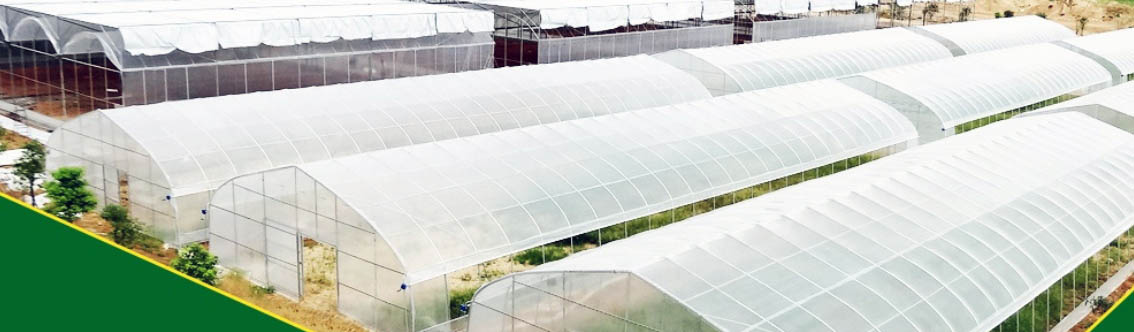
A polytunnel is a tunnel built of polyethylene and usually semi-circular in shape, also called a tunnel greenhouse, a hoop greenhouse or a high tunnel. What makes this model a high polytunnel is not the cover but the frame height: the structure is built at a total structure height of 3 metres or 4 metres, on a gable span running from 5 metres to 10 metres. The physics of the tunnel stays the same - the interior warms because incoming solar radiation heats the plants, the soil and the frame faster than the heat can escape, and the warmed air is held by the roof and the walls. The extra room changes four things: how you walk the tunnel, how much air sits above the crop, how tall a crop can finish, and what can be driven in through the door. Temperature, humidity and ventilation are still set by equipment fixed in the tunnel, and polytunnels are used in temperate regions much as glass greenhouses and cloches are.Shoulder Height, Working Room and Machine Access:
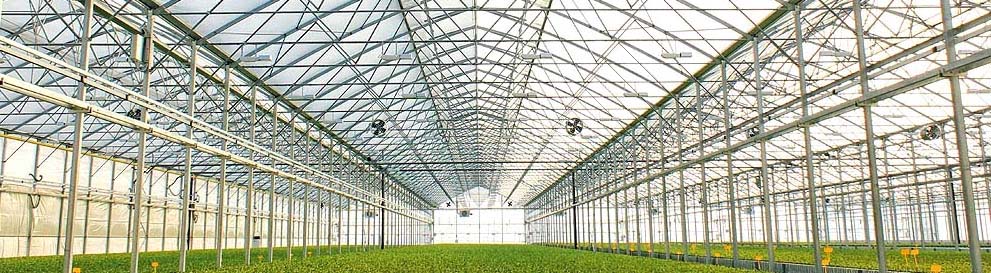
The shoulder is where the side wall stops and the arch begins, and it decides how a tunnel feels to work in. A raised shoulder gives headroom you do not have to bend for all season: you stand up along the side rows to pick, prune and tie, carry crates and trays at full height instead of dragging them. With the shoulder up, the arch sweeps the width of the span without pressing down on the crop below, so the tall space is not only on the centre line - it holds across the working area. That is what makes the structure practical for equipment: with the optional door unit fitted, a barrow, a barrow-mounted sprayer or a small tractor can be taken inside to the bed it serves, instead of stopping at the gable and being unloaded by hand. That door is a working entrance, not a hatch.Air Volume Behind the Ventilation:
Ventilation is by side-wall openings covered with insect nets and closed by roll-up curtains, worked manually or electrically. The openings move the air, but the height gives the air somewhere to go: a taller tunnel holds a larger volume of air above the crop, so the heat that builds on a bright morning is diluted through more air before it reaches the plants, and the drop when the sun goes is gentler too. Two tunnels with the same vent area but different ridge heights behave differently on a hot afternoon. That buffer is why a high polytunnel suits crops that dislike a wide day-night swing, and it is worth about as much as a vent you do not have to open as early.Tall Crops and High Trellising:
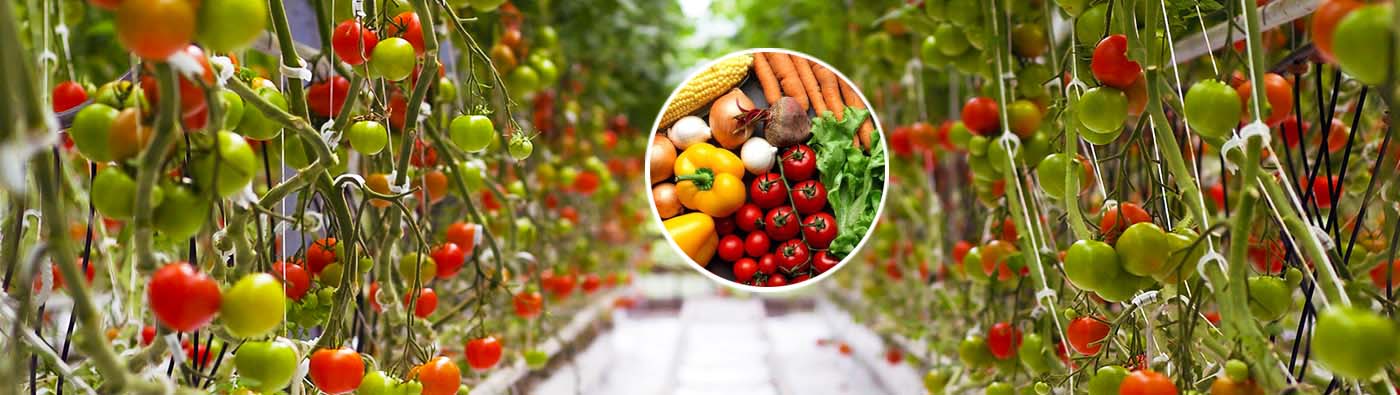
The crops that justify paying for height are the ones grown upwards - tomatoes, cucumbers, peppers and climbing beans trained on strings to a wire near the ridge. A tall tunnel lets the crop finish its full length instead of being stopped at the shoulder and laid over. The second photo above shows exactly that: tomatoes carried high over substrate with a drip line, fruit hanging clear down both sides of a central path. In a low tunnel the same crop is cut back at head height and yields early; at 3 or 4 metres the same plants are kept working much longer up the wire, and the row still takes a barrow between it. Where the summer is hot, the taller air volume matters most, because a fruiting crop in a short tunnel sets poorly once the top of the canopy is cooking.Frame, Sizes, Upkeep and Ordering:
The frame is high-strength round pipe, hot dip galvanized to avoid rust and supplied as a non-welded structure; the tube is 275 gsm zinc coated. The arch roof is covered in film, single or double layer, at a covering material thickness of 0.08 mm, 0.12 mm or 0.15 mm, held down with aluminium clips. Rated loads are a snow load of 0.35 kN/m2 and a wind load of 0.35 kN/m2, with the frame taking wind up to 90-100 km per hour. Capacity is large scale, the covering is film, the package is export packing and the type is a commercial greenhouse. Because the frame is galvanized, its corrosion performance is read against the ISO 9223 atmospheric corrosivity categories and the coating guidance in BS EN ISO 14713-1 - the way a buyer with a coastal or humid site should compare two structures. Recommended dimensions are A. 6 m x 40 m, B. 8 m x 30 m and C. 9.6 m x 16 m with top ventilation, all in multiples of 4 metres. It ships as a do-it-yourself kit with an installation manual and CD, and as a well engineered structure with test reports. Upkeep decides the working life: check connections regularly and re-seat any loose wedge, replace or patch a ruptured film at once, close the vents and step up the pressure lamination line in wind, clear snow promptly and brace temporary stays with the centre tube against the arch if it is heavy, and keep someone responsible for the tunnel in severe weather. A lost or damaged part is bought from the factory, so keep the part name code and purchase date; without taking the greenhouse down, sort and clean the parts and store them dry and ventilated inside, so corrosion and deformation do not shorten the life of the structure. Each tunnel is built to the customer's own site rather than a fixed shelf size, with design, material and construction under one quality control system and 360 degree control. The structure also suits varied and complex ground and any landscape, and stands up under all climate conditions.Frequently Asked Questions:
Q: How tall is this high polytunnel greenhouse?
A: The total structure height is 3 metres or 4 metres, on a gable span from 5 metres to 10 metres. The arch sweeps above the shoulder, so the full height is not lost over the side rows and the tall space is usable across the working area, not only on the centre line.
Q: What does the extra height change in practice?
A: Three things. You work upright along the side rows instead of stooping; a larger volume of air sits above the crop, so the temperature swings through the day are gentler; and tall crops can be trained higher up the wire before they are cut back.
Q: Which crops need a taller tunnel like this one?
A: The upward crops - tomatoes, cucumbers, peppers and climbing beans trained to a wire near the ridge. A low tunnel stops them at head height and they crop early; a 3 or 4 metre structure keeps the same plants fruiting much longer up the string.
Q: Can I get a small tractor or a barrow inside?
A: Yes. An optional door unit is fitted at the gable end, and with the shoulder raised there is room to take a barrow, a barrow-mounted sprayer or a small tractor down the path to the bed it serves, rather than unloading it at the door by hand.
Q: What film and frame does the tunnel use?
A: The cover is film in 0.08 mm, 0.12 mm or 0.15 mm, single or double layer, held with aluminium clips. The frame is a non-welded structure in 275 gsm zinc coated round pipe, hot dip galvanized, with a rated snow load of 0.35 kN/m2 and wind load of 0.35 kN/m2.
Q: How do I get a quotation for this polytunnel?
A: Tell us the span and length you want, the crops you plan to grow and your site wind speed and ground conditions. From that we set the height, hoop spacing and anchoring and quote the frame, the film and the sides together. Call +86 191 5068 3942 or E-mail sales@cngreenhouses.com.

Note: If you're interested in the product, please submit your requirements and contacts and then we will contact you in two days. We promise that all your informations won't be leaked to anyone.
 Deutsch
 Español
 Français
 Italiano
 Português
 日本の
 한국어
 العربية
 български
 hrvatski
 česky
 Dansk
 Nederlands
 suomi
 Ελληνικά
 हिन्दी
 norsk
 Polski
 Română
 русский
 Svenska