
- Commercial Greenhouse
- Film Greenhouse
- PC Greenhouse
- Glass Greenhouse
- Tunnel Greenhouse
- Scientific Research Greenhouse
- Vegetable Greenhouse
- Flower Greenhouse
- Multi-span Greenhouse
- Sawtooth Greenhouse
- Greenhouse Equipments
- Greenhouse Accessories
- Hot Dip Galvanized Pipe
- Irrigation System
- Hydroponics System
- Planting Tools
- Planting technology
Tel: +86 191 5068 3942
Fax:
Mobile: +86 191 5068 3942
Contact: Alina
E-mail: sales@cngreenhouses.com
SKYPE:


Multi-Span Greenhouse Drainage: Gutters and Rainwater
Multi-span film greenhouse drainage: the gutter between the bays, fall and downpipes, the outlet, and collecting roof water for crop irrigation.
.
TEL:+86 191 5068 3942
- Features


Rain is not a detail on a joined greenhouse. Every square metre of film roof passes its water down to one line between two bays, and if that line is not carried away properly the water ends up inside the house, on the crop, or standing against the frame. On a multi-span film house the drainage is a design item rather than an accessory.
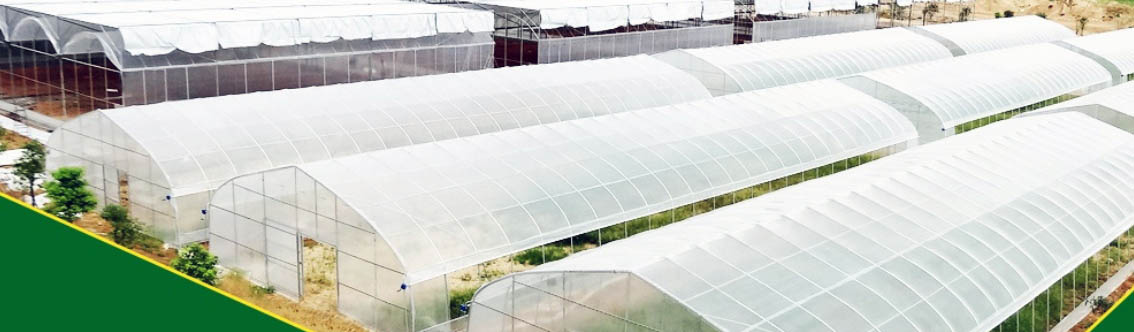
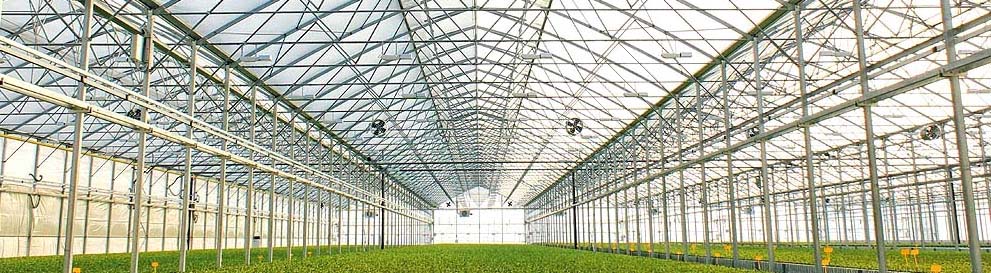
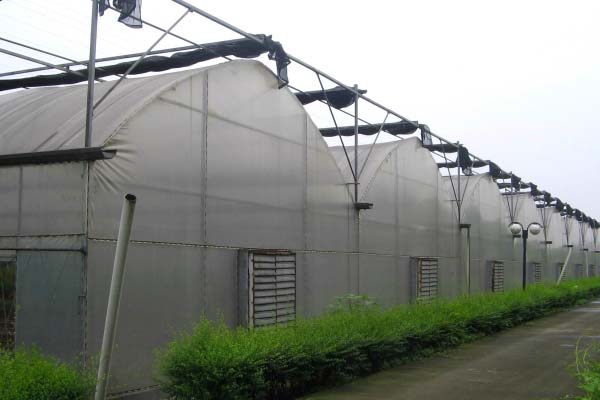
The house on this page is an agricultural multi-span film greenhouse. The main structure is steel and aluminum, the frame is hot dip galvanized steel pipe under an arch roof, the spans available are 6.4, 8, 9.6 or 10 metres, total structure height is 4.3 to 6.5 metres and the covering thickness is 0.15 mm or 0.12 mm. The covering can be a single or a double inflatable plastic film, or a hard material such as PC board, wave board or glass; on the film versions the polyethylene is held with aluminum clips. It is quoted as suitable for all climate conditions and adaptable to any type of landscape.
Why a Joined House Has a Drainage Question at All
The reason is the form itself. In a single tunnel the film runs down to the ground on both sides and water falls off the shoulders onto the soil. In a multi-span house the bays are joined, so each pair of adjacent arch roofs meets at a low line instead of at the ground. That line is the gutter, and every part of the roof above it drains into it.
Two consequences follow. The water is collected inside the footprint of the house, so it has to be led out deliberately. And the gutter is not a length of plastic on an outside wall, it is a member of the steel frame, hot dip galvanized like the rest of the pipe, and it is the member that holds water longest. That is the case galvanizing exists for; the pipe is described on the hot dip galvanized pipe we supply.
What the Gutter Between the Bays Has to Carry
The load on a gutter is set by two figures already in the quotation. The span decides how much roof area reports to each metre of gutter, so a 10 metre bay delivers more water to a metre of gutter than a 6.4 metre bay, and a long row collects from every bay in it. The frame height of 4.3 to 6.5 metres decides that the water arrives well above the crop and so has to be piped down. That trade is what 10 metre wide bays: fewer gutters, more water in each.
The other half of the load is what the water carries. Rain off a film roof picks up dust, pollen and grit, and arrives as a sheet from the whole roof at once. A gutter that is true along its length and free of dips moves that water away; a gutter with a low spot holds it, and standing water shortens the life of a steel member.
Fall, Downpipe and Where the Water Leaves the Site
Water leaves a gutter in one of two ways, and the choice is made once. It can fall along the gutter to a low end and drop out there, which suits a house on ground that already falls that way; or the gutter can run level and the water be taken off at intervals into downpipes, which works on a flat site.
This is where a joined house differs from a tunnel. Because the frame is described as a simple and effective solution for varied and complex topographic conditions, a house may be built across a fall rather than on a levelled pad, and the ground under a long run is rarely even. The fall for the water has to be built into the gutter line rather than the ground, and the outlet arranged where the ground can take it. On anything but a flat site the outlet and its channel are designed with the house.
After the heaviest rain of the year the ground inside the house should be no wetter than the day before, which is the simplest test of whether the outlet works.
Rainwater as a Resource, Not Only a Problem
Once the water is in a gutter and a downpipe it is a supply rather than a nuisance. The line that carries the rain away can be directed into a store, and the store can feed the house through the irrigation system offered as an added line with this model. Where water is bought or pumped, the roof is the largest catchment on the property.
It is roof water rather than mains water, so it is used on the crop and not where potable water is needed, and it carries the dust washed off the film. On a large roof a first flush arrangement, diverting the dirtiest water at the start of a storm away from the store, is worth having. The equipment this water would feed is set out under irrigation equipment for greenhouses.
Cold, Wind and the Routine That Keeps a Gutter Working
A drainage line fails in three ordinary ways. In winter, snow on the film roof melts into the gutter and can freeze there, so the first thaw arrives at a part blocked gutter. In autumn, leaves and debris collect at the outlet and at every change of direction, and the place a gutter blocks is rarely where it shows. On a windy site the film sheds water in surges against one side.
The routine is short. The gutter is cleared before the season when rain is expected, and the outlet checked at the same time, because that is where a handful of debris stops a whole roof. Downpipes are checked after the first heavy rain, since a leak shows up only under flow. The gutter is a galvanized frame member, so its condition is read from the corrosivity class of the site under ISO 9223 and assessed under BS EN ISO 14713-1, from class C2 in clean country air through C3 and C4 to C5 on a severe marine coast.
The frame, spans and cover of this model are as listed in the questions below. Cooling and heating, irrigation, ventilation, fertilization, shading and benches are added lines. Gutters, downpipes, outlets and any collection tank are not standard items and are settled with the site, so no gutter size, pipe diameter or fall figure is quoted: those follow the roof area, the rainfall and the ground.
The company manufactures in its own factory and has done so for above 35 years. Guidance on water in agriculture is published by the United States Department of Agriculture, and trade reporting on covered growing by Hortidaily. The range this house belongs to is under the multi-span greenhouse range. To settle a site drainage plan, call +86 191 5068 3942 or write to sales@cngreenhouses.com with the ground plan and the ground slope.
Frequently Asked Questions
Q: Does a multi-span film greenhouse need gutters?
Yes, because the bays are joined. Where two arch roofs meet there is a low line, and all the rain that falls on the film above it runs to that line. A tunnel can shed water to the ground on both sides; a joined row has to collect it and lead it out.
Yes, because the bays are joined. Where two arch roofs meet there is a low line, and all the rain that falls on the film above it runs to that line. A tunnel can shed water to the ground on both sides; a joined row has to collect it and lead it out.
Q: Where does the water from the film roof actually go?
Off the film into the gutter between the bays, then along the gutter to a low end or into downpipes, and out at an outlet leading to a ground channel or a store. It should never fall inside the house onto the crop rows.
Off the film into the gutter between the bays, then along the gutter to a low end or into downpipes, and out at an outlet leading to a ground channel or a store. It should never fall inside the house onto the crop rows.
Q: How does the bay width affect the gutters?
A wider bay puts more roof area onto each metre of gutter, so a 10 metre bay delivers more water to a metre of gutter than a 6.4 metre bay. Wide bays mean fewer gutters across the site but more water in each.
A wider bay puts more roof area onto each metre of gutter, so a 10 metre bay delivers more water to a metre of gutter than a 6.4 metre bay. Wide bays mean fewer gutters across the site but more water in each.
Q: Can the rainwater be used to irrigate the crop?
Yes. The gutter and downpipe are already a collection system, so the water can be directed into a store and fed to the house through the irrigation system offered as an added line. It is roof water, so a first flush diversion is worth having.
Yes. The gutter and downpipe are already a collection system, so the water can be directed into a store and fed to the house through the irrigation system offered as an added line. It is roof water, so a first flush diversion is worth having.
Q: What has to be cleared from a gutter, and when?
Leaves, grit and debris, most of it at the outlet and at changes of direction, cleared before the rainy season, with the outlet checked at the same time. Downpipes are checked after the first heavy rain, since a leak shows up only under flow.
Leaves, grit and debris, most of it at the outlet and at changes of direction, cleared before the rainy season, with the outlet checked at the same time. Downpipes are checked after the first heavy rain, since a leak shows up only under flow.
Q: What frame, span and cover figures apply to this model?
Frame of aluminum and hot dip galvanized steel pipe under an arch roof, 4.3 to 6.5 metres high, in spans of 6.4, 8, 9.6 or 10 metres. Cover is single or double inflatable film at 0.15 mm or 0.12 mm held with aluminum clips, or a hard covering such as PC board, wave board or glass.
Frame of aluminum and hot dip galvanized steel pipe under an arch roof, 4.3 to 6.5 metres high, in spans of 6.4, 8, 9.6 or 10 metres. Cover is single or double inflatable film at 0.15 mm or 0.12 mm held with aluminum clips, or a hard covering such as PC board, wave board or glass.
Note: If you're interested in the product, please submit your requirements and contacts and then we will contact you in two days. We promise that all your informations won't be leaked to anyone.
 Deutsch
 Español
 Français
 Italiano
 Português
 日本の
日本の
 한국어
한국어
 العربية
 български
 hrvatski
 česky
česky
 Dansk
Dansk
 Nederlands
 suomi
suomi
 Ελληνικά
 हिन्दी
 norsk
norsk
 Polski
 Română
 русский
 Svenska