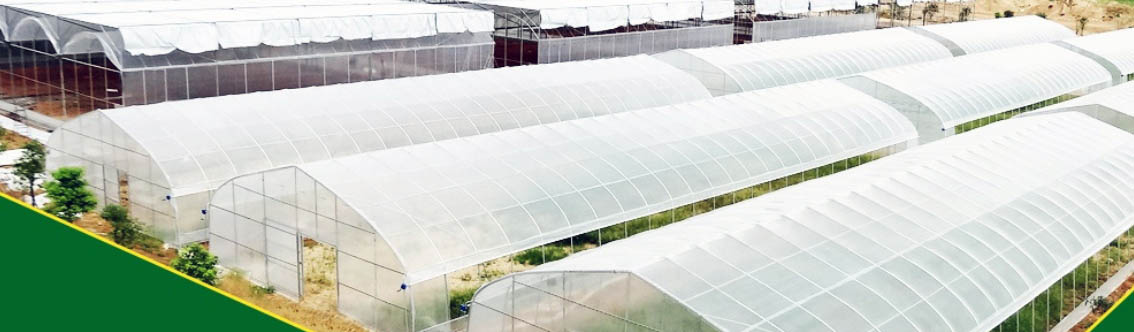


- Commercial Greenhouse
- Film Greenhouse
- PC Greenhouse
- Glass Greenhouse
- Tunnel Greenhouse
- Scientific Research Greenhouse
- Vegetable Greenhouse
- Flower Greenhouse
- Multi-span Greenhouse
- Sawtooth Greenhouse
- Greenhouse Equipments
- Greenhouse Accessories
- Hot Dip Galvanized Pipe
- Irrigation System
- Hydroponics System
- Planting Tools
- Planting technology
Tel: +86 191 5068 3942
Fax:
Mobile: +86 191 5068 3942
Contact: Alina
E-mail: sales@cngreenhouses.com
SKYPE:


Greenhouse Exhaust Fan: Airflow Matching with Wet Curtains
A greenhouse exhaust fan matched to wet curtains: airflow from house volume, fan count and wall layout, shutters and guards, belt care and summer running.
.
TEL:+86 191 5068 3942
- Features


A wet curtain cooling system only works as a set: the fan, the wet screens, and the water supply and drainage system that keeps the screens wet. The screens only cool the air pulled through them, and the fan is what pulls; the set is built for a good cooling effect, long life and stable performance. This page stays on the fan side - airflow matching, fan layout, shutters and guards, belt care and summer running. The pad side is on the wet curtain cooling set and the openings on the greenhouse ventilation layout.

Matching the Airflow to the House
The first figure is not the fan but the air. The bank has to hold the crop in its band on the hottest afternoon the site gets, and the quantity comes out in a fixed order: the volume of the house first, span times length times average height; then the air changes per hour the crop and the climate call for. Volume multiplied by air changes gives the airflow that must enter through the pad and leave through the fans, and the pad area and the fan bank are then sized together.
The rate is not a constant: a full-canopy crop needs more than a bench crop, and an exposed site more than a cool coast. More airflow is not automatically better: a bank larger than the house needs pulls air through the screen faster than the screen can wet it, while a set that is too small leaves the middle of the house hot with a wet pad and fans turning all afternoon. The airflow, the fan diameter, the motor power, the fan count and the pad area are worked out together for the house.

Fan Count and Wall Layout
In a pad and fan house the two families of parts sit on opposite walls, and that pairing is the design. The pad covers one long side or one gable from about crop height to the eaves, and the fans go on the wall opposite as a bank rather than scattered about the structure, so the air has one way in and one way out and crosses the crop along the house.
Each fan pulls a plume of moving air and not an endless column, so past a certain distance the air slows to a crawl, and on a long house the set is broken into zones, each with its own pad section and fan bank drawing along its own length. Where the air stalls in the middle, small circulation fans keep it moving over the leaves. The layout also needs the house to be reasonably tight: an open door or a short circuit on the fan wall is a route the fans will use instead of pulling along the crop from the pad.
Shutters, Guards and the Losses That Take Airflow
The shutter on the outside of the fan is more than a cover. Its blades are opened by the air stream the fan makes and closed by counterweights or springs when it stops, which stops backdraught and keeps driven rain, leaves and birds out. A blade that sticks part open is a permanent hole in the wall, and stiff blades standing open sit in the air stream, so the fan moves less than its rating.
The wire guard over the fan face and the insect netting on the pad side are part of the specification: the guard keeps hands and birds out of a turning blade, and on the inlet side the air passes the wet screen and the netting, so clean netting costs the fan little while netting loaded with dust or pollen behaves like a smaller fan. Dirt on a blade unsettles the balance, showing first as vibration and then as lost airflow, and cleaning is a wash job with water on the fan, never on the motor or the belt guard.
Belts, Bearings and Motor Care
Most greenhouse exhaust fans of this size are belt driven: the motor sits outside the air stream and one, two or three V-belts carry its power to the fan shaft. That keeps the motor out of the wet air, lets fan speed be set by pulley size, and puts the upkeep where the airflow eventually disappears from. A belt that has lost tension slips, the fan turns slower than the motor, and the airflow falls away before anything sounds wrong: the fan still turns, the pad is still wet, and the house is a degree or two warmer than last week.
Tension is judged by feel and by how deep the belt sits in the groove; the belt is checked for glazing and fraying, and belts that share a drive are replaced together, since mixed belts share the load badly. Pulleys must be lined up, since one out of line eats the belt sidewall and loads the bearing with it, and a bearing that has dried out runs hot, whines and seizes. On the motor, keep the cooling fins clear of dust, keep the terminal box and gland tight, and watch the supply: a long cable run with an undersized conductor drops the voltage, so the motor draws more current for the same airflow.
Running the Fans Through a Summer Day
The pad is wetted before the fans are started, because a fan pulling air through a dry pad is only pulling hot air through a frame. Start early and stage the banks: the load climbs while the morning still feels cool, and a house that waits until it is hot never catches up, since an air change holds a crop but cannot undo a peak already built.
While the forced set runs, the natural openings stay shut: with a roof or side vent open the fans take their air from the nearest opening instead of along the house from the pad. The set is also run on two readings: temperature decides when cooling is wanted, humidity whether the pad is the right tool at that moment, since water over the screen when the outside air is near its dew point adds moisture for little cooling.
Night is when the set has to fail safely: a bank that stops on a hot, still day leaves minutes rather than hours, so the opening side must open without power. Running the fans dry at the end of the day dries the pad for the night.
Independent references help when a set is specified: FAO publishes material on protected cultivation, and Greenhouse Grower follows daily practice in the greenhouse industry.
To have a set quoted and laid out, send the span, the length, the average height, the crop and its stage, the hottest month where you are and what the temperature reaches in it, and whether the house is new or standing. That is enough to work out the airflow, the pad area and the fans as one specification. Our factory has built greenhouses and their equipment for above 35 years; the range is under greenhouse equipment, the water side in the irrigation system range, and the fittings under greenhouse accessories. Call +86 191 5068 3942 or write to sales@cngreenhouses.com.
Frequently Asked Questions
Q: How is the airflow for a wet curtain fan chosen?
From the volume of the house and the air changes per hour the crop and the climate call for: volume is span times length times average height, times the air changes per hour.
From the volume of the house and the air changes per hour the crop and the climate call for: volume is span times length times average height, times the air changes per hour.
Q: Why must the fan bank sit opposite the pad?
Because the wetted screen is the inlet and the fans are the outlet, so the air crosses the crop along the house. Spread the fans one to a bay and the air short circuits near them instead of travelling through the house.
Because the wetted screen is the inlet and the fans are the outlet, so the air crosses the crop along the house. Spread the fans one to a bay and the air short circuits near them instead of travelling through the house.
Q: What does a shutter that will not close cost?
A fan opening left part open is a hole in the wall all day and all night: outside air is drawn back through the stopped fan on a cold or windy night, and the opening lets driven rain, dust and birds in.
A fan opening left part open is a hole in the wall all day and all night: outside air is drawn back through the stopped fan on a cold or windy night, and the opening lets driven rain, dust and birds in.
Q: How do you tell that a belt is slipping?
By the airflow rather than the noise. A slack belt lets the fan turn slower than the motor, so the house runs a degree or two warmer than the week before with nothing visibly wrong; check the tension and look for fraying.
By the airflow rather than the noise. A slack belt lets the fan turn slower than the motor, so the house runs a degree or two warmer than the week before with nothing visibly wrong; check the tension and look for fraying.
Q: Should the pad be wetted before the fans start?
Yes. A fan pulling air through a dry pad is pulling hot air through a frame, so the other order wastes the first minutes of every cooling cycle. Wet the screen first, then stage the banks.
Yes. A fan pulling air through a dry pad is pulling hot air through a frame, so the other order wastes the first minutes of every cooling cycle. Wet the screen first, then stage the banks.
Q: What do you need to lay out a set for us?
The span, length and average height of the house, the crop and its stage, the hottest and most humid month where you are and what the temperature reaches in it, and whether there is power at the site.
The span, length and average height of the house, the crop and its stage, the hottest and most humid month where you are and what the temperature reaches in it, and whether there is power at the site.
Note: If you're interested in the product, please submit your requirements and contacts and then we will contact you in two days. We promise that all your informations won't be leaked to anyone.
 Deutsch
 Español
 Français
 Italiano
 Português
 日本の
 한국어
 العربية
 български
 hrvatski
 česky
 Dansk
 Nederlands
 suomi
 Ελληνικά
 हिन्दी
 norsk
 Polski
 Română
 русский
 Svenska