

- Commercial Greenhouse
- Film Greenhouse
- PC Greenhouse
- Glass Greenhouse
- Tunnel Greenhouse
- Scientific Research Greenhouse
- Vegetable Greenhouse
- Flower Greenhouse
- Multi-span Greenhouse
- Sawtooth Greenhouse
- Greenhouse Equipments
- Greenhouse Accessories
- Hot Dip Galvanized Pipe
- Irrigation System
- Hydroponics System
- Planting Tools
- Planting technology
Tel: +86 191 5068 3942
Fax:
Mobile: +86 191 5068 3942
Contact: Alina
E-mail: sales@cngreenhouses.com
SKYPE:


Polycarbonate Greenhouse: Panel Installation and Upkeep
Polycarbonate greenhouse installation and care: cutting panels with room to move, the glazing gasket, cleaners to avoid, and when a panel needs replacing.
.
TEL:+86 191 5068 3942
- Features


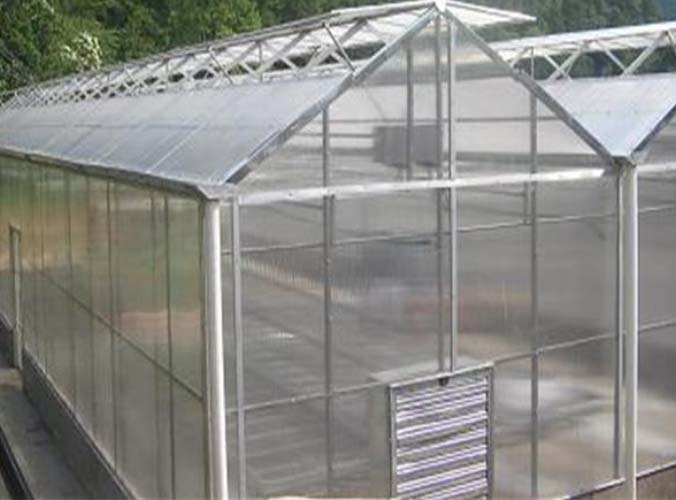
A polycarbonate greenhouse is bought as a frame and a set of panels, and what decides how it performs after a few seasons is done on the day the cover goes on and in the care that follows. This page stays with that side of the house: cutting the sheets to the opening and leaving room for movement, the glazing channel and gasket that hold them, the cleaners that must never touch the sheet, and when a panel is due for replacement. Panel thickness, wall count and performance figures are in the specification of these polycarbonate panels, and the houses built on them are in the PC greenhouse range.
Cutting the Sheets to the Opening, and the Allowance They Need
The cover is a polycarbonate hollow sheet, usually a double or a triple wall transparent panel and sometimes a single wave plate, and these do not cut alike. A hollow panel is cut across the flutes with a fine-tooth blade run at low speed, so the heat of the cut does not smear the channels; a wave plate is cut square across the corrugation so its edge lands flat in the glazing bar. A sheet cut short leaves a gap a gasket cannot bridge.
The panel then needs room, not a tight fit. Of the common covers it is glass that has a low coefficient of thermal expansion and contraction; the plastic moves noticeably more as the house warms and cools, and a panel held hard at both ends bows, pulls at its edge and works against the frame. The allowance is taken at the perimeter and along the glazing bar, so the sheet is held and sealed without being trapped, which is why a cover that creaks on a hot afternoon was fitted tight.
The Glazing Channel, the Gasket and the Closed Cut Edge
On this house the sheet is carried in a grooved channel rather than screwed through its face: the profile takes the wind load, and the gasket seated in the groove is what makes the joint watertight. That gasket, not the plastic, is the part of a cover most often at fault: once it has gone hard or rolled out of its groove, rain runs down the bar behind the sheet and shows inside as a drip that looks like a panel defect.
A hand run along the glazing bars is the simplest item in any service round. The gasket is pressed back where it has lifted and renewed where it has perished, and the same pass catches loose fixings on the frame of hot dip galvanized pipe, with damaged coating touched up before rust starts.
A cut edge is the other way in. Every cut leaves the flutes open, and an open flute takes dust, water and insects, which turns a clear panel grey from the inside and costs the house light. Those ends are closed with the closure strip or the polycarbonate tape matched to the sheet.
Cleaning the Cover: What to Use, and What Must Never Touch It
Rain keeps a pitched cover mostly clean; what builds up is dust, pollen, insect deposits, scale under the gutter line and a thin organic film, and that film quietly takes light out of the house.
Wash with plenty of lukewarm water and a mild soap or a cleaner labelled for polycarbonate, using a soft cloth, sponge or soft brush, then rinse before the water dries. These must never touch the panels: ammonia-based glass cleaners, alkaline cleaners, solvents and thinners, abrasive powders, scouring pads and steel wool. Polycarbonate is not glass, and those products leave a milky bloom rinsing will not take out.
A cover ages fastest through dry wiping of dusty panels, a pressure washer held close to the sheet, and washing in full sun while the panel is hot.
Scratches, Yellowing and When a Panel Is Due for Replacement
Two things age a cover: damage on the surface and sunlight inside the material. A light scuff in the body of a panel is cosmetic, but a scratch deep enough to open a flute, a cracked rib or a crack running out from a fixing is not, because it lets water in and grows with movement. A sheet made for greenhouse use carries its UV protection on one face, fitted outward, so the face is checked when the cover goes on.
Yellowing is the slow version of the same process: the panel hazes, the light inside flattens, and the change is read from the house rather than from a calendar. Haze around the fixings and along the glazing bars is the signal to look at the cover and not the frame.
The panels are the wear part of a covered house and the frame is not. A polycarbonate cover is used up sooner than a glass one, and sooner than the steel carrying it, so the sheet set is replaced within the life of the house. No fixed age can be put on that replacement: it follows the panel, the exposure of the site and how the cover is cleaned. The frame is graded: its coating is set to the corrosivity class of the site under ISO 9223 — class C2 in clean inland air, class C3 and C4 in between, class C5 on a severe coast — with BS EN ISO 14713-1 for each class.
What a Polycarbonate Cover Asks of You, Against Glass
Glass and polycarbonate both cover commercial houses and ask for different care. Glass has a low coefficient of thermal expansion and contraction, a light transmittance of about 90 percent and the clear appearance growers recognise; it is inert to sunlight, so it neither yellows nor is consumed by weather as a plastic sheet is, and it is easily obtained. Polycarbonate brings high light transmittance, good sealing, good impact strength and good insulation, and of the common covering materials it has the best overall performance; it also suits any region, cold inland or humid. The trade is that the sheet is the more expensive of the covers, and that upkeep falls to the panel: soft washing, gasket checks, an eye on scratches and haze, and a new set in time.
The factory has been building greenhouses for above 35 years, and its engineer department can travel to a foreign site to guide installation when the customer asks; customers also visit the factory each year. For outside reading, the Food and Agriculture Organization of the United Nations publishes guidance on protected cultivation, and Greenhouse Grower reports on greenhouse production and equipment. Send the cover type, the climate and the crop to sales@cngreenhouses.com or call +86 191 5068 3942, or use the contact page.
Frequently Asked Questions
Q: How much clearance should a polycarbonate panel be given when it is fitted?
A small clearance at the perimeter and along the glazing bar rather than a tight fit, because the plastic moves more with temperature than glass does. A panel held hard at both ends bows against the frame.
A small clearance at the perimeter and along the glazing bar rather than a tight fit, because the plastic moves more with temperature than glass does. A panel held hard at both ends bows against the frame.
Q: What should a polycarbonate cover be washed with?
Lukewarm water with a mild soap or a cleaner made for polycarbonate, applied with a soft cloth, sponge or soft brush and rinsed before it dries. Ammonia-based glass cleaners, alkaline or solvent cleaners, abrasive powders and scouring pads must not be used.
Lukewarm water with a mild soap or a cleaner made for polycarbonate, applied with a soft cloth, sponge or soft brush and rinsed before it dries. Ammonia-based glass cleaners, alkaline or solvent cleaners, abrasive powders and scouring pads must not be used.
Q: How do I judge when the panels are due for replacement?
Read the haze and the light rather than the calendar. A milky cast, a duller house, a scratch that has opened a flute or a crack at a fixing mean the panel has gone. The sheet set is the wear part, and the replacement point follows the panel and the site exposure.
Read the haze and the light rather than the calendar. A milky cast, a duller house, a scratch that has opened a flute or a crack at a fixing mean the panel has gone. The sheet set is the wear part, and the replacement point follows the panel and the site exposure.
Q: Where does water get into a polycarbonate cover?
At the two places where it is jointed: a gasket gone hard or lifted from the glazing channel lets rain run down the bar behind the sheet, and the open flutes at a cut edge take water and dust into the panel, so those ends are closed with the closure strip or tape matched to it.
At the two places where it is jointed: a gasket gone hard or lifted from the glazing channel lets rain run down the bar behind the sheet, and the open flutes at a cut edge take water and dust into the panel, so those ends are closed with the closure strip or tape matched to it.
Q: Does the steel frame need maintenance of its own?
Its coating is set to the corrosivity class of the site under ISO 9223 and BS EN ISO 14713-1, so a humid or coastal site is specified differently from clean inland air. In service the fixings are checked and any damaged coating touched up.
Its coating is set to the corrosivity class of the site under ISO 9223 and BS EN ISO 14713-1, so a humid or coastal site is specified differently from clean inland air. In service the fixings are checked and any damaged coating touched up.
Q: Can the factory send an engineer to help with installation?
Yes. The engineer department can travel to a foreign site to guide installation when the customer asks, and the company has been building greenhouses for above 35 years. Write to sales@cngreenhouses.com or call +86 191 5068 3942.
Yes. The engineer department can travel to a foreign site to guide installation when the customer asks, and the company has been building greenhouses for above 35 years. Write to sales@cngreenhouses.com or call +86 191 5068 3942.
Note: If you're interested in the product, please submit your requirements and contacts and then we will contact you in two days. We promise that all your informations won't be leaked to anyone.
 Deutsch
 Español
 Français
 Italiano
 Português
 日本の
日本の
 한국어
한국어
 العربية
 български
 hrvatski
 česky
česky
 Dansk
Dansk
 Nederlands
 suomi
suomi
 Ελληνικά
 हिन्दी
 norsk
norsk
 Polski
 Română
 русский
 Svenska