- Commercial Greenhouse
- Film Greenhouse
- PC Greenhouse
- Glass Greenhouse
- Tunnel Greenhouse
- Scientific Research Greenhouse
- Vegetable Greenhouse
- Flower Greenhouse
- Multi-span Greenhouse
- Sawtooth Greenhouse
- Greenhouse Equipments
- Greenhouse Accessories
- Hot Dip Galvanized Pipe
- Irrigation System
- Hydroponics System
- Planting Tools
- Planting technology
Tel: +86 191 5068 3942
Fax:
Mobile: +86 191 5068 3942
Contact: Alina
E-mail: sales@cngreenhouses.com
SKYPE:


Glass Greenhouse Glazing - Float vs Tempered Glass
Glass greenhouse glazing explained: 4-5mm float or 5mm tempered glass, single layer, above 90% light. See which sheet to specify and where.
.
TEL:+86 191 5068 3942
- Features


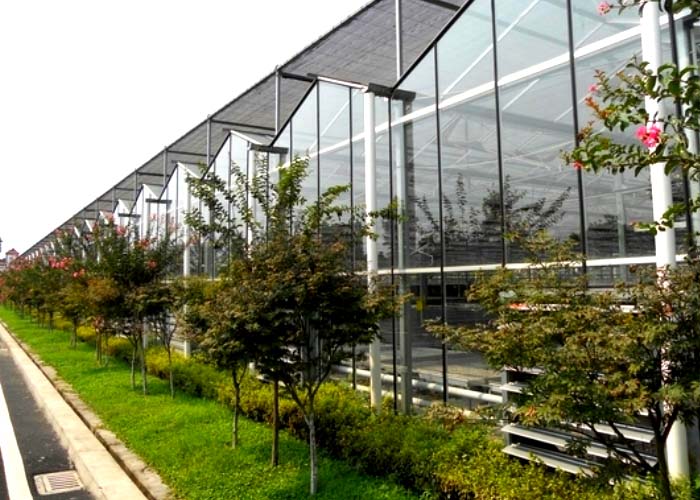
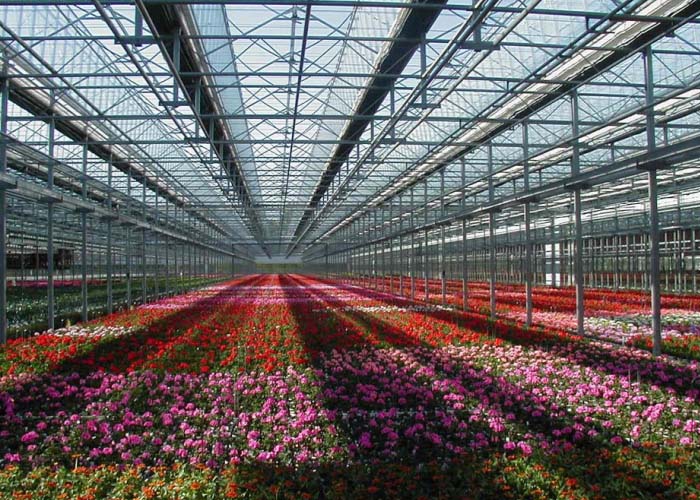
Basic Information:
Size: 15m*30m. Cover Material: Glass. Layer: Single. Type: Glass Greenhouse.
Feature: Small Scale. Area: 450 Square Meter.
Wind Load: 0.35kn/M2. Snow Load: 0.35kn/M2.
Export Markets: Global.
Application: Scientific research, High-end seed nursery, Hydroponics, etc.
Float Glass or Tempered Glass
The glass is the one part of the order that cannot be swapped once the frame is on site. This house is glazed with 4 mm or 5 mm float glass, or with 5 mm tempered glass.
Float glass. This is the flat sheet made by floating molten glass over a bath of tin, so its two faces are even and parallel and there is no ripple when you look through it at an angle. It is the standard greenhouse glazing and the less expensive of the two.
Tempered glass. The same sheet taken through a heat treatment. It resists impact far better than float glass, and when it fails it breaks into small blunt granules instead of long sharp shards. That break pattern is what makes it a safety glass: the reason to specify it is not light, it is what happens the day something hits the roof.
How an order is usually split. Tempered glass goes where breakage is a real event rather than a rare one: roof panes over a walkway or an entrance, house fronts open to visitors, and roofs in hail belts or exposed to wind-borne debris. Float glass carries the rest of the cover, and the two can be mixed in one house.
4 mm, 5 mm and What the Cover Transmits
Both thicknesses are run across the glass greenhouse models. On light alone the difference between them is small: the cover transmits above 90 percent of the daylight reaching it, more than a PC board house, and it holds that figure evenly across the floor instead of throwing the shadow lines a hoop frame does.
Thickness earns its keep in other ways. A 4 mm pane is the lighter sheet, so it loads the glazing bars less and is easier to handle on a long roof. A 5 mm pane is stiffer and heavier, and where the roof takes wind lift and snow the thicker section carries the load with less deflection. In practice 4 mm is asked for most often on the walls and 5 mm on the roof and on the corners of an exposed site, and 5 mm tempered is specified where that thickness also has to be safety glass.
Two properties come with the material itself. Glass has a low coefficient of thermal expansion and contraction, so panes and glazing bars move very little as the house heats and cools and the cover stays tight through the seasons. Glass is also inert under ultraviolet light: it does not yellow, chalk or go brittle the way plastic covers do, and it keeps its transmission as it ages while the surface is kept clean. On a dusty site roof washing is part of running the house, because 90 percent is a clean-pane figure.
Single Layer or Double Glazed
This house is offered with a single layer of glass: one pane over the whole cover, in the 4 mm or 5 mm thickness above. Single layer is the maximum-light, minimum-weight version of a glass house.
Double glazing, or hollow glazing, puts a sealed air gap between two panes. What it buys is heat: the air gap insulates, so the cover loses far less warmth on a cold night and the heating load falls with it. What it costs is weight, price and some light, because every extra pane and frame line takes something out of the transmission.
The rule is simple. Where the winter heating bill decides whether the house makes money, double glazing or a polycarbonate sheet house keeps warmth in better than single glass. Single-layer glass is chosen where light over a long working season is worth more than the heat it lets out: high-end seedling nursery work, plant research and hydroponics, and flowers and vegetables grown in the late autumn and winter window.
Breakage, Replacement and Support
Glass is brittle, and that is the honest trade-off of the material. Wind does not abrade it the way it works on film, but a dropped tool, a hailstone or a stone off a mower will break a pane. Because the cover is built pane by pane, that is a local repair rather than a failure of the cover: the sheet sits in glazing bars and is held by clips, so it is released and replaced on its own without stripping the roof. Keep a small stock of spare panes in the thickness you ordered and a repair does not wait on a shipment.
The structure around the glass is a frame of hot dip galvanized steel pipe under a gable roof, with gable spans from 8 metres to 10.8 metres and a total structure height of 4 metres to 5.3 metres; single-slope and dual-slope glass greenhouses are both built on it. Frame protection is specified to the corrosivity class of the site under ISO 9223 and BS EN ISO 14713-1, from class C2 inland air through C3 urban to C4 industrial and C5 coastal. It is a simple and effective answer on varied or complex topography and adapts to any type of landscape, because the structure sits on its own foundation rather than on the shape of the land.
What glass asks in return, set against a flexible cover, is a higher first cost and more care during installation and maintenance. Those are the terms on which a glass house is bought: the wider range is compared on the commercial greenhouses page when you want to weigh glass against film or PC sheet. Covering choice is part of mainstream crop production rather than a niche: USDA treats controlled-environment growing as ordinary agriculture, and the trade around the glazing that supplies it is reported by HortiDaily.
Normal shipping time is 4 to 6 weeks after receipt of the order, plus transit from the factory. A payment of 30 percent of the basic greenhouse price may be charged when the order is placed, with the balance charged before shipment.
On the factory side, above 35 years in greenhouse manufacturing and our own engineer department: on request we send engineers abroad to guide the installation on site, and customers visit the factory every year for the same reason. To have the glass schedule checked against your site, send us the site details, write to sales@cngreenhouses.com or call +86 191 5068 3942.
Frequently Asked Questions
Q: What glass is used on this greenhouse?
4 mm or 5 mm float glass, or 5 mm tempered glass, over a single-layer cover. The frame is hot dip galvanized steel pipe under a gable roof, and single-slope and dual-slope glass houses are both available on it.
4 mm or 5 mm float glass, or 5 mm tempered glass, over a single-layer cover. The frame is hot dip galvanized steel pipe under a gable roof, and single-slope and dual-slope glass houses are both available on it.
Q: Should I specify float glass or tempered glass?
Tempered glass where breakage is a real risk: roof panes over walkways and entrances, house fronts open to visitors, and roofs in hail belts or exposed to wind-borne debris. Float glass on the rest of the cover. The two can be mixed in one house, and tempered glass is the more expensive sheet.
Tempered glass where breakage is a real risk: roof panes over walkways and entrances, house fronts open to visitors, and roofs in hail belts or exposed to wind-borne debris. Float glass on the rest of the cover. The two can be mixed in one house, and tempered glass is the more expensive sheet.
Q: Is single-layer glass enough, or do I need double glazing?
Single layer gives the most light and the lightest cover, and it is what this house is quoted with. Double glazing adds a sealed air gap, which cuts heat loss on cold nights at the cost of weight, price and some light. Where the winter heating bill decides the economics, single-layer glass is the wrong cover.
Single layer gives the most light and the lightest cover, and it is what this house is quoted with. Double glazing adds a sealed air gap, which cuts heat loss on cold nights at the cost of weight, price and some light. Where the winter heating bill decides the economics, single-layer glass is the wrong cover.
Q: How much light does the glass cover transmit?
Above 90 percent of the daylight reaching it, higher than a PC board house. That is a clean-pane figure, so a dusty or algae-streaked roof drops the level and the crop notices before the owner does.
Above 90 percent of the daylight reaching it, higher than a PC board house. That is a clean-pane figure, so a dusty or algae-streaked roof drops the level and the crop notices before the owner does.
Q: What happens when a pane breaks, and how is it replaced?
The glass sits in glazing bars and is held by clips, so a broken pane is released and replaced on its own without stripping the roof. Keep a small stock of spare panes in the thickness you ordered.
The glass sits in glazing bars and is held by clips, so a broken pane is released and replaced on its own without stripping the roof. Keep a small stock of spare panes in the thickness you ordered.
Q: What wind and snow loads is this house designed for?
Wind load 0.35 kN/M2 and snow load 0.35 kN/M2 on the frame with 4 mm or 5 mm glass. If your site is more exposed or carries heavier snow than those figures, send the local values with your enquiry so the glazing schedule is checked before the order.
Wind load 0.35 kN/M2 and snow load 0.35 kN/M2 on the frame with 4 mm or 5 mm glass. If your site is more exposed or carries heavier snow than those figures, send the local values with your enquiry so the glazing schedule is checked before the order.
Note: If you're interested in the product, please submit your requirements and contacts and then we will contact you in two days. We promise that all your informations won't be leaked to anyone.
 Deutsch
 Español
 Français
 Italiano
 Português
 日本の
日本の
 한국어
한국어
 العربية
 български
 hrvatski
 česky
česky
 Dansk
Dansk
 Nederlands
 suomi
suomi
 Ελληνικά
 हिन्दी
 norsk
norsk
 Polski
 Română
 русский
 Svenska