- Commercial Greenhouse
- Film Greenhouse
- PC Greenhouse
- Glass Greenhouse
- Tunnel Greenhouse
- Scientific Research Greenhouse
- Vegetable Greenhouse
- Flower Greenhouse
- Multi-span Greenhouse
- Sawtooth Greenhouse
- Greenhouse Equipments
- Greenhouse Accessories
- Hot Dip Galvanized Pipe
- Irrigation System
- Hydroponics System
- Planting Tools
- Planting technology
Tel: +86 191 5068 3942
Fax:
Mobile: +86 191 5068 3942
Contact: Alina
E-mail: sales@cngreenhouses.com
SKYPE:


- Features


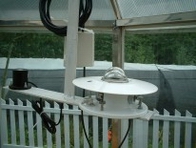
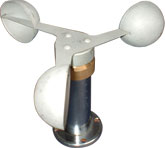
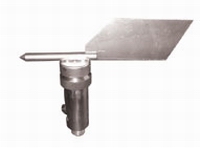
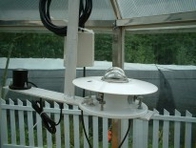
An automatic control system replaces the grower's hand on the vent handle with a loop of sensing, judgement and action that runs without being watched. The photos above show the sensing end of it: the weather station cluster, the anemometer and the wind vane that tell the system what the outside conditions are doing. This page follows that loop from the sensor to the actuator, and covers the parts that decide whether it works in practice.
What the control system is made of
A greenhouse control installation is built from weather stations, sensors, a master control unit and a computer, and it drives the equipment that changes the house: windows, screens, cooling and heating. The sensors measure what is happening, the controller compares those readings with the values the grower has set, and the actuators move the equipment until the readings match.
The important point is that the system is only as good as the loop. A controller cannot correct what no sensor reports, and it cannot hold a value that the equipment cannot move quickly enough. Every part of the chain therefore has to be chosen against the others, which is why the sensor layout and the actuator capacity are settled before the controller is selected.
Sensing: what is measured, and where
Temperature, light intensity and the other environmental factors are collected continuously, and the placement of the sensors decides how representative those readings are. A sensor mounted at the ridge reads the air that the crop never sees; the same sensor in the crop layer, protected from direct sun and from the wetting of an irrigation line, reads what the plants are actually experiencing.
Outside conditions matter as much as inside ones, which is what the weather station is for. Wind speed and direction decide whether opening a vent will bring useful exchange or simply damage the structure, and external light and temperature tell the controller how much heat and how much light are coming in. A single sensor gives one reading for the house; a second one at the far end shows whether the house is actually uniform, which is the number that matters when the crop is zoned.
The decision layer: setpoints, dead bands and priority
The controller works from setpoints: the values the grower wants held for temperature, humidity, light and the rest. Around each setpoint a dead band is used, so that the equipment does not start and stop continuously as a reading crosses the target; the vents open when the house is warmer than the band and close again when it is cooler, which keeps the drive motors and the climate stable at the same time.
Where two targets conflict, the controller needs a priority. Cooling and ventilation remove moisture as well as heat, heating and closing the house conserve both, and light reduction through a shading screen fights with the crop's need for light. A house is normally divided into zones so that each is controlled on its own readings, and the priorities are set so that the action the crop needs most takes effect first.
Actuation: the equipment the system drives
On the output side the controller runs the window drives and the screen motors, the fans and the wet pad pumps, the heating valves or burners, the supplementary lights and the irrigation valves. Each of those has its own characteristics: window drives have travel limits and end stops, screen motors have limits at both ends of their travel, and the heating equipment has to be interlocked with ventilation so that the two never run against each other.
That interlock is worth spelling out, because it is one of the few places where a control system can waste real money. Opening the vents for temperature or humidity throws away heat and added carbon dioxide at the same time, so the interlock holds the heating off while the vents are open, and the enrichment off as well. Manual override stays available on every output, because someone has to be able to open a house when the controller is down.
Alarms, fallback and commissioning
The failure that matters most is not the controller stopping but a sensor drifting or failing while the system carries on acting on a wrong number. A failed sensor reading a fixed high temperature will hold the house open all night, and one reading a fixed low value will keep the heating running. Cross checking between sensors, and high and low alarms on every measured value, are what catch that before the crop suffers.
A house also needs a defined response to losing power or the network: vents that fail safe rather than fail closed, alarms that reach a phone rather than only a panel, and a manual routine for the period before anyone arrives. Commissioning is where all of this is set up: each sensor is checked against a reference, each actuator is run through its full travel, the interlocks are proved, and the setpoints and dead bands are set for the crop that is actually growing rather than left at the factory values.
To have the control system designed together with the house it drives, write to sales@cngreenhouses.com or call +86 191 5068 3942. With above 35 years in greenhouse engineering we supply greenhouse equipment systems as a package, and keep reference material on what a single control unit can take over in multifunction greenhouse control, on the logic behind venting in ventilation control, and on how the whole environment is balanced in climate controlled greenhouse operation.
Independent background on controlled environment production is published by the NGMA, and current commercial reporting by HortWeek.
Frequently Asked Questions about greenhouse automatic control
Q1: What does a greenhouse automatic control system actually control?
The equipment that changes the growing environment: window drives, shading and insulation screens, fans and wet pads, heating, supplementary lighting and irrigation. Sensors measure the house, the controller compares the readings with the setpoints, and those outputs are moved until the readings match.
Q2: Where should the sensors be mounted?
In the crop layer, at the height the plants occupy, shielded from direct sun and from spray or irrigation lines. A sensor at the ridge reads air the canopy never experiences, and a wet or sunlit sensor reads a number that has nothing to do with the crop.
Q3: What is a dead band and why does it matter?
It is the margin around a setpoint within which the controller takes no action. Without it, a reading hovering at the target would start and stop the vents continuously, wearing the drives and swinging the climate; with it, the equipment runs less often and the house stays steadier.
Q4: Can heating and ventilation run at the same time?
They are interlocked so that they do not. Opening the vents to remove heat or moisture also throws away warmth and added carbon dioxide, so the controller holds the heating and enrichment off while the vents are open, and manual override stays available on every output.
Q5: What happens if a sensor fails?
That is the dangerous case, because the system keeps acting on a wrong number rather than stopping. A failed sensor reading a fixed high temperature can hold the house open all night, which is why values are cross checked between sensors and every measured value carries high and low alarms.
Q6: What should be checked when the system is commissioned?
Each sensor against a reference, each actuator through its full travel including the end limits, every interlock proved, and the alarms tested through to whoever receives them. The setpoints and dead bands are then set for the crop actually growing rather than left at factory defaults.
 Deutsch
 Español
 Français
 Italiano
 Português
 日本の
日本の
 한국어
한국어
 العربية
 български
 hrvatski
 česky
česky
 Dansk
Dansk
 Nederlands
 suomi
suomi
 Ελληνικά
 हिन्दी
 norsk
norsk
 Polski
 Română
 русский
 Svenska