- Commercial Greenhouse
- Film Greenhouse
- PC Greenhouse
- Glass Greenhouse
- Tunnel Greenhouse
- Scientific Research Greenhouse
- Vegetable Greenhouse
- Flower Greenhouse
- Multi-span Greenhouse
- Sawtooth Greenhouse
- Greenhouse Equipments
- Greenhouse Accessories
- Hot Dip Galvanized Pipe
- Irrigation System
- Hydroponics System
- Planting Tools
- Planting technology
Tel: +86 191 5068 3942
Fax:
Mobile: +86 191 5068 3942
Contact: Alina
E-mail: sales@cngreenhouses.com
SKYPE:

News Show
How a Climate Controlled Greenhouse Works: Light, Heat, Air
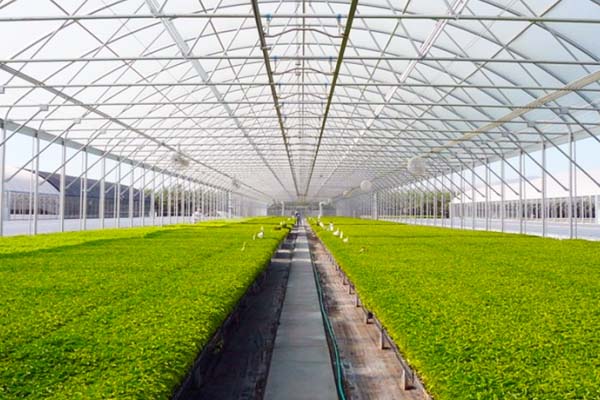
Some of my earliest memories are of being around greenhouses. I remember weekends at my Granddad's place in London, where he had built a greenhouse and a fish pond in the little garden behind the flats, and the first thing I did on arrival was reach for the goldfish food off the shelf above his greenhouse bench. My parents rented a plot when I was growing up in England, and the greenhouse on it was what got the seedlings going and what kept fresh vegetables coming all year. That habit carried into my own adult life, and it is the reason this page exists. Growing in a greenhouse takes a little more knowledge than putting up a protective structure and throwing some plants inside it, so here is how the thing actually works, element by element, in the same greenhouse planting technology library as our other growing articles.
A Greenhouse Is Four Balances, Not One
Ask what a greenhouse does and most answers name one thing - it stays warmer. It is more useful to see it as four balances that move against each other all day: light, heat, humidity and air. Light is the input that drives everything else, because it is the energy the crop turns into growth. Heat is what the structure lets you keep, and where a house sits on the cold-to-heated spectrum decides how much of the year you can use it. Humidity is the moisture the crop transpires, held or carried away by the same air that carries the heat. Air is the medium all four travel in, and it is the one you can move on demand, because every vent you open trades heat and humidity out for fresh air in.
None of the four can be set independently. Shade the house in summer and you cut light, so transpiration falls, so humidity behaves differently. Close the vents at dusk to hold heat and you also hold the moisture the crop gave off during the day. Choose a heavier cover to trap heat and you change both how much light gets in and how much air leaks out. A greenhouse that works well is not one with the best single component - it is one where the four settings were decided together, at the design stage, by somebody who knew which crop was going in.
The Day-Night Cycle: What Changes and Why
Through the day the sun is the only significant heat input, and it arrives faster than the crop and the soil can absorb it. Air temperature therefore climbs ahead of the mass inside the house, which is why a house that was cold at dawn can overshoot by mid-morning and need venting even in weather that still feels cold outside. As light and temperature rise, the crop transpires harder, so the air inside gets moister as the day goes on. In the afternoon the inputs fall away, and the vent decision at dusk is the most consequential one of the day.
At night the heat input stops, and the house does nothing but lose heat through the cover and through its leaks. A closed house also traps the moisture produced during the day; as air cools it can hold less of that moisture, so relative humidity climbs while the temperature falls, and any surface that drops below the dew point collects condensation. This is the reason night-time humidity problems appear in houses that look perfectly dry at noon, and the reason growers watch the first hours after sunset rather than the middle of the day.
The practical consequence is that a greenhouse is managed as two different buildings - a ventilated one by day and a sealed one by night - and the design has to suit both. If the house is also heated, the heating side is a separate sizing exercise; the method for that is set out in our companion page on heating needs in a greenhouse.
The Covering Is the Choice That Sets Three of the Four
Of every decision made at design stage, the covering is the one that reaches furthest. It sets how much light reaches the crop, how much heat the house holds overnight, and how much air leaks in and out when the vents are shut. Those three pull against each other, so a cover that is best at one is rarely best at all three.
On light, the published figures for what reaches the crop generally run around 80 to 90 per cent for new single-layer film, roughly 85 to 90 per cent for glass, and about 70 to 82 per cent for twin-wall polycarbonate. Polycarbonate looks like the loser on that line until you remember that it diffuses what it passes, so a canopy under it is lit more evenly than under clear glazing with hard shadows. The trade is easier to see with film: moving from a single layer to a double layer buys real insulation, at a cost of roughly 7 to 15 per cent of the light the single layer was passing. That is the whole design argument in one number - every extra layer of cover is heat bought with light.
The usable light also depends on things the cover cannot control. Frame members, gutters, hanging crops, heating pipes and dirt on the glazing all take a share before the light reaches the canopy, and film ages - it yellows and hazes, so a house performing well in its first winter will transmit less in its third. Because of that, the covering choice and the glass areas of a house are best settled together rather than separately, which is how the covering options in our glass greenhouse covering range are presented.
Where the House Sits on the Cold-to-Heated Spectrum
A cold house is the simplest form of greenhouse. It has no artificial heat at all, so when the outside temperature drops below freezing the growing season shortens - it is not possible to grow frost-sensitive plants from late autumn through to the middle of spring in one. What a cold house does do is extend the season beyond what the open garden manages, by trapping the heat of the sun during the day, and it gives you a place to work out of the wind and rain while it shelters the plants from the same weather.
Put a heater into that house and it becomes a true greenhouse, and the hobby turns into a year-round one. The figure to plan around is that the minimum temperature required to grow greenhouse plants through the winter is 45 degrees F (7.2 degrees C) - hold that and the house is productive in the cold months, so the cost of the heat has to be allowed for in the running budget rather than treated as a surprise. One siting decision cuts both the build cost and the heating cost: put the greenhouse as close to your house as you reasonably can. Shorter runs mean less digging and less cable and pipe to install, and in winter a house you can reach in a few steps gets checked, vented and closed on days when a house at the bottom of the garden does not.
Air Exchange: The Number That Ties the Cover to the Vents
The link between covering and ventilation is a single measurable quantity: how many times an hour the whole volume of air in the house is replaced by outside air. Published figures for new construction put a double plastic film house at roughly 0.75 to 1.5 air changes per hour, and a glass or fibreglass house at roughly 0.50 to 1.0. Those numbers are not losses to be minimised - some exchange is necessary, and it is what keeps the air inside from becoming stale and wet. They are useful because they tell you what the house is already doing before you touch a vent.
The same source shows how quickly that changes when a house is not maintained: older glass construction in good condition runs at about 1.0 to 2.0 air changes per hour, and older glass in poor condition at 2.0 to 4.0. A leaky house is not just an energy problem. Because the exchange is uncontrolled, it happens hardest on the windiest, coldest nights, exactly when you least want it, and it strips the air of the moisture balance you were managing. Wind exposure and construction quality therefore belong in the same conversation as the vent and fan spec, which is the subject of our greenhouse ventilation system article.
Portable, Hobby, Kit, Sun Room, Large or Mini
Greenhouses on the market fall into a wide spread of types, and each answers a different level of commitment. Where a grower builds a structure from scratch on a proper foundation, the expectation from the house is correspondingly serious. For growers who want less of a project there are the smaller forms - the portable greenhouse, the hobby greenhouse, the mini greenhouse and the sun room kit - and each manufacturer publishes its own specifications and recommendations for its own range, because a portable house and a commercial multi-span frame are not the same product with a different label.
The point to carry into the purchase is that the type of house decides which of the four balances you can still adjust afterwards. A structure with proper vents, a real door and a covering you chose deliberately gives you control over all four. A small kit house with a fixed cover and one zip door gives you control over very little, and is best judged honestly against what you actually intend to grow in it.
The Planning Checklist Before You Build
Working through this list before construction starts is what separates a house that performs from one that gets rebuilt. Decide the type of greenhouse you want - whether that is a cold house, a portable greenhouse, a hobby greenhouse, a greenhouse kit, or a large or a mini greenhouse. Decide the construction and the type of foundation it will sit on. Decide which greenhouse equipment you will need, and which greenhouse covering or glazing suits your site and crop. Then decide the systems that keep the four balances in range: watering, humidity control, heating, and air circulation.
Those seven decisions are cheapest to make on paper and most expensive to make later. We quote complete houses rather than frames alone, so covering, vents, irrigation, heating and the control gear can be specified in one pass instead of being retrofitted one season at a time; the components sit inside our greenhouse climate control accessories range.
Why Us
Bozong Greenhouse has above 35 years of professional greenhouse production behind it. From a small workshop, the company has grown into a professional conservatory manufacturer with a real presence in the market, and we build complete houses: cooling and heating, irrigation, fertilization, hydroponics, ventilation, lighting and automatic control are all part of the package rather than extras sourced elsewhere.
Because a greenhouse only works when its four balances are matched to the crop and the climate, we design around your site rather than around a catalogue: the frame, span and covering are adjusted to your conditions, and the systems are sized to the crop you intend to grow.
Guidance on protected cropping and greenhouse practice is published by the FAO, and commercial greenhouse practice is reported every month by Greenhouse Grower.
Frequently Asked Questions:
Q: What does a greenhouse actually do for the plants inside it?
A: It manages four balances - light, heat, humidity and air - that the open garden leaves to the weather. The cover lets light in and holds heat back, the crop transpires into the air it sits in, and the vents exchange that air for outside air. Extending the season is the visible result, not the mechanism.
A: It manages four balances - light, heat, humidity and air - that the open garden leaves to the weather. The cover lets light in and holds heat back, the crop transpires into the air it sits in, and the vents exchange that air for outside air. Extending the season is the visible result, not the mechanism.
Q: What is the difference between a cold house and a heated greenhouse?
A: A cold house has no artificial heat at all. It still extends the season beyond the open garden by trapping the sun's heat during the day, but it cannot carry frost-sensitive plants from late autumn to mid-spring. Add a heater and it becomes a true greenhouse and a year-round one, with 45 degrees F (7.2 degrees C) as the minimum temperature to grow greenhouse plants through the winter.
A: A cold house has no artificial heat at all. It still extends the season beyond the open garden by trapping the sun's heat during the day, but it cannot carry frost-sensitive plants from late autumn to mid-spring. Add a heater and it becomes a true greenhouse and a year-round one, with 45 degrees F (7.2 degrees C) as the minimum temperature to grow greenhouse plants through the winter.
Q: Why does the house need venting in the middle of the day and closing at night?
A: Solar gain arrives faster than the crop and soil can absorb, so air temperature overshoots around mid-morning even in cold weather, and that is when the house is vented. Once the sun goes the heat input stops and the house only loses heat, so closing up holds what is left. The same closing also traps the day's moisture, which is why night humidity is the harder problem to manage of the two.
A: Solar gain arrives faster than the crop and soil can absorb, so air temperature overshoots around mid-morning even in cold weather, and that is when the house is vented. Once the sun goes the heat input stops and the house only loses heat, so closing up holds what is left. The same closing also traps the day's moisture, which is why night humidity is the harder problem to manage of the two.
Q: How much light does the covering cost me?
A: Published figures generally run around 80 to 90 per cent for new single-layer film, about 85 to 90 per cent for glass, and roughly 70 to 82 per cent for twin-wall polycarbonate. Adding a second film layer for insulation costs roughly a further 7 to 15 per cent of the light. Frame members, pipes and dirt take an additional share before the light ever reaches the canopy.
A: Published figures generally run around 80 to 90 per cent for new single-layer film, about 85 to 90 per cent for glass, and roughly 70 to 82 per cent for twin-wall polycarbonate. Adding a second film layer for insulation costs roughly a further 7 to 15 per cent of the light. Frame members, pipes and dirt take an additional share before the light ever reaches the canopy.
Q: How airtight should a greenhouse be?
A: New double plastic film construction typically exchanges about 0.75 to 1.5 air changes per hour and new glass or fibreglass about 0.50 to 1.0. Some exchange is needed, so the target is control rather than zero. Older glass in poor condition can run at 2.0 to 4.0 air changes per hour, and because leakage is worst on cold, windy nights it takes both heat and moisture control with it.
A: New double plastic film construction typically exchanges about 0.75 to 1.5 air changes per hour and new glass or fibreglass about 0.50 to 1.0. Some exchange is needed, so the target is control rather than zero. Older glass in poor condition can run at 2.0 to 4.0 air changes per hour, and because leakage is worst on cold, windy nights it takes both heat and moisture control with it.
Q: Where should the greenhouse be positioned on the plot?
A: As close to the house as you reasonably can. Shorter runs mean less digging and less electrical and plumbing work, and in winter a house a few steps away gets checked, vented and closed on days when one at the far end of the garden is left alone. Beyond that, the light and solar decisions follow from siting, so they are best settled before construction begins.
A: As close to the house as you reasonably can. Shorter runs mean less digging and less electrical and plumbing work, and in winter a house a few steps away gets checked, vented and closed on days when one at the far end of the garden is left alone. Beyond that, the light and solar decisions follow from siting, so they are best settled before construction begins.
If you need to ask a question and get some help to find the best greenhouse for you, then just call us on +86 191 5068 3942 or send E-mail to sales@cngreenhouses.com
 Deutsch
 Español
 Français
 Italiano
 Português
 日本の
日本の
 한국어
한국어
 العربية
 български
 hrvatski
 česky
česky
 Dansk
Dansk
 Nederlands
 suomi
suomi
 Ελληνικά
 हिन्दी
 norsk
norsk
 Polski
 Română
 русский
 Svenska