- Commercial Greenhouse
- Film Greenhouse
- PC Greenhouse
- Glass Greenhouse
- Tunnel Greenhouse
- Scientific Research Greenhouse
- Vegetable Greenhouse
- Flower Greenhouse
- Multi-span Greenhouse
- Sawtooth Greenhouse
- Greenhouse Equipments
- Greenhouse Accessories
- Hot Dip Galvanized Pipe
- Irrigation System
- Hydroponics System
- Planting Tools
- Planting technology
Tel: +86 191 5068 3942
Fax:
Mobile: +86 191 5068 3942
Contact: Alina
E-mail: sales@cngreenhouses.com
SKYPE:

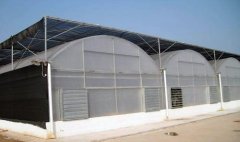

Film Greenhouse External Shading: Rate, Drive, Control
How an external shade system works on a film greenhouse: shade rate for the crop, the drive that draws the screen, and the cooling it gives the house.
.
TEL:+86 191 5068 3942
- Features


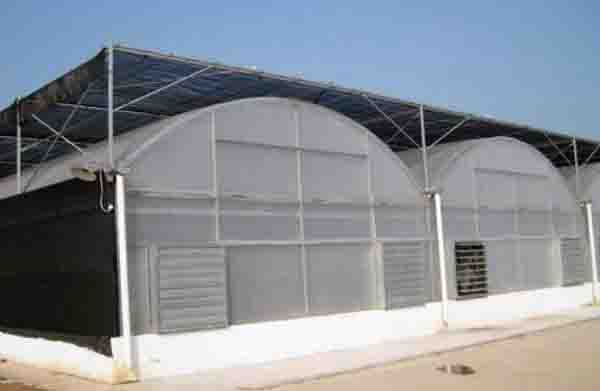
This model is a multi-span film greenhouse, also known as an agricultural plastic poly film greenhouse, and the part of it that this page deals with is the external shade system: the screen that sits above the film, its support, the drive that draws it across the roof and the control that decides when it opens. The film itself is a settled decision - a single or a double layer of 0.15 mm or 0.12 mm film, held by aluminium clips in a grooved channel - so on a house like this the daily change in light and heat has to come from a system that moves, not from the cover. It is one of the added systems in our film greenhouse range, and it is quoted with the house rather than fitted afterwards.
The Shade System Is Not Part of the Covering
On this house the covering and the shading are two different systems that happen to work on the same roof. The film is fixed for the season: it is locked into the grooved channel with aluminium clips and it stays there through the crop cycle, which is what gives the plants a long lasting covering with light transmission, UV protection and tensile strength. The shade screen does the opposite job. It is there to be in the way at midday and out of the way when it is not wanted, and the whole value of the system is that it can be taken out of the light path without touching the film.
That is why shading appears in the list of systems that can be added to this model, along with cooling and heating, irrigation, ventilation, fertilization and benches. It is not a second covering layer and it does not replace the film. Think of it as the one element of the house that is adjustable across the day, while the film, the frame and the channel are fixed for the whole season. In our equipment range the hardware is listed as the external shading system, and it is supplied alongside the house rather than as a separate purchase.
Why the Screen Sits Outside the Film
An external screen intercepts the sun before the radiation has entered the house. An internal screen does the opposite: the radiation is already inside by the time the screen meets it, and the heat then has to be dealt with in the air around the crop. That order of events is the whole reason a grower chooses to carry the screen above the roof, and it is also why the external screen does most of the cooling work when a house carries both.
The internal screen has a second job that the external one cannot do, which is to hold warmth in overnight, and in our range the internal shading system is described as day cooling and night insulation together. The external screen is a daytime instrument. Where a site is bright enough to need both, the two are quoted as a pair, and the page you are reading describes the outside one.
Because the screen lives above the film, it is not simply a sheet of fabric laid on a roof. Screen, support, drive and control form a structure in their own right, and a screen that is drawn out in the middle of the day adds surface for the wind to push against. A shade system is therefore specified with the same design wind load as the house underneath it - this model is listed at 0.35 kN/m2 - and it is worth settling at the drawing stage rather than adding a screen to a finished house without a second look at the roof.
Matching the Shade Rate to the Crop
The screen is ordered by its shading rate, and our polyethylene screens cover a range from 65% to 90%, so the same house frame can be fitted for a seedling crop or for a flowering crop without changing the structure. The fabric itself, with its weight in grammes per square metre and its colour options, is described on the shade screen rates we supply; what belongs on this page is the decision you make when ordering it.
More shade is not automatically better. Every extra per cent of shading takes heat out of the house and also takes light away from the crop, and a house that is already working at the edge of its light budget will lose growth rather than gain comfort. The figure should be chosen against what the crop needs: vegetable, fruit, flower and seed nursery work all use this structure, but they do not all want the same light level at midday. A seedling house and a cutting house on one site rarely settle on the same number, and the point of a retractable screen is that the shading rate and the hours of shade can be treated as two separate decisions.
Drawing the Screen In and Out
The screen is drawn across the roof through the middle of the day and pulled back when it is not needed, and it is drawn by a rack and pinion or cable drive. On this model the operating drives are quoted as manually or electrically operated, so the way the shade screen is moved is settled at the same time as the rest of the configuration rather than as a separate afterthought. A long multi-span roof is a wide piece of fabric to move, and the drive and the screen support are sized together for the run you order.
Control matters as much as drive. The screen has to reach both ends of its travel, because a screen that opens fully but cannot retract completely gives away part of the light it was installed to protect, and a screen that closes short of the far side leaves a strip of roof working at full sun. In practice the control decides the daily schedule: open when the sun is high or the house is running warm, closed again as the angle drops or the sky fills in, and pulled right back when the crop wants everything the sky can give.
There is a mechanical point that is easy to miss. The screen runs above the film, so the support has to hold a clear gap between the fabric and the covering over the whole span. If that gap closes, a gust can press the screen down onto the film, and the film then takes a load it was never sized for. The total structure height of this house runs from 4.3 m to 6.5 m, and the height you order is what creates the clearance under the shade frame.
What the Shade Does for the House and the Crop
The external shade system does three things on a film house, and all three come from the same move: it reduces the indoor temperature, it keeps the crop away from burning light, and it is adjusted to the light and temperature needs of the particular crop. On a film house those three matter more than they do on a lighter-glazed building, because film transmits well and a closed house with a full crop inside will gain heat quickly once the sun is overhead.
The gain is on the load side rather than on the crop side. A screen that stops radiation at the roof means the air inside the house has less heat to shed, so the ventilation and any cooling equipment are working on a smaller problem through the hottest hours of the day. Shading and ventilation are quoted together for exactly that reason - shade alone holds a house down only as far as the air can move. This model keeps a low energy consumption in its own description, and the shade system supports that by taking heat out before it arrives, rather than spending energy to remove it afterwards. How other growers set that balance through the season is followed by the horticulture trade press, for example HortWeek.
The retractable part is what makes the system work in winter as well as summer. A permanent screen takes a share of the light all year, which is a poor bargain on a short winter day. A screen that pulls right back gives the crop the full winter light and the full benefit of a covering that already prevents heat loss and cold air intrusion, and it comes out again in spring. That flexibility is the reason the system is offered with the house, and it is also the reason the drive and the control should not be treated as the least important part of the order.
The Screen, the Frame and the Loads
The shade system hangs on the same structure as everything else. The frame is hot dip galvanized steel pipe, chosen to avoid rust on a house that stays damp inside, and the pipes that carry the arch roof also carry the shade support above it. The aluminium parts on this house are the film fixings - the cover may only be held by polyethylene with aluminium clips in the grooved channel - and the way the steel and the aluminium divide their work is set out on the galvanized frame the shade system hangs on.
The rest of the house is the standard multi-span package: an arch roof, spans of 6.4 m, 8 m, 9.6 m or 10 m, a total structure height of 4.3 m to 6.5 m, a 64 m by 40 m reference layout covering 2,560 square metres, and a design wind load of 0.35 kN/m2. Custom-cut lengths are available on many of the components, which matters more on a shaded house than on a bare one, because the shade support has to follow the same bay lines as the arches if the screen is to run true along the roof.
Specifying a Shaded Film Greenhouse
Six items let a shaded house be quoted without a second round of questions: the span, the total structure height, the run length, the shade rate you want, whether the screen is external only or external with an internal screen as well, and how the drive is to be operated. Add the crop you plan to grow and the summer conditions on the site, because the shade rate is chosen against the crop rather than against the latitude alone, and the ventilation is then quoted to suit the same figure.
The house ships in three groups that follow the assembly order on site - metal structures, covering system and install accessories - and the shade system joins the order as an added system rather than being packed as a fourth shell group. Because the support, the drive and the screen all come from the same supplier as the frame and the film, the clearances, the bay spacing and the fixings are drawn together instead of being reconciled on site between three deliveries.
For background on screened growing and protected cultivation, public material is published by bodies such as the USDA.
Why Us
We have produced greenhouses and their steel structures for above 35 years, and this house, its frame and its shade support are made in our own factory rather than assembled from bought-in parts. Our engineer department reviews the span, the roof height and the shade duty with the buyer, and where a customer asks, we send engineers abroad to guide the installation on site. Growers and project contractors visit the factory each year to see the frames and the equipment being made before they order. To have a shaded house quoted, call +86 191 5068 3942 or write to sales@cngreenhouses.com with the span, the run and the crop you have in mind.
Frequently Asked Questions:
Q: Is the external shade system part of the film covering?
A: No. The film is fixed into the grooved channel with aluminium clips and stays on the house for the crop cycle, while the shade screen is a separate system carried above the roof on its own support. The screen is the part of the house that can be moved across the day; the film is not.
A: No. The film is fixed into the grooved channel with aluminium clips and stays on the house for the crop cycle, while the shade screen is a separate system carried above the roof on its own support. The screen is the part of the house that can be moved across the day; the film is not.
Q: Which shading rate should I order for my crop?
A: The screens we supply run from 65% to 90% shading rate, so the range covers everything from a light shade over a light-hungry crop to heavy shade for a seedling or cutting house. Choose against the light the crop needs at midday, not against the hottest day on the site, because every extra per cent of shade also takes light away from the plants.
A: The screens we supply run from 65% to 90% shading rate, so the range covers everything from a light shade over a light-hungry crop to heavy shade for a seedling or cutting house. Choose against the light the crop needs at midday, not against the hottest day on the site, because every extra per cent of shade also takes light away from the plants.
Q: How is the screen opened and closed?
A: The screen is drawn by a rack and pinion or cable drive, and the operating drives on this model are quoted as manually or electrically operated. On a long multi-span roof the drive and the screen support are sized together for the run you order, so it is worth settling the drive at the same time as the house rather than after the drawing is fixed.
A: The screen is drawn by a rack and pinion or cable drive, and the operating drives on this model are quoted as manually or electrically operated. On a long multi-span roof the drive and the screen support are sized together for the run you order, so it is worth settling the drive at the same time as the house rather than after the drawing is fixed.
Q: Does the shade system put extra load on the frame?
A: It does, and that is why it is specified with the house. A screen drawn out at midday adds surface for the wind to push against, so the shade support is worked to the same design wind load as the structure underneath - 0.35 kN/m2 on this model - and the support holds a clear gap above the film so a gust cannot press the screen down onto the covering.
A: It does, and that is why it is specified with the house. A screen drawn out at midday adds surface for the wind to push against, so the shade support is worked to the same design wind load as the structure underneath - 0.35 kN/m2 on this model - and the support holds a clear gap above the film so a gust cannot press the screen down onto the covering.
Q: Can the screen be added to the house after it is built?
A: It is offered as an added system, and the honest answer is that it is far easier to specify with the house. The support has to follow the same bay lines as the arches, the drive needs a control point, and the frame is checked against the extra wind area of a deployed screen - all of which are drawing decisions rather than site decisions.
A: It is offered as an added system, and the honest answer is that it is far easier to specify with the house. The support has to follow the same bay lines as the arches, the drive needs a control point, and the frame is checked against the extra wind area of a deployed screen - all of which are drawing decisions rather than site decisions.
Q: What span and height does the shaded house come in?
A: Spans of 6.4 m, 8 m, 9.6 m and 10 m with a total structure height of 4.3 m to 6.5 m on an arch roof, and the reference layout is 64 m by 40 m, an area of 2,560 square metres. The height you order is what creates the clearance between the film and the shade frame above it.
A: Spans of 6.4 m, 8 m, 9.6 m and 10 m with a total structure height of 4.3 m to 6.5 m on an arch roof, and the reference layout is 64 m by 40 m, an area of 2,560 square metres. The height you order is what creates the clearance between the film and the shade frame above it.
Note: If you're interested in the product, please submit your requirements and contacts and then we will contact you in two days. We promise that all your informations won't be leaked to anyone.
 Deutsch
 Español
 Français
 Italiano
 Português
 日本の
日本の
 한국어
한국어
 العربية
 български
 hrvatski
 česky
česky
 Dansk
Dansk
 Nederlands
 suomi
suomi
 Ελληνικά
 हिन्दी
 norsk
norsk
 Polski
 Română
 русский
 Svenska