
- Commercial Greenhouse
- Film Greenhouse
- PC Greenhouse
- Glass Greenhouse
- Tunnel Greenhouse
- Scientific Research Greenhouse
- Vegetable Greenhouse
- Flower Greenhouse
- Multi-span Greenhouse
- Sawtooth Greenhouse
- Greenhouse Equipments
- Greenhouse Accessories
- Hot Dip Galvanized Pipe
- Irrigation System
- Hydroponics System
- Planting Tools
- Planting technology
Tel: +86 191 5068 3942
Fax:
Mobile: +86 191 5068 3942
Contact: Alina
E-mail: sales@cngreenhouses.com
SKYPE:


- Features


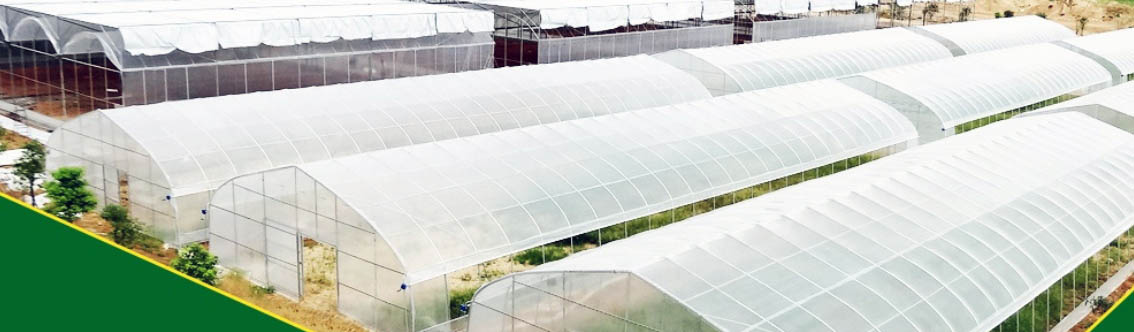
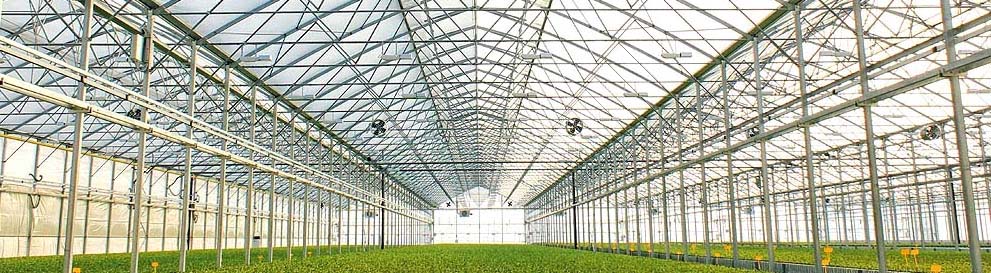
The DongSheng farm seedling base half PC board greenhouse: the material pairing logic of a mixed-covering house
This project at the DongSheng seedling base is a half PC board greenhouse: part of the envelope is finished with rigid polycarbonate board, the rest stays under film. It is not a compromise. It is a deliberate split, and this page explains the logic behind the pairing rather than the panels themselves. If you are weighing the same decision, the pages in our project display section show how the choice is applied across real builds.
Why a Half PC Board Greenhouse Mixes Two Coverings
The two materials do not do the same job, so mixing them means each one is asked only to do what it does best.
- The board carries the steady load. Where the envelope must hold warmth through the night, resist impact and keep its shape over time, the rigid board is the working surface. It keeps the useful heat loss low on the faces that matter most.
- The film carries the light and the span. Where the goal is maximum daylight transmission across a wide roof, film is less costly to span and easier to renew. It gives the crops the light they need without paying board thickness across the whole area.
- Cost follows function. Covering the whole house in board would raise the material bill for faces where extra insulation is barely used; covering the whole house in film would leave the cold, exposed faces unprotected. The mixed envelope spends material where it earns its keep.
The logic is the same whether the structure is a dedicated board house or a mixed envelope; you can compare the framing families in our PC greenhouse series.
Which Parts Take Board and Which Take Film
- Board: side walls, gable ends and the lower band. These faces sit closest to people, media pipes and water, and they take the most wind-driven rain and knocks. Rigid board also stiffens the envelope at the corners.
- Film: the arched roof and the large open spans. The curved roof is the widest, most light-hungry surface, so film is the economical way to close it while keeping transmission high.
- Ventilation openings follow the same split. Louvre and shutter openings are framed into the board sections because the rigid panel gives a clean, square edge for the hardware, while roof film is left undisturbed for the ridge vents.
For a workshop built around this principle, see the PC board seedling workshop project, which shows where a full board envelope is the right call.
Seams and Sealing at the Board-to-Film Transition
The joint between rigid board and flexible film is the single most sensitive line in a half PC board greenhouse. If it fails, the house leaks air before it leaks light.
- Give the film a rigid receiver. Film is fixed into a channel or profile clamped to the board edge, so the flexible sheet never rests directly against a sharp rim.
- Use a continuous gasket, not spot sealant. A full-length gasket or sealing strip lets the joint move with temperature without opening a gap; spot sealant cracks as the two materials move differently.
- Allow for differential movement. Film stretches and shrinks far more than board, so the transition is built with a little slack and a cover batten rather than pulled tight.
- Drain the line. The transition should sit so that condensation on the film runs away from the joint instead of pooling in it.
How the Two Materials Zone the Interior Temperature
Because film and board insulate differently, a mixed envelope does not hold one uniform temperature. It naturally divides the house into a warmer core and cooler outer bands.
- Board faces hold heat. The areas against the board walls lose heat more slowly, so they stay noticeably steadier overnight.
- Film faces swing more. Under the film roof the temperature rises faster on sunny mornings and falls faster after sunset.
- Plan the layout around the zones. Place the most cold-sensitive benches against the board walls, and keep the film side for stages that tolerate a wider range.
- Use air movement to soften the edges. Gentle internal circulation blurs the boundary between zones so the house behaves closer to one block.
Public guidance on controlled-environment growing is available from USDA resources on protected agriculture, and current industry practice is reported by Hortidaily greenhouse news.
Retrofitting an Existing Greenhouse: What to Keep and What to Change
- Check the frame before the covering. A mixed envelope adds board weight to the walls, so the posts and trusses must already carry that load; do not assume they will.
- Upgrade the faces that pay back. In most retrofits the windward wall and the gable ends are worth boarding first; the roof film often stays because it is the lower-cost light.
- Budget the transition work. New receiving profiles and gaskets cost less than rebuilding the envelope, but they must be planned, not improvised on site.
- Keep the galvanised skeleton honest. Where frames are hot-dip galvanised, corrosion class is set to ISO 9223 and BS EN ISO 14713-1 (class C2–C5) so the retrofit does not outlive its own structure.
- Plan the shutdown window. Do the board work and the seam sealing in one pass while the house is empty.
Frequently Asked Questions
Q1: Why combine PC board and film in one greenhouse instead of using one covering?
A: Each material is asked to do only what it does best: the board holds warmth and resists impact on the walls, while film spans the wide roof at lower material cost and keeps light transmission high. Mixing them spends material where it actually pays back.
Q2: Which parts of a half PC board greenhouse use board and which use film?
A: Board goes on the side walls, gable ends and the lower band near people and water; film covers the arched roof and the large light-hungry spans. Louvre and shutter openings are framed into the board sections.
Q3: How are the seams between board and film sealed?
A: The film is clamped into a rigid receiving channel fixed to the board edge, run with a continuous gasket rather than spot sealant, given a little slack for differential movement, and set so condensation drains away from the joint.
Q4: Does mixing coverings really create different temperature zones?
A: Yes. Board faces hold heat longer overnight while film faces swing more with the sun, so the house naturally divides into a steadier core and faster-changing outer bands. Layout and gentle air circulation are used to manage that split.
Q5: Can an existing greenhouse be retrofitted with a mixed covering?
A: Often yes, but the frame must first be checked for the added board weight. Most retrofits board the windward wall and gable ends first and leave the roof film in place, and the new receiving profiles and gaskets must be planned before work starts.
Q6: What maintenance does a mixed-covering greenhouse need?
A: Inspect the board-to-film seam each season for gasket compression and slack, clear the transition line so it drains, retension or renew the film when transmission drops, and keep the galvanised frame free of standing water.
To discuss a half PC board greenhouse for your own site, contact us at sales@cngreenhouses.com or call +86 191 5068 3942. With above 35 years in greenhouse manufacturing, we can advise on the covering split before the frame is ordered.
 Deutsch
 Español
 Français
 Italiano
 Português
 日本の
 한국어
 العربية
 български
 hrvatski
 česky
 Dansk
 Nederlands
 suomi
 Ελληνικά
 हिन्दी
 norsk
 Polski
 Română
 русский
 Svenska