- Commercial Greenhouse
- Film Greenhouse
- PC Greenhouse
- Glass Greenhouse
- Tunnel Greenhouse
- Scientific Research Greenhouse
- Vegetable Greenhouse
- Flower Greenhouse
- Multi-span Greenhouse
- Sawtooth Greenhouse
- Greenhouse Equipments
- Greenhouse Accessories
- Hot Dip Galvanized Pipe
- Irrigation System
- Hydroponics System
- Planting Tools
- Planting technology
Tel: +86 191 5068 3942
Fax:
Mobile: +86 191 5068 3942
Contact: Alina
E-mail: sales@cngreenhouses.com
SKYPE:

You are here: China Greenhouse Manufacturers > Project Display

Ecological Agriculture Park: The Greenhouse's Roles
In an ecological agriculture park a film greenhouse is production house, visitor experience and demonstration plot at once. See how the park is zoned.
.
TEL:+86 191 5068 3942
- Features


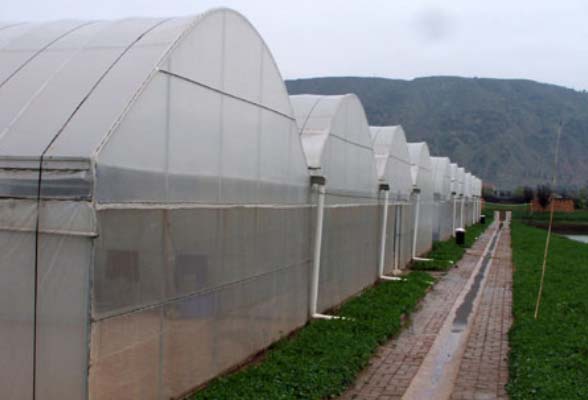
Three Jobs for One Greenhouse in an Ecological Agriculture Park
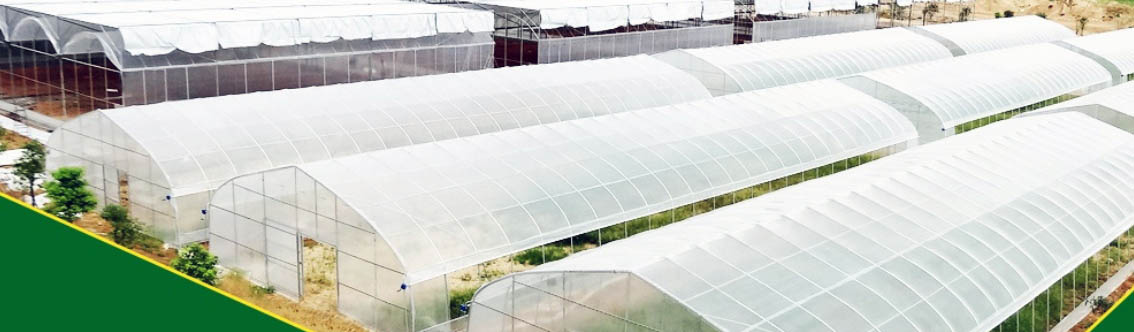
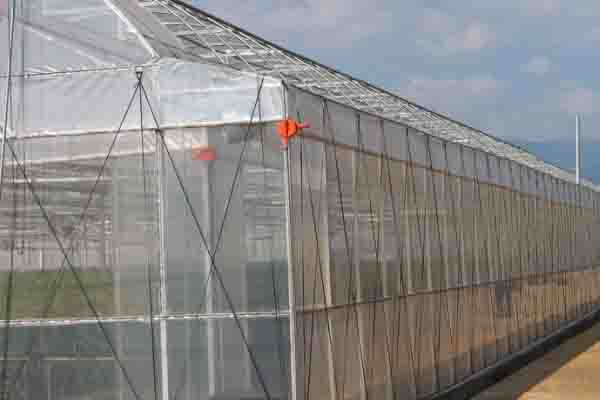
An ecological agriculture park is not one crop under one roof. It is a working landscape in which farming, teaching and visitors share the same ground, and inside that plan a multi-span film greenhouse — the agricultural plastic poly film house we build for this type of project — is asked to do three jobs at once. As a production house it gives a protected, controllable volume where a crop can be grown out of season and kept off the weather. As an experience space it lets a visitor walk into a growing environment and see where the food comes from. As a demonstration plot it shows the methods the park is built on — water-saving irrigation, seedling raising, composting, integrated pest management — in a form other growers can copy.
Those three jobs pull against each other. A house tuned for yield wants high light, closed doors and few people in it; a house open to visitors wants a clear route, labelling and room to walk. The answer is rarely one compromise house but a small group of houses that share services while each leans toward its own job.
Zoning: Production Block, Display Block and Service Yard
The park reads best when the ground is divided into clear zones. The production block holds the houses that must not be interrupted — mother plants, seedling lines, crops on a tight schedule. The display block holds the houses that are opened to the public, with a route through them and interpretation at the entrance. A service yard sits between the two and carries everything both blocks need: paths, water lines, power, seedling trolleys and the collection point for waste.
Buffer strips of grass or hedge between the blocks do more than look tidy. They slow surface water, host beneficial insects and separate the noise of a working yard from the quiet of a display house. A livestock shed, a composting pad or a market area belongs on the service side, off the visitor loop.
Circulation: The Visitor Path and the Work Path
Two flows run through the park and they should touch as little as possible. The visitor path is a loop that starts at reception, passes the display houses and the outdoor beds, and returns without ever crossing a working gate. The work path is a spine that reaches every house door, the service yard and the compost area, wide enough for a trolley or a small tractor and kept clear of parked visitors.
On paper the separation is a colour; on site it is gates, signs and surface. A change of paving from slabs to concrete or gravel tells a visitor where the route ends. Doors that serve the work path stay closed to the public, while the display house gets its own entrance, its own step-over mat and, where disease pressure matters, a footbath. The headland in front of each door stays clear so that trays and crates never block the visitor loop. Keeping the two flows apart is the cheapest biosecurity measure a park can buy.
Fitting the Greenhouse to the Rest of the Park
A greenhouse is only as good as the services that reach it. Water comes first: the irrigation systems for greenhouses should be designed for the park as a whole, with a tank sized for a few days of demand, a pump set, filters and a drip or micro-sprinkler layout matched to each crop. Where the park sells seedlings or grows its own transplants, a nursery house close to the water source shortens the trolley run and keeps young plants in the best light. Compost from the park's own green waste closes the nutrient loop and is best kept on a pad near the service yard, screened from the visitor route.
Climate hardware belongs to the same picture. Wet curtain pads with fans on the houses that run through summer, roof vents that open in the warm half of the year, and a shading layer for the brightest weeks all draw on the same water and power as the irrigation, so they are planned together instead of being added one by one. The paths between the houses carry the pipe runs and the drainage, and a firm, well-drained surface keeps the visitor route usable in wet weather. When the climate debate starts, greenhouse humidity and dew point control explains how the air inside a display house behaves once it is full of people.
What the Operator Checks Before Buying
A park buys a greenhouse the way it buys any other long-life asset: on running cost, and on how easily the asset can be changed later. The covering is the part with the shortest life, so a film that can be renewed in place, bay by bay, without dismantling the frame is what keeps the park open. The frame is expected to outlast several covers, so the corrosion class of the galvanised steel matters more than the price of the first tonne; the reference standards are ISO 9223 and BS EN ISO 14713-1, with class C2 to C5 taken according to the atmosphere at the site. NGMA, the greenhouse manufacturers association, is a useful cross-check on decisions of this kind.
Capacity to expand is the second check. A park grows in steps, so a house size and bay length that can be repeated without redesign, and services laid with spare capacity, save money later. Doors wide enough for the park's own equipment, and a gutter height that suits both a tall crop and a visitor walking underneath, are set at order stage and are hard to change afterwards. The third check is the calendar: a display house has to be presentable on the day visitors arrive, so maintenance is planned around the visitor season. Ask how the cover, the vents and the irrigation are serviced, and whether park staff can do that work.
Frequently Asked Questions About Park Greenhouses
Q1: How does a park decide which greenhouses to open to visitors?
A1: Open the houses that are meant to be seen and keep the production block closed. A display house is chosen for a clear route, easy interpretation and a crop that looks good over a long season, while mother plants and tightly scheduled crops stay behind the work gate.
A1: Open the houses that are meant to be seen and keep the production block closed. A display house is chosen for a clear route, easy interpretation and a crop that looks good over a long season, while mother plants and tightly scheduled crops stay behind the work gate.
Q2: Should the visitor path run through the production houses?
A2: No. Run the visitor loop through the display block only, and let the work path serve the production houses. The two flows meet at reception and at the service yard, not at a crop. This protects the crop from traffic and the visitor from trolleys and spray work.
A2: No. Run the visitor loop through the display block only, and let the work path serve the production houses. The two flows meet at reception and at the service yard, not at a crop. This protects the crop from traffic and the visitor from trolleys and spray work.
Q3: Which services have to be planned together with the greenhouse?
A3: Water, power, drainage, the nursery and the compost pad. Irrigation, cooling pads, vent drives and lighting all pull on the same supply, and the paths between the houses carry the pipe runs, so they are laid out on one plan rather than added house by house.
A3: Water, power, drainage, the nursery and the compost pad. Irrigation, cooling pads, vent drives and lighting all pull on the same supply, and the paths between the houses carry the pipe runs, so they are laid out on one plan rather than added house by house.
Q4: What should an operator check first before buying a park greenhouse?
A4: Three things. How the covering is renewed and how often, whether the frame and its hardware are specified to a corrosion class that matches the atmosphere, and whether the house size and bay length can be repeated when the park expands.
A4: Three things. How the covering is renewed and how often, whether the frame and its hardware are specified to a corrosion class that matches the atmosphere, and whether the house size and bay length can be repeated when the park expands.
Q5: What type of greenhouse suits an ecological agriculture park?
A5: A multi-span film house, also called an agricultural plastic poly film greenhouse, covers a large area at modest cost and can be divided into blocks for production, display and seedling work. Its film cover is renewed bay by bay, which suits a park that cannot close for long.
A5: A multi-span film house, also called an agricultural plastic poly film greenhouse, covers a large area at modest cost and can be divided into blocks for production, display and seedling work. Its film cover is renewed bay by bay, which suits a park that cannot close for long.
Q6: How do the houses stay workable when many visitors come in summer?
A6: Ventilation, cooling and shading carry the extra heat and humidity, and the route is set so people do not stand in the crop. Where a house is crowded, air movement and dehumidification are sized for the people as well as the plants. Seasonal background on protected growing is published by HortWeek.
A6: Ventilation, cooling and shading carry the extra heat and humidity, and the route is set so people do not stand in the crop. Where a house is crowded, air movement and dehumidification are sized for the people as well as the plants. Seasonal background on protected growing is published by HortWeek.
Bozong Greenhouse has been building and equipping greenhouses for above 35 years. See more park and farm projects in our project display gallery, or start from the wider commercial greenhouse range. To ask a question and get help finding the right greenhouse for your park, call us on +86 191 5068 3942 OR send E-mail to sales@cngreenhouses.com
Note: If you're interested in the product, please submit your requirements and contacts and then we will contact you in two days. We promise that all your informations won't be leaked to anyone.
 Deutsch
 Español
 Français
 Italiano
 Português
 日本の
日本の
 한국어
한국어
 العربية
 български
 hrvatski
 česky
česky
 Dansk
Dansk
 Nederlands
 suomi
suomi
 Ελληνικά
 हिन्दी
 norsk
norsk
 Polski
 Română
 русский
 Svenska