- Commercial Greenhouse
- Film Greenhouse
- PC Greenhouse
- Glass Greenhouse
- Tunnel Greenhouse
- Scientific Research Greenhouse
- Vegetable Greenhouse
- Flower Greenhouse
- Multi-span Greenhouse
- Sawtooth Greenhouse
- Greenhouse Equipments
- Greenhouse Accessories
- Hot Dip Galvanized Pipe
- Irrigation System
- Hydroponics System
- Planting Tools
- Planting technology
Tel: +86 191 5068 3942
Fax:
Mobile: +86 191 5068 3942
Contact: Alina
E-mail: sales@cngreenhouses.com
SKYPE:


- Features


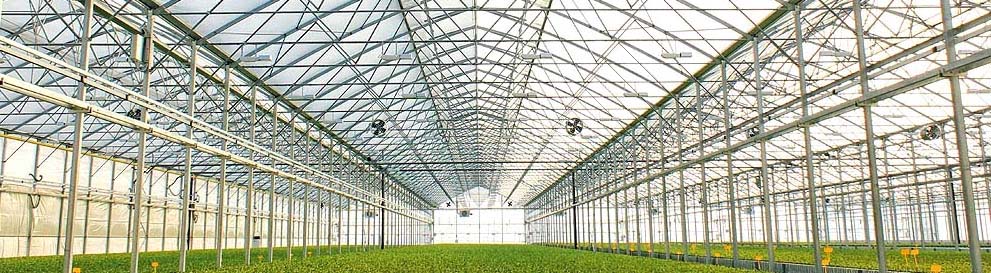
This project is a glass greenhouse at Dazhou, Sichuan, for raising vegetable seedlings. The photograph shows the finished house: clear glazing on walls and roof, a gable roof with ridge vents, and slatted cooling pads in the side wall. A glass house and a seedling crop are a natural pair: a seedling is a light-hungry plant in a small pot. The fit works only with the right fittings — a use decision, not a construction guide.
Why glass glazing suits vegetable seedling raising
Vegetable seedlings — tomato, pepper, cucumber, melon, brassicas — are raised in the darkest, coldest part of the year, when light is scarce. High transmission is the strongest argument for glass: it passes a large share of daylight for years, as it does not yellow or chalk up like plastic covers. Flat panes also shed rain and snow and do not sag between supports, so light on the bench stays even.
Glass also holds a stable air volume. A seedling house runs at high humidity and plant density, and a rigid, closed envelope holds its set point better than film. That stability pays at germination, when a few degrees of drift turn an even tray patchy. Our glass greenhouse range is built around that trade-off: maximum light and a tight envelope, at the cost of weaker insulation than a double-glazed sheet house.
What weak insulation means, stage by stage
Glass insulates poorly compared with double-wall polycarbonate or double film, and that drives most decisions here.
Germination to cotyledon. Trays are held warm and moist, often 22–25 °C at the roots. Here weak cover is the biggest cost: on a clear frosty night a single glass skin loses heat fast, and trays near walls and gutters run coldest. Bottom heat plus a closed thermal screen carry it; air heating alone cannot hold a uniform bench temperature.
True-leaf to transplant size. Real leaves shift the target from warmth to growth balance. Cooler, brighter conditions suit this phase, and glass light gain now helps: you can run a lower night temperature without the stretching a shaded plastic cover would cause.
Hardening before planting out. Lighter glazing supports controlled water and temperature stress, so plants leave the house tougher. The risk is condensation, not cold.
Fittings a glass seedling house needs
The fittings carry the climate. Three matter most.
Heating. Size it for the coldest night you intend to run, not the average, and distribute it low so the tray and bench zone is warmed, not the ridge. Cover loss dominates heat load, so modest under-bench heating goes a long way with a screen.
Thermal screen. A retractable screen is the best answer to weak cover insulation. Closed at night it cuts radiative loss from crop to cold glass and holds warmer air round the seedlings; opened at sunrise it lets light through. What matters is reliable closing, not the most reflective screen sold.
Supplemental light, timed rather than simply added. Seedlings respond to daily light integral and day length, so extend the natural day at both ends — a brief run before sunrise and after sunset — instead of lighting through the brightest hours. Lamps high enough to cover the bench evenly, over a reflective floor, stretch the effect.
Humidity and condensation inside glass, and the young seedling
A tight glass envelope holds humidity, and a seedling house is damp by design. Two problems show with young plants.
The first is leaf-surface wetness. Seedlings have thin, soft leaves and little canopy movement, so any drip that lands on them stays, and condensation running down the inner glass onto trays is the classic route to damping-off and grey mould. The fixes: keep night humidity down with a short dry-vent or dehumidification cycle rather than leaving windows shut, run the thermal screen so the coldest surface sits above the crop, and drain condensation at the glazing to the gutter. Because the panes never move, how the glazing is fixed decides much of this; the reference on glass installation and sealing methods covers those principles.
The second is unevenness. Corners and wall ends stay wet and cool while the centre dries, so roots stall in the wetter zone and check in the drier one. Gentle air movement, and benches laid out to suit the house rather than filling every corner, is the usual answer.
Seasons, climates and the cover choice for seedlings
In a temperate or higher-latitude climate glass earns its cost through winter and early spring, when every extra hour of light shortens the raising period. In a hot, humid or low-light rainy climate the balance flips: cooling is the constraint, and the house needs forced ventilation, cooling pads and shading — the side-wall pads in this Dazhou project are that response. Where winters are severe and long, glass is a handicap and a double-skinned sheet house costs less to run.
Comparing covers for seedlings: glass gives the most light and the tightest, longest-lived envelope, but the highest up-front and heating cost. Polycarbonate sheet is the mirror image — a double-wall sheet insulates far better, so germination and early stages cost less to run, and it diffuses light though it transmits less, which matters in deep winter. Film and polytunnel is the least costly way to get a large seedling space and suits a short warm-season window, but its light declines as the film ages.
So glass is not automatically the best seedling house — it is the best light house. Match it to the light-hungry stages, insulate with a screen and heat, and let a warmer cover carry the rest. See this logic across the range of commercial greenhouses we build; trade bodies such as the National Greenhouse Manufacturers Association and trade press such as HortWeek track how growers settle it. Our float versus tempered glazing comparison explains what the glass grade changes.
If you are planning a glass seedling house, tell us the crops, the raising season and the lowest night temperature you must hold, and we will advise on cover and fittings. Ask our engineers at sales@cngreenhouses.com or call +86 191 5068 3942. We have built commercial greenhouses for above 35 years, and steelwork is protected to ISO 9223 / BS EN ISO 14713-1 corrosion classes (class C2–C5) by site conditions.
Frequently Asked Questions on Glass Greenhouses for Vegetable Seedlings
Q: Is a glass greenhouse good for raising vegetable seedlings?
A: Yes, mainly for its light. Glass keeps more natural light than any other cover, which matters in winter and early spring. The trade-off is weak insulation: heating, a screen and humidity control are needed.
Q: Why do my seedlings get cold at night in a glass house?
A: A single pane loses heat fast, so the bench zone cools close to outside temperature on clear nights. Fix it with a thermal screen closed at night plus under-bench heating; air heating alone will not hold a uniform bench temperature.
Q: When should I add supplemental light in a glass seedling house?
A: Extend the natural day at both ends, before sunrise and after sunset, rather than lighting through the brightest hours. Midday light already comes through the glass, so adding it wastes energy.
Q: How do I stop condensation dripping on young seedlings?
A: Keep night humidity lower with a short dry-vent or dehumidification cycle, close the thermal screen so the coldest surface sits above the crop, and let condensation run to the gutter, not the bench.
Q: Should I choose glass or polycarbonate sheet for a seedling house?
A: PC sheet insulates better and is lower-cost to run for germination and early stages; glass gives more light and suits the true-leaf and hardening stages. Many growers split the programme: warm cover early, glass later.
Q: Which climates suit a glass seedling house?
A: Temperate and higher-latitude climates, where light is limited much of the year, benefit most. In hot, humid or very cold climates the house needs more cooling or heating, and a double-skinned cover is more economical.
 Deutsch
 Español
 Français
 Italiano
 Português
 日本の
 한국어
 العربية
 български
 hrvatski
 česky
 Dansk
 Nederlands
 suomi
 Ελληνικά
 हिन्दी
 norsk
 Polski
 Română
 русский
 Svenska