
- Commercial Greenhouse
- Film Greenhouse
- PC Greenhouse
- Glass Greenhouse
- Tunnel Greenhouse
- Scientific Research Greenhouse
- Vegetable Greenhouse
- Flower Greenhouse
- Multi-span Greenhouse
- Sawtooth Greenhouse
- Greenhouse Equipments
- Greenhouse Accessories
- Hot Dip Galvanized Pipe
- Irrigation System
- Hydroponics System
- Planting Tools
- Planting technology
Tel: +86 191 5068 3942
Fax:
Mobile: +86 191 5068 3942
Contact: Alina
E-mail: sales@cngreenhouses.com
SKYPE:


- Features


What an institution-run greenhouse project needs
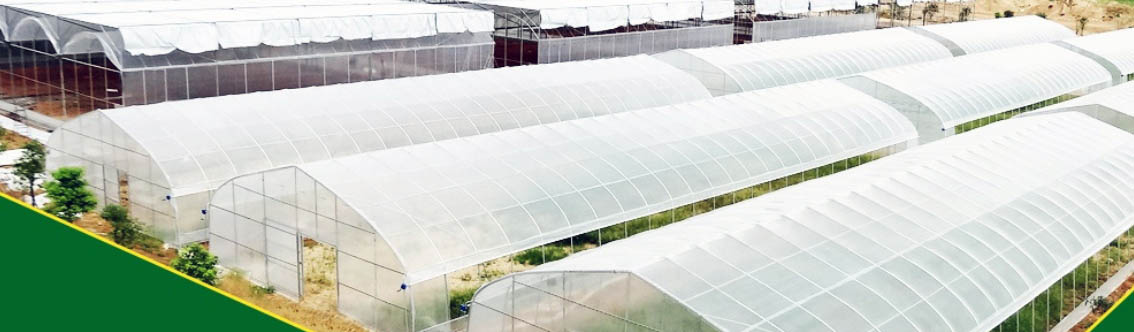
When the owner is an institution building for its own use rather than for resale, the brief changes shape. Crop marketing moves to the background, while three things move forward: the facility must match a fixed internal plan, stay simple enough for a small in-house team to run, and be handed over as a working facility rather than as a pile of structures. A row of arched film tunnels like the one pictured is a typical starting point — a compact production block that can be walked, inspected and repaired without specialist machinery. Related layouts appear in our project display and in the wider commercial greenhouse programme.
Because the same organisation owns and operates the site, the real question is not only whether the structure is sound. It is whether handover leaves the owner able to grow, service and extend the facility without depending on the original builder.
Phased construction and room left for later expansion
Institution-run projects rarely arrive in one lump. Budgets are released in stages and interest grows once the first tunnels are standing, so the block is best designed to be built in phases: a first group commissioned and used, with the site plan already reserving space, access and service routes for a later group.
The reservations that matter most sit on the ground, not in the drawing title. Service roads and turning areas must stay wide enough for a delivery lorry or small tractor when the next phase starts, and headlands between bays should remain walkable and drainable rather than filled with spoil. If more area will eventually be watered, the main supply line should be sized once, at the beginning, so that adding bays later does not mean digging up working ground. The tunnel family used here also carries a range of spans, which makes staged growth straightforward: see the commercial poly tunnel range.
Construction organisation and site handover
On a self-use site the construction crew and the future operator are often the same small organisation, so the sequence is planned around what the ground can accept. A workable order is: clear and level the block, set the drainage falls, install the main service spines, then erect the tunnels bay by bay so that finished ground is never driven over again.
Ground conditions decide most of the risk. On dry, stony plots like the one pictured, the priority is a level, well-compacted pad with a clear fall to the perimeter, because uneven ground twists the frame and ponds water at the doors. Site handover should therefore be an agreed milestone rather than an unspoken assumption: the pad level, the paths in place, the service trenches covered and marked, and both sides having walked the boundary together and recorded what was handed over. Anything left unsettled then tends to become a dispute once the tunnels are loaded with crop.
Acceptance criteria and where responsibility sits
Acceptance for a self-use facility is best kept short and checkable. Useful items include frame alignment along each bay, film tension without sagging or chafing, doors and vents opening fully and closing flush, water and power points working where agreed, and drainage discharging where the plan says. Cover choice should be settled before acceptance, since it feeds straight into structure and service life; the trade-offs are set out in comparing polycarbonate and glass covers.
Just as important is a clear boundary of responsibility. The builder answers for structure, covering, fixings and the connections it installed. The owner answers for what happens after handover — daily operation, cleaning, crop management, and damage caused by misuse, uncleared snow or later third-party work. Writing that line into the handover document protects both sides and prevents the common case of an owner ringing the builder years later over a problem that was operational.
Training and document handover for non-professional operators
The people who end up running an institution-owned greenhouse are usually not career growers. They may be maintenance staff, gardeners or administrative staff who take the facility on alongside other duties, so training has to be practical and repeated rather than a single lecture on handover day.
A short, ordered handover pack does most of the work: the as-built layout, a list of structures and covering, the maintenance schedule for film, fixings and moving parts, the routine for ventilation and irrigation, and contacts for spare parts. Walk-through training should cover the few actions that decide whether the facility survives its first year — opening and closing vents correctly, checking and re-tensioning covering, spotting a loose fixing or bent hoop before it tears the film, and preparing the tunnels before a storm or heavy snow. Plain-language guidance on protected cropping is also available from USDA, useful background material to leave with non-specialist operators.
Building self-reliant operation after handover
The measure of a good delivery is what happens in the second and third year, once the builder has gone. By then the facility should run on the owner’s own routine: a named person responsible, a simple daily and seasonal checklist, a small on-site stock of film, fixings and door hardware, and a written record of repairs and replacements.
Two habits keep a self-run block healthy. The first is inspection — a short weekly walk over covering, doors, drainage and frame, so small faults are caught while they are small. The second is realistic, phased growth: add bays or improve water and ventilation only once the current area is being run well, rather than expanding faster than the in-house team can absorb. Keeping up with how similar facilities are operated, for example through trade reporting such as Hortidaily, helps an owner keep that routine current. Owners planning a facility of this kind can email sales@cngreenhouses.com or call +86 191 5068 3942 for advice on phasing, handover and operator training.
Frequently Asked Questions
Q1: How is delivery different when the owner runs the greenhouse itself?
The emphasis shifts from a fast handover to a usable one. The owner needs a facility it can operate, maintain and later extend with its own staff, so phasing, site preparation, training and documentation carry more weight than on a project built for resale.
Q2: Can the block be built in stages and extended later?
Yes, and it is the usual route for institution-run sites. The plan reserves space, access and service routes from the start; a first group of tunnels is commissioned and used, and later bays are added when budget and demand allow, without reworking working ground.
Q3: What should be settled at site handover before erection begins?
A level, compacted pad with a clear fall to the perimeter, service trenches covered and marked, paths and headlands in place, and a joint walk of the boundary with a written record of what each side handed over.
Q4: Who is responsible for what after acceptance?
The builder answers for structure, covering, fixings and the connections it installed; the owner answers for daily operation, cleaning, crop management and damage from misuse, uncleared snow or later third-party work. That boundary belongs in the handover document.
Q5: What training do non-professional operators need?
Practical, repeated walk-through training on opening and closing vents, checking and re-tensioning covering, spotting loose fixings or bent hoops, and preparing tunnels before storms or heavy snow, supported by a written pack with the as-built layout, maintenance schedule and spare-part contacts.
Q6: How can an owner keep the facility running well without the original builder?
By fixing a simple routine: a named person in charge, a weekly inspection walk, a small on-site stock of film, fixings and door hardware, and a written record of repairs. Growth in area should follow the team capacity, not run ahead of it.
 Deutsch
 Español
 Français
 Italiano
 Português
 日本の
 한국어
 العربية
 български
 hrvatski
 česky
 Dansk
 Nederlands
 suomi
 Ελληνικά
 हिन्दी
 norsk
 Polski
 Română
 русский
 Svenska